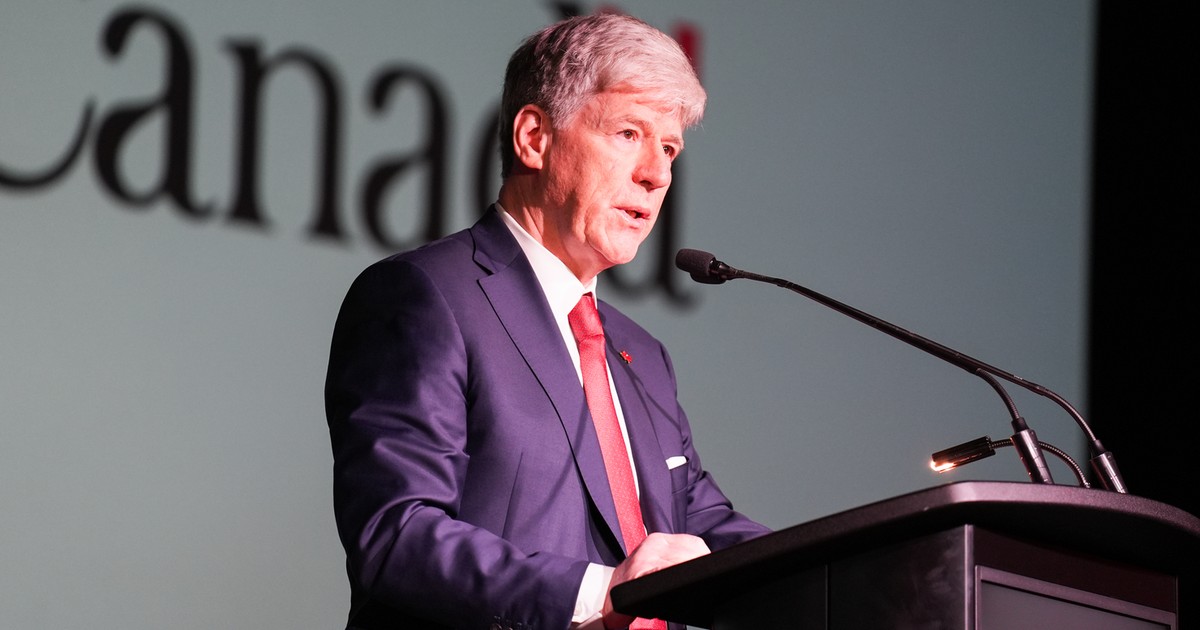
Canada will export liquefied natural gas (LNG) to Germany, Canadian Energy Minister Tim Hodgson announced on Wednesday in Vancouver. The agreement for the export of 1 million tons of gas per year was concluded by Ksi Lisims LNG from British Columbia and the German SEFE. As Tim Hodgson added, Germany wants to diversify the sources of gas imports, which it currently imports from the USA, instead of – as before – from Russia.
See also: Record imports of Russian gas to Europe. The high price of addiction
They are building an LNG terminal for billions of dollars
Gas carriers to Germany will be able to sail from the west coast of Canada through the Panama Canal or by sea around Africa. There is also the possibility of the so-called a swap in which LNG from British Columbia is sold to Asian markets, and gas from supplies directly to the European market goes to Germany.
The agreement between Canada and Germany will use one of the priority infrastructure projects that the Canadian government wants to implement quickly. This is about Ksi Lisims – a floating gas terminal project that is to be launched by 2029 and will cost USD 10 billion. Canadian (approx. USD 7.2 billion US). It is intended to enable the export of 12 million tons of LNG per year. The agreement with Ksi Lisims LNG was concluded already in 2024 by the British Shell for the supply of 2 million tons of LNG per year for 20 years; a similar contract was also signed by the French TotalEnergies in 2025 – remind Canadian media.
These three contracts mean that almost half of the future terminal's export capacity has already been included in contracts with recipients, noted the French-language public broadcaster Radio-Canada.
See also: Germany panics due to China's actions. 'Entire supply chains at risk'
The terminal will be built on Nisga'a Indian territory, 80 km north of Prince Rupert. It will be an opportunity for economic development and new jobs for them. As Eva Clayton, head of the Nisga'a Lisims government, noted on Wednesday, the agreement with the German SEFE is beneficial to both parties.
Not all Native American nations agree to build a new terminal. British Columbia Indian Chiefs Association (UBCIC), as well as, among others, The David Suzuki Foundation wants to block the implementation of the agreement.