
US allows Poland to produce Patriot missiles. The global ammunition crisis is a game-changer

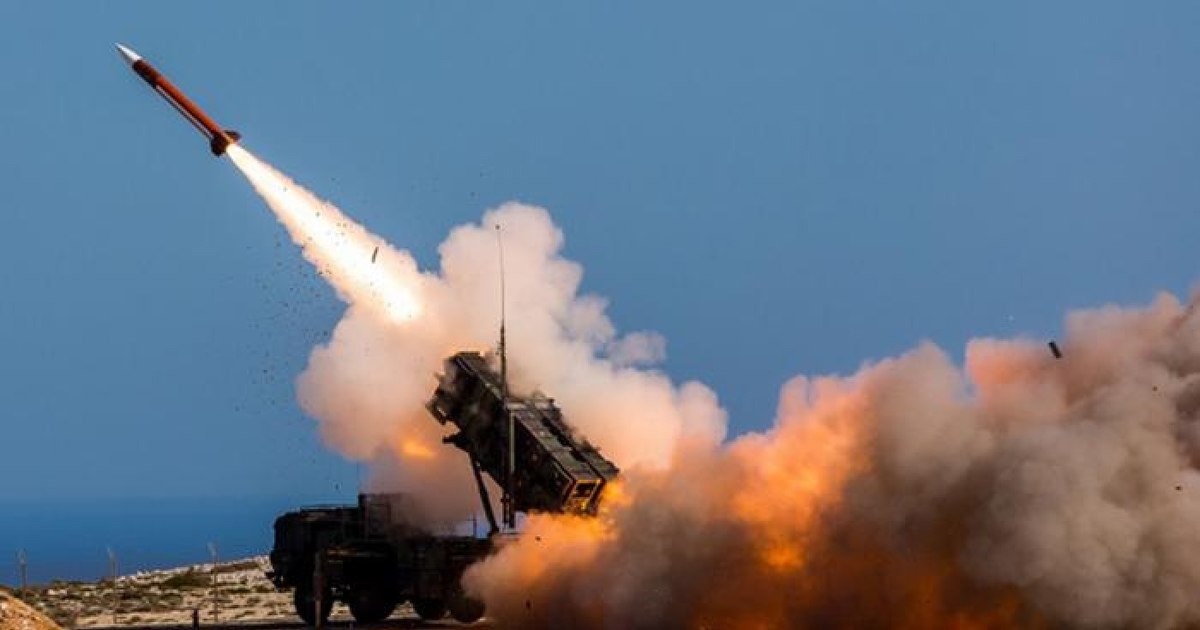
The United States has granted crucial preliminary approval to Poland to start production of missiles for Patriot air defense systems at domestic defense industry plants.
Poland will produce interceptors for the Patriot anti-missile system/FOTO:X
The announcement, made by Polish Deputy Defense Minister Cezary Tomczyk, marks a profound paradigm shift in Washington's security policy, imposed by the harsh realities on the Ukrainian front and acute tensions in the Middle East.
Although US officials were initially extremely skeptical about the transfer of such a sensitive and unique technology, the recent visit of a Polish delegation to the US unlocked the negotiations. The shift in focus reflects a troubling reality: the Pentagon's global stockpile of interceptors is drastically depleted following recent operations in Iran, massive support for Kiev, and growing demand from NATO allies.
How pragmatism overcame Washington's reluctance
According to the details provided by Tomczyk during an intervention on TVN24 television, the project would be implemented by creating a consortium of Polish companies that already possess the necessary technical capabilities. The main stake is the PAC-3 MSE model – the most modern and capable variant of Patriot missiles, used specifically for intercepting ballistic missiles.
Until recently, Washington closely guarded the secrets of this technology. But the mathematics of war of attrition forced a reassessment. Current US production capacity: approximately 620–700 PAC-3 MSE missiles per year. The Pentagon's target: reaching a volume of 2,000 units annually by the end of 2030.
To achieve this ambitious goal, expanding industrial capabilities overseas has become a strategic necessity, not just a political option. Furthermore, Poland is not alone in wanting this capability; Germany, for its part, is making intensive efforts to host similar assembly lines.
Poland: From buyer to regional military hub
Warsaw quickly understood that security cannot rely solely on imports. As part of its “Wisła” air defense program, Poland placed huge orders:
-In 2018: a first installment of two Patriot batteries and 208 PAC-3 MSE missiles, worth $4.75 billion.
-In 2023: a mega-order of 48 more launchers (6 batteries) and 644 PAC-3 MSE missiles, through a $15 billion contract.
In addition to the Patriot missiles, the deputy defense minister hinted that the US side was “extremely interested” in Poland also producing long-range missiles for the HIMARS systems, as well as Hellfire guided missiles used by Apache attack helicopters.
Poland is not starting from scratch. The local industry is already integrated into the American supply chain: the WZL 1 plant has already manufactured the first launch containers for the PAC-3 MSE, and the Huta Stalowa Wola (HSW) company produces chassis elements and launchers in partnership with Raytheon.
The connection with the Ukrainian front
The decision has major geopolitical importance for the entire Eastern Flank of NATO. Locating a production line for Patriot interceptors in the immediate vicinity of Ukraine dramatically shortens logistics routes.
Moreover, the specialist publication Defense Express recently speculated that Warsaw had already secretly transferred some of its PAC-3 MSE missiles to Ukrainian forces to protect the cities from Russian ballistic attacks. In this context, the localization of production becomes a guarantee not only for the defense of Poland, but also for the long-term sustainability of Ukraine's air defense in the face of Kremlin aggression.


