The economic story behind the movie “French Connection”. How the most profitable supply chain of the 20th century worked

Heroin was not a product of the underworld. It was a product of globalization.
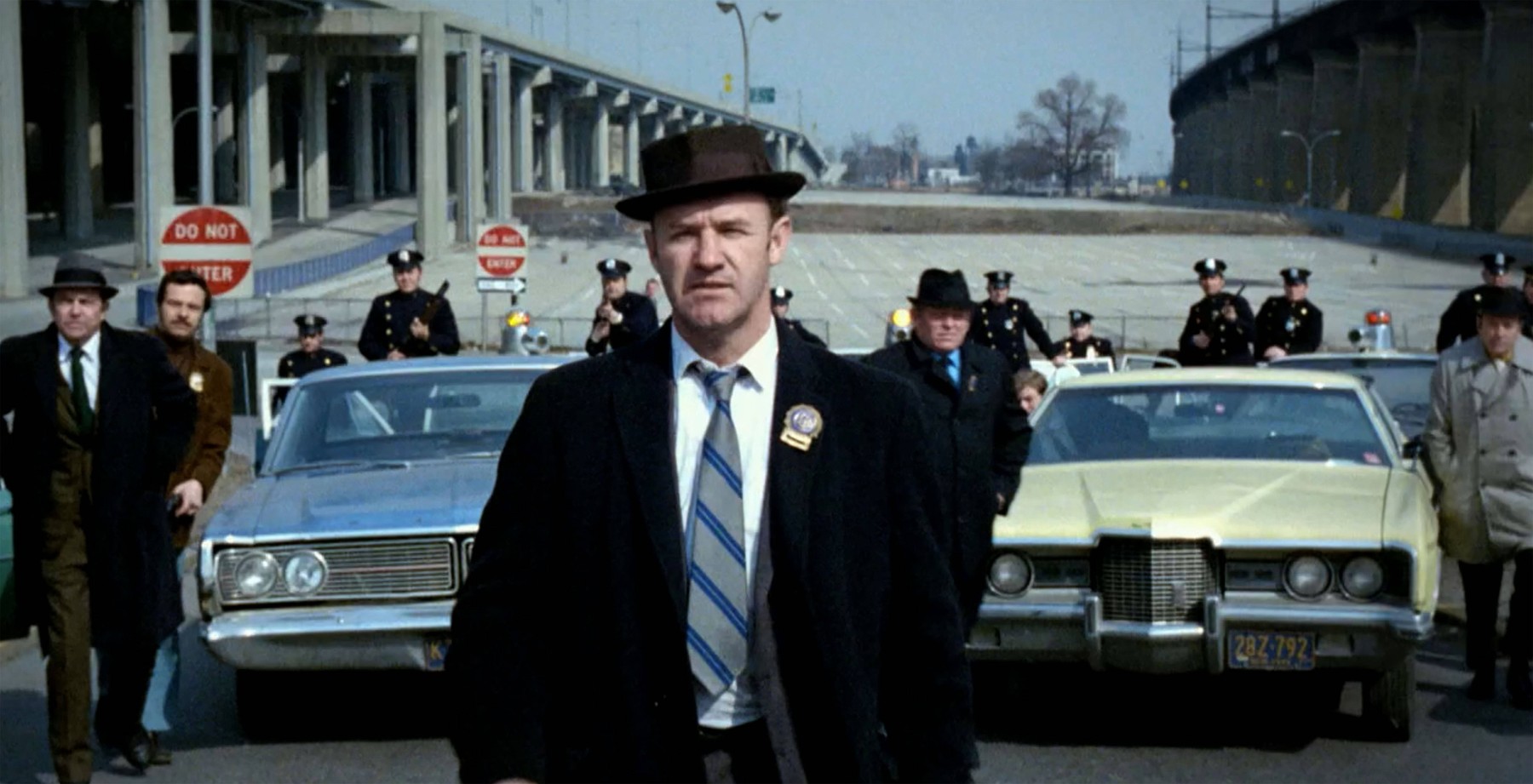
If you've seen The French Connection, you probably didn't make the connection with President Nixon's anti-drug campaign. The audience's attention turned instead to Gene Hackman's performance as Detective Jimmy “Popeye” Doyle, a ruthless cop who solves a drug case on the streets of New York City.
Many critics admired the film for Hackman's portrayal of a cop unencumbered by morality or civility. Popeye, as a New York Times columnist saw it, was the avatar of one of the most “underprivileged members of contemporary society,” the underpaid cop.
There's one figure that sums up everything you need to know about the French Connection: A kilogram of heroin refined in France was sold in the United States for up to $210,000. About 42 times the wholesale price.
Neither oil nor gold nor any other legitimate commodity offered comparable profit margins.
And at the time the CIA calculated these numbers for the Nixon administration, chemists in Marseille were paying 32 percent less for the raw material—the basic morphine—than they had a decade earlier. Volume had increased, competition had decreased, and margins had exploded. This wasn't just a mob operation. It was an industry. Let's “translate” it economically.
The supply chain
Like any efficient industry, French Connection operated vertically: raw material, processing, distribution, retail.
Opium came from Turkey and the Hmong fields of Indochina. It reached Marseilles through specialist brokers in Istanbul and Beirut, with fixed relationships and negotiated prices—not occasional transactions, but repeatable contracts. In Marseille, it was processed into heroin by specialized chemists. From there, via Montreal or directly, it went to New York, where the Five Families provided final distribution.
Each node of this chain was owned by a different actor with clear specialization. The Turks—Ihsan Sekban and Hüseyin Eminoğlu—controlled the supply. The Guérini brothers of Marseille controlled the processing. Vincenzo Cotroni of Montreal and the Bonanno family controlled importation into North America. It was a franchise chain, not an integrated company—an organizational model that, as economists later discovered, reduces systemic risk and increases resilience.
Cost of entry and barriers to competition
What looked like a chaotic market was actually a market with high barriers to entry. Not everyone could become a broker between Istanbul and Marseille. It required relationships built over years, diasporic communities to ensure trust—the Armenians, the Corsicans, the Lads of northern Turkey. The Armenian intermediary in Istanbul was valuable precisely because it was, as he himself said, “a minority without a homeland, but present everywhere”—human network instead of institutional infrastructure.
Barriers to competition were also provided by something else: systemic corruption. In Turkey, Prime Minister Adnan Menderes directly covered officials involved in the traffic. In Lebanon, Sami al-Khoury operated with complete freedom thanks to the network of politicians and policemen who protected him. In Sicily, the Mafia provided votes for the Christian Democratic Party and received operational immunity in return. It wasn't accidental corruption — it was a business model: you buy protection, eliminate regulatory risk, and lower your operating costs.
The Marshall Plan as a growth factor
A detail usually ignored: the recovery of the post-war Italian mafia was not based only on drugs. It was directly fueled by European reconstruction. Marshall Plan funds created a boom in government contracts, and Mafia and Camorra families positioned themselves as middlemen—discreet patrons behind companies bidding on public works. As the Italian welfare state expanded, extortionists became the arbiters of the allocation of public resources: jobs, contracts, permits. The illicit economy and the legal economy were not parallel—they overlapped.
The same phenomenon was repeated with the 'Ndrangheta in Calabria, which took control of the construction boom in northern Italy in the 1970s, and with groups in Montreal, which reinvested heroin profits in gambling and cigarette smuggling.
The real moment of conception of the “French Connection” probably took place in Canada.
Postwar Montreal had some of the appeal of Havana, but without the tropical heat.
Prohibition had turned Canada's largest city into a Mecca for rum dealers in the 1920s. Its French flair and vibrant nightclub scene attracted casual tourists as well as gamblers and lecherous patrons from both sides of the American border.
However, before 1945, the underworld was small. Pre-war Montreal, however, left its mark on its most famous gangster.
Vincenzo Cotroni arrived in Canada in 1924 as a teenager from Calabria in southern Italy. After abandoning his professional wrestling career, Cotroni found a job as a bookie. He then parlayed that profession into a decade-long career as a nightclub owner. With the help of other gangsters, Cotroni founded his own mafia family.
Around 1947, Cotroni met a recent immigrant from Marseille named Antoine D'Agostino, who had been arrested for rape, prostitution and robbery. After the Nazi invasion, he offered his services to the Gestapo as an informer and enforcer. The liberation of France from German occupation sent D'Agostino into hiding in Canada. In Montreal he teamed up with another mafia leader, François Spirito. Both men eventually found their way into Cotroni's orbit.
As in Japan and elsewhere in the world, shortages and rationing of staple foods led to the flourishing of the black market.
Moreover, the massive influx of funds under the Marshall Plan created even greater opportunities. As reconstruction and modernization efforts began, Mafia and Camorra families positioned themselves as patrons or discreet partners behind companies bidding for government contracts.
This culture of clientelism became entrenched as the Italian welfare state matured. As sprawling government offices proliferated, mobsters became the arbiters of public services, including the awarding of jobs and contracts.
Illicit profits soared in the 1960s as the Italian economy expanded faster than that of many of Europe's larger states.
Instead of seeking new lives in America, a significant number of Sicilian and Neapolitan gangsters relocated to Rome, Milan and other northern cities because it was more profitable.
When the state intervened
Nixon declared war on drugs in 1969 with a ten-point agenda. The result, from an economic perspective, was a temporary supply shock: Turkey stopped opium cultivation, laboratories in Marseille were broken into, several major traffickers were arrested. The price of heroin on the American market has increased, consumption has decreased slightly.
But in 1974, Turkey resumed its cultivation. Production has moved – to Southeast Asia, to Latin America, to the Balkans. And the mobs that emerged after the fall of communism quickly filled the void. The lesson that economists would later formulate—that suppressing supply in a market with inelastic demand shifts production instead of eliminating it—was already visible in the data. Nobody wanted to read it.
The outbreak of the war on drugs did not destroy the industry. He restructured it.