Mario Draghi – “Too much bureaucracy in the EU. The auto industry objectives are no longer achievable”


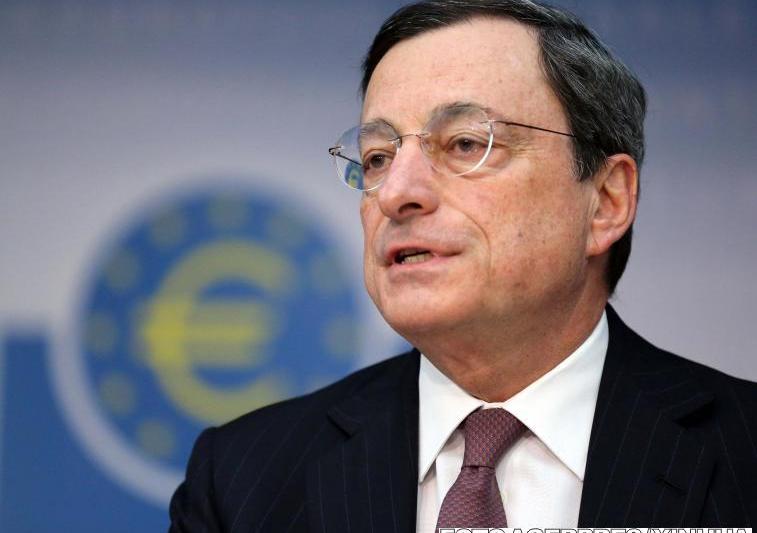
Mario Draghi (photo archive), photo: Agerpres/Xinhua
Europe moves too slowly, blocked by bureaucracy and much from its main competitors, especially the US and China. In an intervention in Brussels, Mario Draghi explained that it is necessary to “act together and that we need more speed,” writes at Stampa.
Draghi emphasized the need for “a different way, which requires a new speed, magnitude and intensity. It means acting together, not to fragment our efforts. It means focusing the resources where the impact is major. And it means producing results in a few months, not in years.” And in terms of the problem of the automotive industry, the former president of the ECB stressed that “the premises of the EU goal are no longer valid.”
People are disappointed by the slowness with which the EU moves. It considers us unable to keep up
“I welcome Europe's decision to place competitiveness in the center, and its agenda is ambitious. European citizens and enterprises appreciate the diagnosis, clear priorities and action plans, but they also express an increasing frustration. They are disappointed by the slowness with which the EU moves. They consider us to keep up. They managed to understand the severity of the moment, “said the former president of the ECB and former Italian prime minister in his speech at the high level conference, one year after presenting his report on competitiveness.
“Too often, apologies are invented for this slowness. Let's just say that this is how the EU is built. That a complex process must be respected with many actors. Sometimes, inertia is even presented for the rule of law. This is self -mum. Competitors in the United States and China are much less constrained, even when they are working within the law.”
The former ECB president then identifies the areas that require urgent actions. “There are three areas in which a higher ambition is needed. First of all, the elimination of obstacles to the expansion of new technologies. A true” 28th regime “must become a reality, allowing innovative companies to operate, trading and attracting without obstacles in all 27 Member States, as well as the competitions, At a high level “one year after the Draghi report”, along with Ursula von der Leyen.
The Strategy of the Commission “Applying Artificial Intelligence” this autumn will be a key test
“The second field is the regulation. One of the most visible requests from the European companies is a radical simplification of the GDPR, not only of primary legislation, but also of the burdensome regulations of the Member States. The training of Ia models requires enormous amounts of public data available online. However, the legal uncertainty regarding their use creates Europe, ”said Draghi. “The third field is the vertical integration of taking into the industry.
The sectoral applications of IA are even more important than the power of calculation of supercomputers. “” In this area, Europe has a real advantage: its companies have more than half of the global market for industrial automation solutions, a cornerstone of artificial industrial intelligence. However, only about 10% of the companies have used this year. Early advantage in own European solutions.
Mario Draghi considers that the decarbonization objectives of the car sector “are based on assumptions that are no longer valid” and that “the transition must be flexible and pragmatic”. In general, the mere relaxation of some of the most onerous requirements to report sustainability is not sufficient. The future revision of the Regulation on CO2 emissions (which prohibits the sale of new petrol and diesel cars from 2035) “should follow a technologically neutral approach and take into account the market and technological evolutions.”
In short, the deadline of 2035 for zero emissions had to trigger a virtuous circle. The strict objectives would have stimulated investments in the charging infrastructure, would have expanded the internal market, stimulated innovation in Europe and have made more accessible electric vehicles. We were expecting the adjacent sectors – batteries and chips – to develop in parallel, supported by specific industrial policies. However, this “did not happen”. Installation of charging points must accelerate three or four times in the next five years to get adequate coverage.
The electric vehicle market has increased slower than it was provided. Draghi continues: “European innovation remained behind, models remain expensive, and supply chain policies are fragmented.” At the same time, the European car park of 250 million vehicles ages, and CO2 emissions have only decreased in recent years. Finally, an integrated approach to the growth of electric vehicles is required, taking into account the supply chains, infrastructure needs and the potential of zero carbon emissions.
(Material made with the support of Rador Radio Romania)