Is it ever too late or too late for the anti-colonial revolt and the sending of the signal to permanently sever ties with the past filled with shameful memories of dependence on the metropolis?
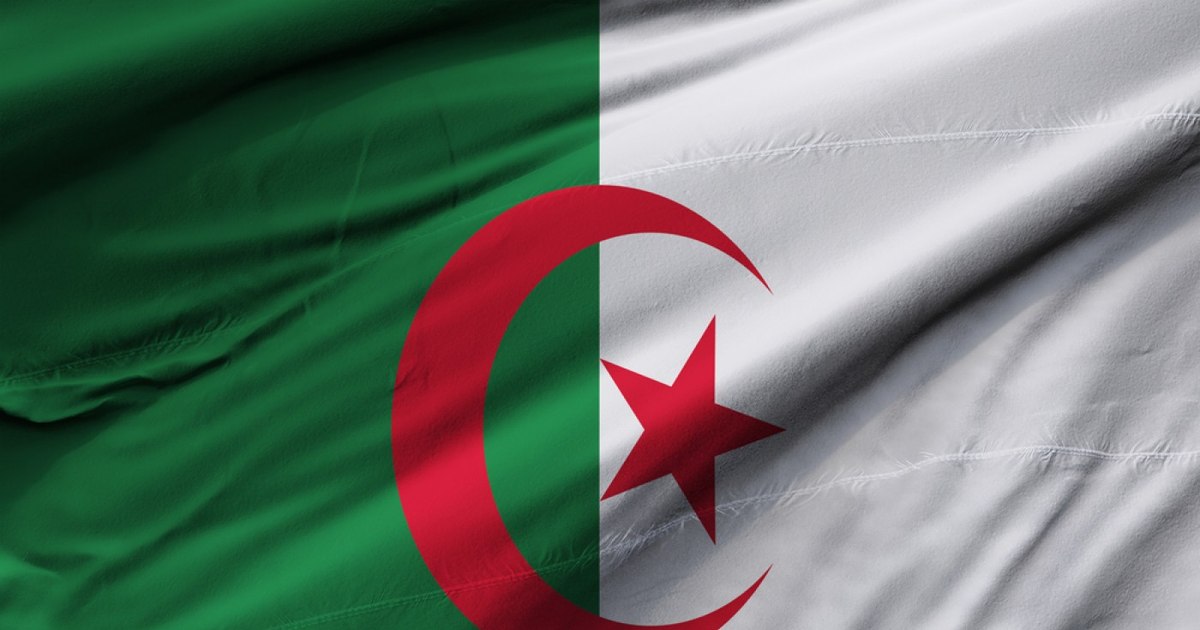
Flag of Algeria PHOTO Shutterstock
Perhaps no one expected that, now that civilized countries are making projections for the development models that will enter 2050, the issue of decolonization will be raised again, in an exemplary way, returning to the international news at a sensitive moment, at the ever-restless edge of the Mediterranean.
Behold:
In Algeria, the law 26-10 of May 12 regarding the legal condemnation of the period of French colonization, was published on May 21 in the Official Journal and entered into force, introducing an enormous vector of tension in the relationship with France and, much more importantly, signaling a complete break from a tragic episode that lasted from June 14, 1883 to July 5, 1962.
Attention to this exceptional wording: in the terms of art.2 of the law, French colonization is defined as “state crime” against the human, political, economic and cultural values of the Algerian nation. There are listed 31 serious crimes considered as non-prescriptive criminal actions directly related to the colonial period, such as intentional murders, attacks against the civilian population, extrajudicial executions, torture, deportations, rapes, sexual slavery, chemical experiments and conducting nuclear tests.
There are a lot of terrible testimonies about that period and the incriminated acts. The most recent are gathered in the Stora Report https://www.vie-publique.fr/rapport/278186-rapport-stora-memoire-sur-la-colonisation-et-la-guerre-dalgerie (after the author, historian Benjamin Stora) of 146 pages delivered to Macron in 2021 but considered too watered down or insufficient. Far too few, it was said if the testimonies of General Bugeaud on the Colonization of Algeria are really taken into account https://archive.org/details/delacolonisation00buge/page/n4/mode/1up (the book published in 18477, exemplary to understand the extent and extreme diversity of the violent procedures applied in that period: the use of asphyxiating gases against the civilian population, terrible being the case of the refugees in the caves in the region Dahra.
In the military operations to subjugate the local tribes, entire villages were destroyed and crops burned, and some historical sources of the time state that the entire population of Algeria was then reduced by half, that is, from 3 million to only 1.5 million people… There is the tragic memory of the protest demonstrations in favor of independence after the Second World War, the harsh intervention of the French troops causing thousands of deaths in Setif, Guelma or Kherrata…During the Algerian War, the French troops used all the modern military equipment at their disposal but, indisputably, allowed the widespread use of torture against independence activists, carried out arbitrary arrests and extrajudicial summary executions.
One of the shocking testimonies that must be read to understand the magnitude of the events is that of General Aussere in 2001 who spoke about the widespread use of torture and executions. Please read his book Special Services, Algeria 1955-1957: Mon temoignage sur la torture Ed. Perrin, confirming the extra-judicial assassination of some great Algerian personalities of the time, including the lawyer Ali Boumedjel and the trade unionist Larbi Ben M'hidi. And it must also be said that, as a result of his testimony, the general was kicked out of the army, stripped of the Legion of Honor and convicted in France of “complicity in the apologia of war crimes”…
Finally, another ultra-sensitive topic is reopened for debate, the devastating effects on the environment and the population of the 17 underground and aerial nuclear tests carried out by the French in the Algerian Sahara (at Reggane and In Ekker, the estimates being that they caused the death of 42,000 people, in addition to those left disabled for life as a result of radiation.
In my opinion, however, there is a story https://musulmansenfrance.fr/lincroyable-histoire-des-cranes-algeriens-du-musee-de-lhomme/ which encloses in it the whole horror of the crimes of the colonial period and their reminiscences in the contemporary period.
During the colonial uprisings, capital punishment for the leaders of the movement was commonplace, their heads being kept after beheading and the decision was made to send them to the capital, Paris, where they were exhibited at the Musee de l'Homme in 1880-1881 https://histoirecoloniale.net/rubrique/la-societe-francaise-face-a-lheritage-de-son-passe-colonial/la-reconnaissance-du-passe-colonial/reconciliation-et-reparations/la-restitution-des-objets-et-restes-mortuaires-coloniaux/les-cranes-dalgeriens-au-musee-de-lhomme/. Since 2011, Algeria has been asking France to return all the tragic relics of which 31 have been identified, and France returned in July 2020 only 24 of them.