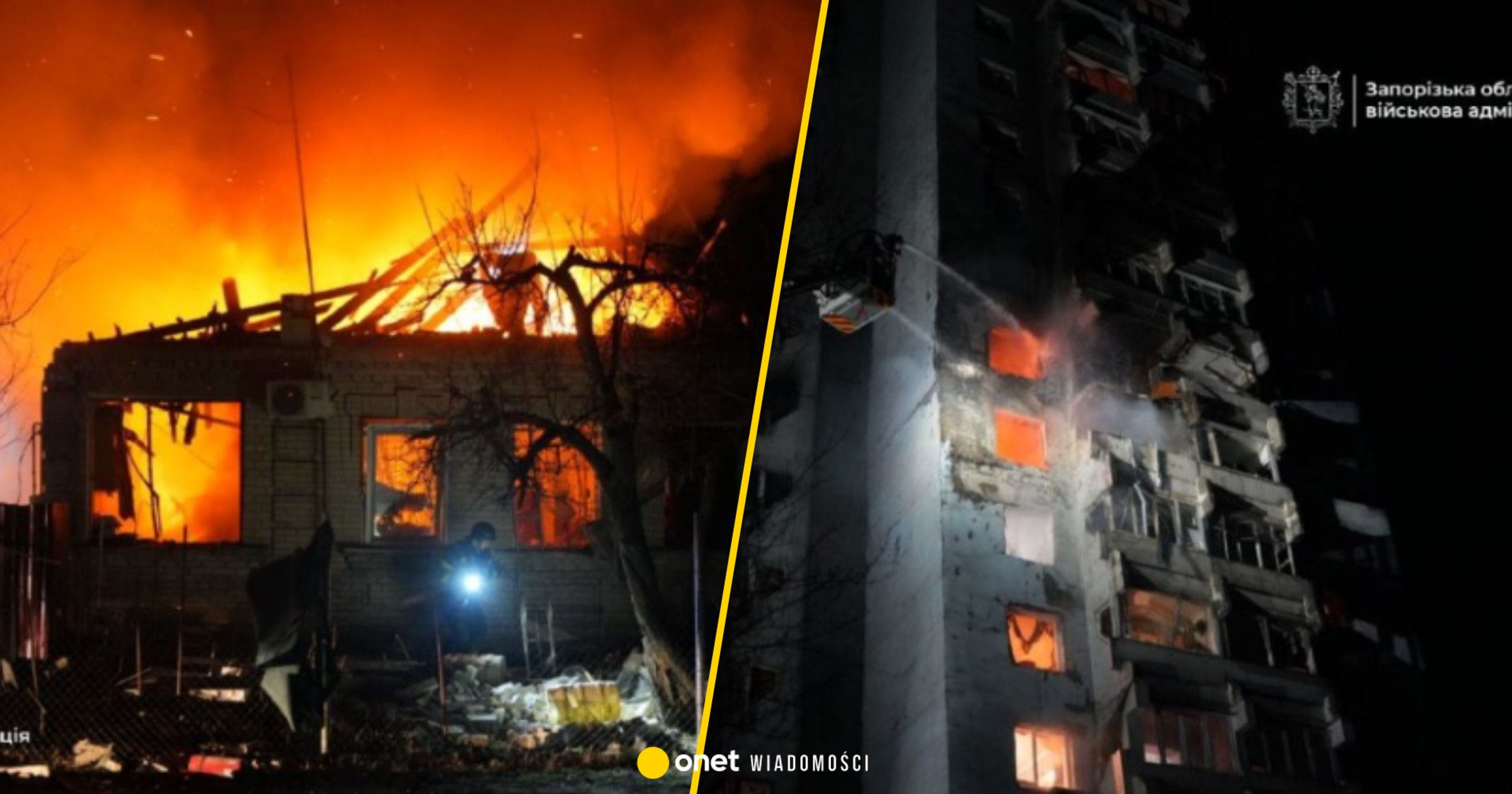
A nightmare for Russia. Ukraine's secret weapon effectively thwarts its plans


Ukraine has limited supplies of anti-aircraft missiles. So it found another way to disrupt Russian drones and missiles and change their course – it created its own Lima electronic warfare system.
One of its creators described to POLITICO how it disrupts the operation of the guidance system of incoming Russian weapons.
Unlike traditional air defense systems that destroy incoming threats by hitting them with missiles, Lima jams and spoofs satellite navigation signals, causing Russian weapons to veer off course. This system is becoming an increasingly important element of Ukraine's air defense architecture as Russia intensifies long-range attacks and Kiev struggles with a constant shortage of expensive interceptor missiles.
If satellite signals are blocked, Russian long-range weapons can continue flying using inertial navigation systems, but their accuracy can vary by about 2 km for every 100 km of distance traveled. This means it is less likely to hit the target.
– When Lima is on, bullet deflection is even greater. In addition to simply disrupting navigation, we use spoofing and changing coordinates by several kilometers. We can make their missiles fall into fields instead of hitting their targets, says Alchemist, creator of Lima and commander of Night Watch, the electronic warfare unit of Ukraine's territorial defense forces. For security reasons, he asked to be identified only by his military nickname.
Part of Lima's appeal is its scope and cost. Unlike many other tactical jammers, Lima can cover large swathes of territory, protecting critical infrastructure. According to Cascade, the production of each unit costs up to UAH 3 million (PLN 247,500), depending on the version. The company estimates that 30 to 100 units are needed to protect a large city – the cost is approximately EUR 5 million (PLN 21.2 million). This is approximately how much one Patriot PAC-3 missile costs.
Startup Cascade Systems has already delivered over 400 Lima devices to the army. It started using them in July 2024, and in October 2025 it extended their use to the protection of civil infrastructure. According to the company's data, Lima devices have disrupted the operation of 20,500 devices over the last 18 months. Shahid drones and misled dozens of ballistic and cruise missiles.
The latest versions of the device can neutralize long-range weapons — including ballistic missiles — that rely on systems such as the Russian GLONASS satellite navigation system, says Maksym Skoretskyy, head of the electronic warfare department of Ukraine's ground forces.
Operation of the Lima system
Lima spoofs satellite navigation signals used by Russian missiles and drones by giving them false coordinates. According to the creators, it was possible to redirect some of the previous Russian attacks in this way – thanks to the system, the incoming missiles received data indicating that they were in Peru. The Lima system may also create a “dead zone” where the Russian drone loses its homing signal.
— When we create a wide enough zone protected by the Lima system, the missile won't even hit the city. We will send him into the open field, says the Alchemist.
The situation with glide bombs is worse – it is more difficult to disrupt their flight because Russia sends them mainly to frontline areas. It is more difficult for Ukraine to create dead signal zones there because it controls only part of these areas. But as Ukrainian engineers found ways to bypass newer Russian anti-jamming antennas, Lima also began to disrupt the flight of glide bombs.
However, relying solely on electronic warfare carries certain risks. Disrupted Russian drones and missiles continue to fall and hit something, causing damage, Skoretskyy says. On the other hand, conventional kinetic air defense systems destroy an incoming missile or drone in mid-air – the resulting debris still hits the ground but causes less damage than an intact weapon whose flight path has been diverted.
— But will Russian ballistic missiles hit their intended target when Lima is on? I would say it's unlikely, adds Skoretskyy.
The never-ending technological battle
The creators claim that the first versions of the Lima system will appear as early as 2022. However, Cascade Systems needed years of experiments and over $2 million. (PLN 7.3 million) of its own funds to overcome the skepticism of the Ukrainian government and senior army commanders. At the end of last year, it started receiving state contracts.
Electronic warfare is a never-ending battle of signals and mathematics. Each time Ukraine develops a stronger system, Russia adapts its weapons and antennas to resist it, including: by updating navigation systems so that drones and missiles can maintain stable satellite connections even during an electronic attack.
In early 2025, Russian forces deployed improved jamming-resistant Komet antennas. These rendered existing Ukrainian electronic warfare systems, including earlier versions of Lima, ineffective.
— Then real life began. We lived in our lab trying to get around the new Russian antennas, says Alchemist.
After three months, engineers developed a new version of the system called Lima Quant. It is designed specifically to defeat modernized Russian defense systems by combining traditional spoofing with new high-frequency signals – all to confuse the Comet.
“We are constantly modifying Lima based on the characteristics of the Russian weapon, analyzing hits, and making recommendations to the general staff on where and how to place it,” Alchemist says. — War is constantly evolving.