How the samsars trick us in the markets: “All the intersections are full of Dăbuleni melons, although in Dolj they are only now being harvested”

“Don't make fun of your own work!” warns a mayor of Dolj to local producers who might resort to illegal practices to reserve good sales spots in big city markets.
The mayor warns producers who sell imported goods PHOTO: FB/Sorin Sandu
The pressure to secure a good place to sell in traditionally profitable markets causes certain producers to “steal the start”, but with disastrous consequences for the field. The mayor of Călărași, Dolj county, a locality from which the first local watermelons leave for the market, draws attention that he will check the certificates and the producer's attestations, in case of complaints, and cancel them. Why? Because, in order to reserve a place in the markets in the west of the country, the practice of selling imported melons under the brand “Dăbuleni melons” was noticed. The practice could have disastrous effects on the thousands of producers who are still waiting to be able to harvest the first Dăbuleni melons, warns the mayor.
“This is exactly what I was talking about the other day, there are producers who, in order to catch tables in the market and not to wait for nothing until their products are cooked, can buy imports, a well-known practice. Now, you will say it is their business. The problem is, it's not just their job. Sanctions are also received by mayors who sign documents that are not in accordance with reality, in the sense that they were released before the harvest was ripe”. mayor Sorin Sandu draws attention.
The aedile goes further and warns that “soon there will be information about the watermelons poisoned by Dăbuleni” and “then you will all scream”.
“They cannot be released or registered on the very day of harvesting, for natural reasons”
Mayor Sorin Sandu, who constantly promotes local producers on his social media account, the Călărași commune being famous for the production of early potatoes, strawberries and the famous Dăbuleni melons, reported on Friday, June 12, that he had been called twice in the last two months, once from Timișoara, and on Thursday, June 11, from Alba Iulia, to check on two producers in the area that there were the suspicion that they would sell goods that do not come from their own farms. This after 6 years in which “I have never been called by any institution to check the situation of any local producer”.
“In the last two weeks I was called twice, once from Timișoara and it was a producer from Sadova, with a certificate from Sadova, and yesterday I was called by an inspector from the Alba Agricultural Directorate, who sent me photos of the watermelons and the documents of a producer from Bechet, with certificates from Dobrești and Călărași, who sells in Alba Iulia.
I checked and the producer from Bechet has a leased area in Călărași. So far so good. The problem is that it is suspected that the watermelons are imported, having dry tails and the specific appearance of a melon harvested for a longer time. mentions the mayor.
Sorin Sandu further explains that, given the large number of producers in the locality, but also the diversity of the products, the documents on the basis of which the farmers can capitalize on their goods are issued before the ripening of certain vegetables. At the level of the locality, there are approximately 1,200 farmers who request such documents, and they do not only produce melons, but produce watermelons, cantaloupes, potatoes, sweet corn, peppers, green beans, etc. “They cannot be issued or registered on the very day of harvesting for natural reasons, which are that, in principle, most producers come out with the products in the same time frame, a few days. In addition, each crop is also checked by inspectors from the Dolj Agricultural Directorate, an aspect that requires the organization of the attestation activity a few days before harvesting. It is based on the good faith of the producer”explains the mayor.
It's just that it may happen that not all producers are in good faith, and for these few, the mayor warns that if he receives reports from the country that will be confirmed in the field ( “in the sense that he hasn't harvested yet and yet he sells that product”) will withdraw the manufacturer's attestation and certificate from them.
“First of all, it constitutes tax evasion and we are not sharing the money together. Even worse, they sell watermelons with pesticides, imported, jeopardizing the sale of local products and risking a possible quarantine of the land, just because our producer sells imported products under the cover of the producer card, in which the land is explicitly indicated”, mayor Sorin Sandu also explains.
“Curse me in your mind, otherwise I'll come to where you divide the TIRs with Greece”
The biggest risk is not the individual risk, the mayor draws attention, but that the evil will fall on the serious producers, who are the majority and who are already worried that the price for watermelon will be low, because the ripening is much delayed due to the cold spring, and Romania has been importing melons for over a month.
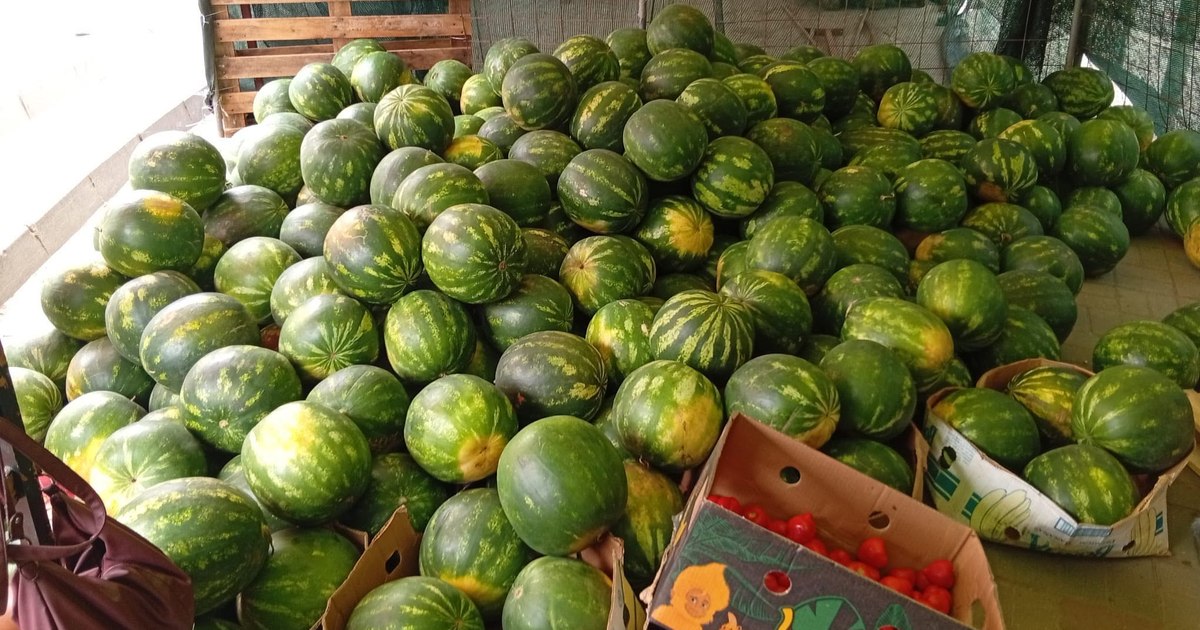
“Many will curse me. Your business, you are making fun of your own work. Those of you who do this are under 1% of the import market, but you provide cover for the other 99% of the samsars who sell in Romania. After that we all complain that it doesn't work, that local products are not sold. How can it be sold if you sell the filth from the outside first? You steal your own hat and we complain about not getting seats in the markets. Well, how can we catch it if all the markets, all the parking lots, all the intersections, are full, for more than a month, of imported Dăbuleni melons? Unfortunately, in vain I will give them the certificates three days before the harvest or five. There will always be others to give them or solutions will be found”added the mayor.
A Romanian turned agriculture into a successful business with an exotic culture. It sold the production both in Romania and in EU countries
The mayor explains, on the other hand, why the producer resorted, if it turns out that this is what happened, to selling some melons taken from the store.
“Some manufacturers may say that the local authorities in the respective cities may have an interest in
What they are and how to obtain the manufacturer's certificate and the marketing card
The old manufacturer's certificate was replaced by the manufacturer's certificate and the sales card, two documents issued according to the provisions of law no. 14/2014, based on which vegetable and fruit producers can capitalize on their goods.
The documents are issued by the town hall within whose territorial radius the agricultural land or holding is located. The owner of the farm submits to the town hall a model application accompanied by a series of documents: copy of identity card for the holder and the members of the household (husband/wife, first degree relatives) who will sell products; certificate from the Agricultural Register proving the land areas owned; the advisory opinion issued by a professional associative structure recognized by the Ministry of Agriculture and Rural Development (MADR) or the County Agricultural Directorate.
The documents are issued after an on-site check is carried out by the members of a commission appointed by the mayor's order. The commission verifies the actual existence of the cultures for which the certificate was requested and draws up a report to certify the declared data. Only after completing these steps is the manufacturer's certificate issued, within a maximum of 5 working days from the on-site verification.
The commercialization book is issued simultaneously or after the certificate, also within 5 days, this being the document used as a receipt/invoice at the time of selling the products.
The manufacturer's certificate is valid for one calendar year after issuance.
The Dolj Agricultural Directorate sent its inspectors to control the town halls
The control that the mayor mentioned, in the warning given to producers, that is liable is exercised by the County Agricultural Directorate (DAJ).
DAJ Dolj is conducting checks in the field right now, confirmed for “Adevărul”, the director of DAJ Dolj, Romulus Agapie. The representatives of the Ministry of Agriculture and Rural Development can check whether the town halls comply with the law when issuing the documents and can apply, in the case of violations, contraventional sanctions to the town hall or the mayor.
Following the controls that the DAJ can do in markets, fairs and other places of sale, either in mixed teams or own controls, producers are also subject to control, in which case the agreement between the products displayed on the stall and those entered in the manufacturer's certificate is monitored, as well as the up-to-date completion of the tabs in the sales book. Producers may also be fined for selling products other than those from their own production or for lack of valid documents. The producers also sign a declaration on their own responsibility, which they attach to the request for the issuance of the certificate, assuming that the declared products, productions and quantities are obtained in their own household.
The last big profit opportunity for farmers. Consumers, surprised by the abundance on Harvest Day. “Look, melons like summer” | REPORT
“They go to the territory and check. There were even reports from Cluj and Botoșani, from which it appears that certain farmers in our area, who really had producer certificates and sales cards, were monitored and filmed when, instead of coming to pick up the goods from the areas they had in the territory, they considered it easier to buy from the supermarket and sell in that area, because the transport costs were much higher than they would have obtained by selling products brought from the farm. Last year there were complaints. And my colleagues were in the territory, they saw the surfaces, they existed, there was production, only they found an easier option”stated director Romulus Agapie.
It even happens that farmers let their own production depreciate, in periods when the price drops a lot and by selling they do not cover their marketing costs, Agapie also specified.
“We also had a meeting at the County Council level, with the mayor of Călărași, with the mayor of Sadova, with the mayor of Bechet, vis-à-vis this situation, especially since you leave and are stopped in traffic, and then you have to present documents for the valorization of the goods. The best solution would be those cooperatives, association in cooperatives or groups of producers, where they are also protected and where they also have benefits regarding allocations of funds from the Ministry of Agriculture and also tax exemptions”, DAJ director Dolj also indicated.