The International Labor Day celebrates the workers' struggle to reduce the daily working norm at 8 hours. On May 1, Ion Popescu-Gopo, the well-known Romanian designer and cartoonist, as well as the famous actress Maia Morgenstern, were born.
Labor Day
1359: The Metropolitan of the Romanian Country is recognized, based at Curtea de Argeș
History teacher Constantin Vasilescu explains at one point that the merit of recognizing the metropolis of the Romanian Country is due to the son of Basarab I, Nicolae Alexandru, who reigned for 12 years, between 1352 and 1364.
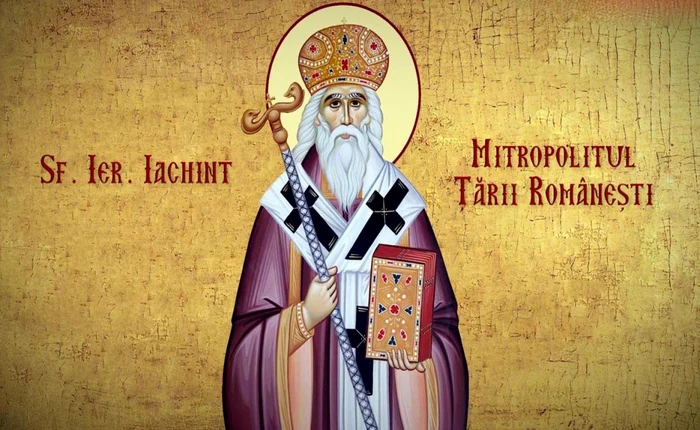
Saint Iachint, the first metropolitan of the Romanian Country Photo: ziarullumina.ro
After months of efforts, on May 1, 1359, the Constantinopolitan Synod, the Patriarch Calist and the Byzantine emperor V approved the request of the voivode Nicolae Alexandru Basarab, calling Iachint “Legitor shepherd of all Ungrovlahia with the rank of pre -established metropolitan, to the blessing and spiritual correction of the ruler, his children and his whole lord ”.
Metropolitan Iachint will enjoy a long and fruitful rule for 13 years, until 1372.
1889: May 1 becomes International Labor Day
Nowadays, May 1, the International Labor Day, is rather an opportunity for relaxation, but the origin of this day is much deeper.
Until the end of the 19th century, the workers used to work 10 or 12 hours a day, at the patron signs, with chenzines and miserable living conditions. If they were missing from work, whether they were tired, or they were sick, they were not paid for the missing days or they risk being fired.
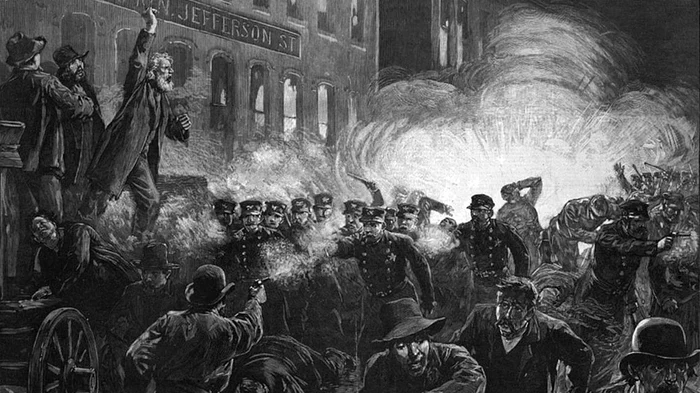
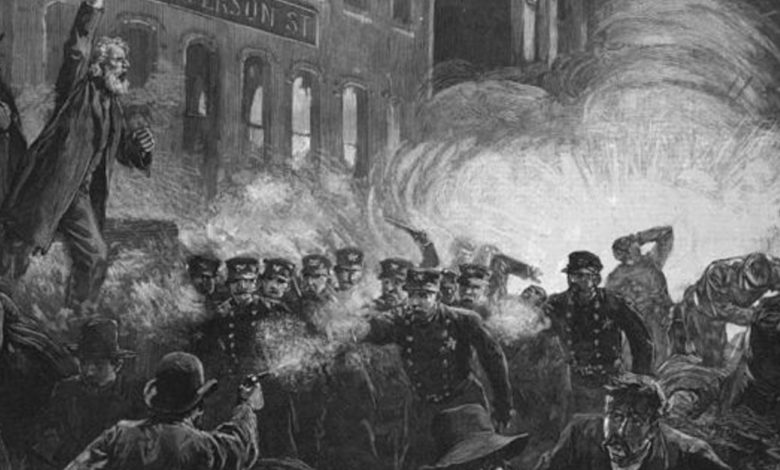
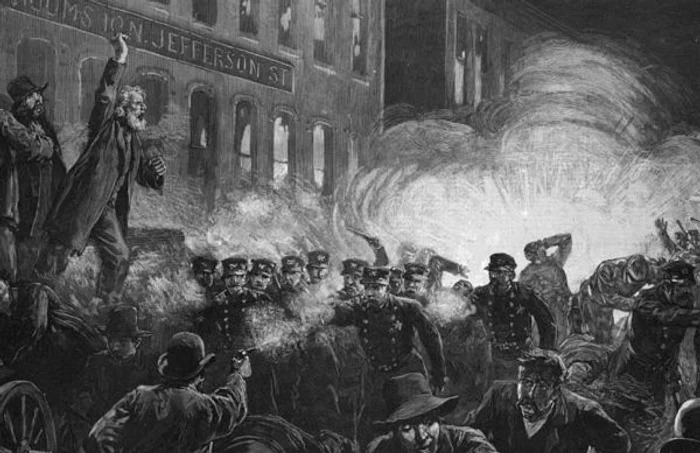
Haymarket Square, May 1886/Photo: Wikipedia
In 1886, George Edoston, the one who founded among the first unions of the workers, organized a meeting between the federations of Canada and the US, in order to obtain, the normal time of 8 hours per day, work, but also days of rest for workers, paid by employers.
The employers totally rejected the proposal, which caused the workers to go out, with hundreds of thousands.
On May 1, 1886, in Chicago, over 90,000 workers demonstrated in the street, demanding a normally eight -hour program.
Another 40,000 workers went on strike. Consequently, part of the employers agreed with this workers' wishes. Tens of thousands of workers, however, remained to protest to improve working conditions and to normalize working time.
On May 4, in Chicago, in Haymarket Square, on a torrential rain, out of the 20,000 protesters, there were only 2,500. At that moment the police intervened in force. A dynamite bomb exploded in the market. It is not known today who threw it away. It is certain that law enforcement has begun to blindly.
The International Labor Day, established on May 1, was officially recognized at the second Congress of the Communist International in 1891.
In Romania, May 1 was first celebrated in 1890, during the reign of Carol I, writes Historia.
Labor Day was intensely celebrated in the years of Romanian communism, although the origin of this international day was in the USA. The Communists did not admit that the Americans were at the origin of the day of work, but invented a fanciful theory of the origin of May 1.
1923: Ion Popescu-Gopo is born, the well-known Romanian cartoonist and cartoonist
Born on May 1, 1923, in Bucharest, Ion Popescu-Gopo remained in history for his creation, “Gopo's man”, a cartoon character who revolutionized the Romanian world of animation, and who became famous to Cannes, from where he brought Romania Palme d'Or.
Through the character he created, Gopo gave life, on the screens, to all the worries of his contemporary world, according to Rador.
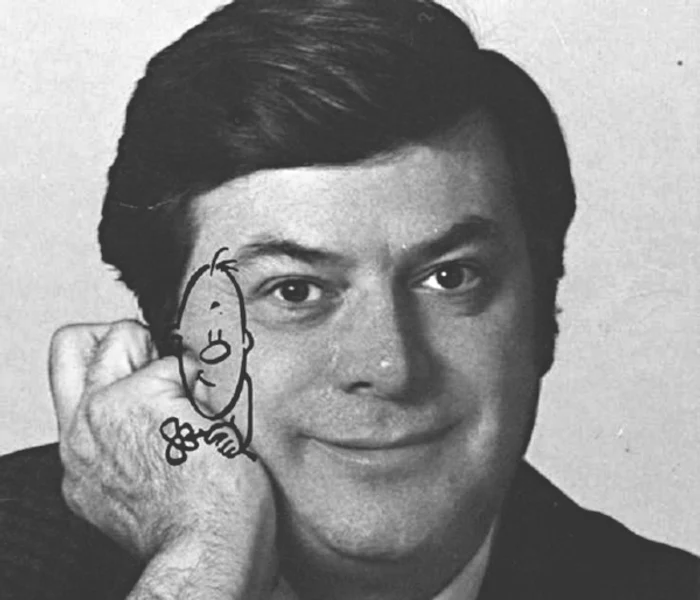
Photo: Ion Popescu-Gopo
At 16, Gopo published caricatures, as well as the pioneers of the Romanian animation Aurel Petrescu and Marin Iorda, and in the film, with a very short film, entitled “Loboda”.
Later, he was admitted to the Academy of Arts in Bucharest, which he later abandoned. However, he attended animation courses in Moscow.
He continued to collaborate with drawings, cartoons and comics in several publications with a humorous profile, then followed a period when he advocated to create an animation section within the National Cinematography Office.
He continued with trials in the animation film, in the 1940s, at the National Cinematographic Office.
In 1949, the official debut in animation is recorded, along with his father and Matty Aslan, with the short film “Puguța with two money”. Of course, the first Romanian cartoons were zoomorphic, being educational fables in the spirit of those times.
In 1951, Gopo produced the cartoon “the disobedient duck”, and in the following period he directed the cartoon films “Albina and Porumbel” – 1951, “Two Rabbits” – 1952, “Marinic” – 1953, “A money fly” – 1954, “Marinică's screw”
On November 29, 1989, Gopo died in Bucharest, following a heart attack, at the age of 66.
In 2007, in his honor and at the 50th anniversary of him since he obtained the Palme D'Or prize at the Cannes Film Festival.
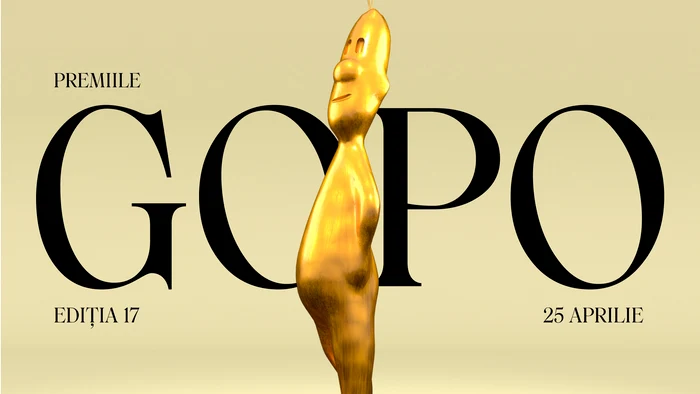
Gopo awards
The association for promoting the Romanian film has set up the GOPO awards, which reward the best performances in the Romanian film industry, and the trophy is shaped like Gopo's little man, an ingenious sculpture made by Adrian Ilfoveanu.
1962: Maia Morgenstern, the famous Romanian actress, is born
On May 1, 1962, in Bucharest, the great actress Maia Morgenstern was born, especially known for the role of Jesus's mother from “Passions of Christ”, for the roles played in films such as “Balance”, “The most beloved of the earth”, “the blue angel” or “Park Your Car in Harvard Yard”.
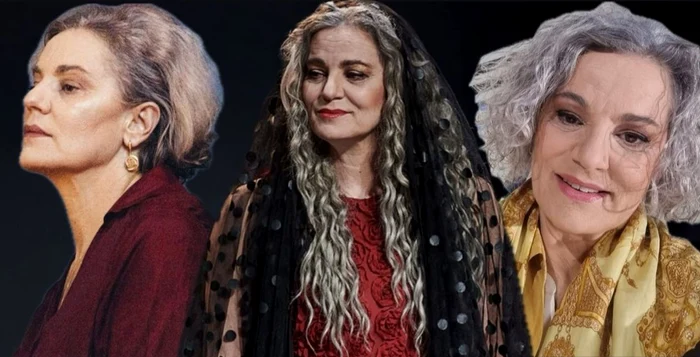
Maia Morgenstern/Photo: Facebook photo collage
This province of a family of Jews passionate about theater.
According to Rador, her name, Morgenstern, means in German “Luceafarul in the morning”, name given to the Virgin Mary, precisely the character she interpreted, over the years, in the film of Mel Gibson, “Passions of Christ”.
His career began with a “failure”, as he confessed: he failed the admission exam in the theater and cinematic art. However, he made his debut in the theater in 1980, and learned an idiot from roles. He played in magazine shows at the Jewish State Theater, being employed as a “whole body”.
He played at the Youth Theater in Piatra Neamt until 1988. He then appeared on the stage of the Jewish State Theater in Bucharest, after which he joined the band from the National Theater “Ion Luca Caragiale”.
In 2004, the talent of the actress was honored by international criticism, after the exceptional interpretation in the film “Passions of Christ” (directed by Mel Gibson), where the role of Mary played. Maia Morgenstern has been married twice. He has three children: Tudor Aaron Istodor, in turn actor, Eva Lea Cabiria and Ana Isadora.
2004: Ten countries to the European Union
On May 1, 2004, ten countries were officially adhered to the European Union, being Cyprus, Estonia, Latvia, Lithuania, Malta, Poland, Czech Republic, Slovakia, Slovenia and Hungary.
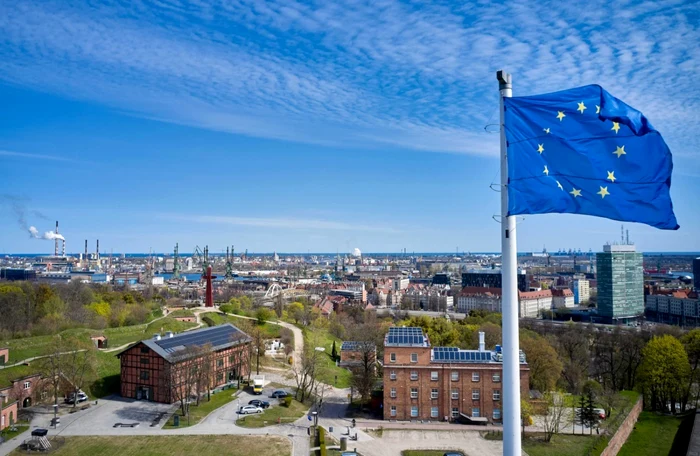
Photo: EPA-EFE
This extension is also known below the “Big Bang” jargon, given that the number of EU states has increased from 15 to 25, according to DW.
“Here are ten Member States, some of whom did not exist twelve years ago,” Juncker, former European Commission, in Paris, on February 26, 2004 announced.
The decision to receive ten countries at the same time was taken at the Copenhagen European Council on December 12 and 13, 2002 and, with this, the negotiations were concluded, according to the Robert Schuman Foundation.
2006: Ion Gavrilă Ogoranu, anti -communist fighter, extinguishes from life
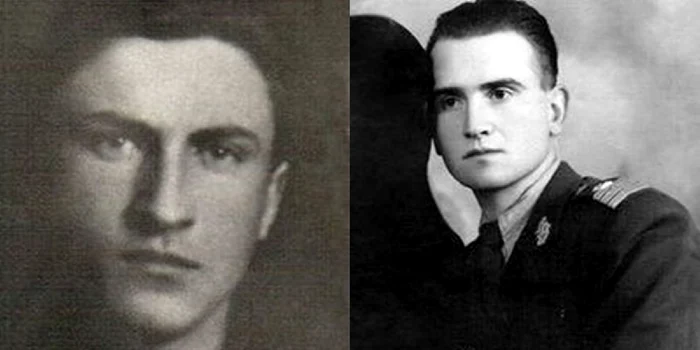
In 1923, Ion Gavrilă Ogoranu was born, in a family of Romanians with three children, in Făgărașului.
Ion Gavrilă Ogoranu/Photo: Archive
He was employed as an anti -communist fighter in the faculty, in Cluj. For his activity he was convicted, in accordance, to death. For 29 years, the security organs could not capture it.
He was caught in 1976, but was saved from the execution with the help of his wife Ana Gavrilă Ogoranu, when she asked in writing the direct intervention of US President Richard Nixon.
His group of 12 young people, most of the students or college graduates, resisted with the weapon in their hand in the Fagaras Mountains, under extremely difficult conditions.
Because he failed to annihilate the resistance groups in the mountains, the Security created a clandestine organization for annihilating the supporters. Its members infiltrated among the fighters, but they ended tragically. Such a fate had Nicolae Anghel and Ioan Vrabie, who became “heroes in the struggle with the enemies of our socialist order. “
On May 4, 2006, Ogoranu was buried in the Galtiu village cemetery in Sântimbru commune, Alba county.
2011: Pope John Paul II is drunk at the Vatican
Beatification represents the process by which a deceased person passes into the category of happy church, on a lower step of the saints.
Pope John Paul II was the first Polish Pontiff/Photo: Archive
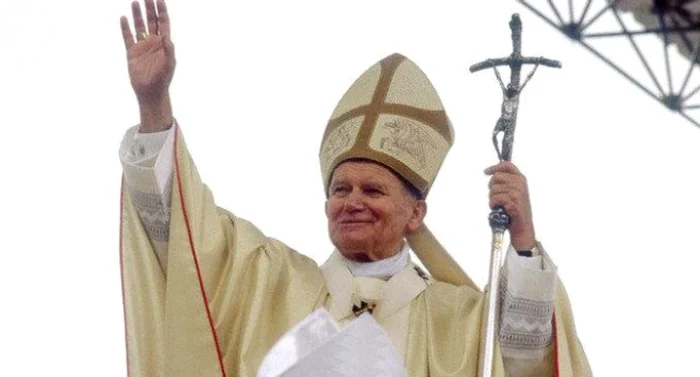
John Paul II, born on May 18, 1920, in Wadowice, Poland, was the 264th pope of the Catholic Church, but also the first of origin than the Italian one from Pope Adrian VI, that is, from 1522.
He advocated that no one for the reconciliation between the Surround, Catholic and Orthodox Churches, being the first pope in history to visited an Orthodox country, Romania, but also the first pontiff who arrived in Israel and visited a synagogue, but also a mosque, according to Radio Romania Cultural.
Regarding its links with Romania, it should be specified that since 1996 it has supported the inauguration, in the Sixtin salon, of the exhibition “Monumenta Romania Vaticana” (Romanian testimonies from the Vatican), an exhibition cared for by Professor Ion Dumitriu-Snagov, an opportunity to return to memory of the two millennia.
At 85, on April 2, 2005, John Paul II died from a septicemia and irreversible cardiopulmonary collapse, aggravated by the Parkinson's disease.
Pope John Paul II was drunk on May 1, 2011 in the “St. Peter” Square in Rome. The Beatification service was chaired by Pope Benedict XVI. His passage among the saints was officiated by Pope Francis on April 27, 2014.