Ship traffic in the Strait of Hormuz is expected to return to previous levels. There are controversial points

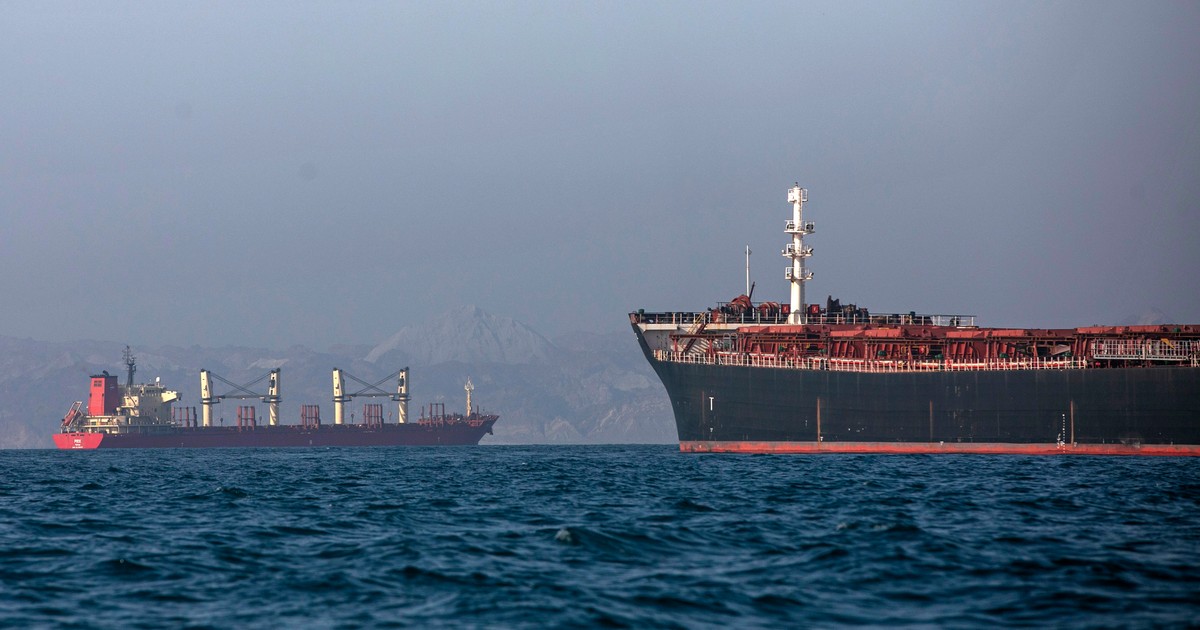
The Tasnim agency, quoted by Reuters, reported on Sunday that one of the elements of the agreement is to restore the number of tankers passing through the Strait of Hormuz to the pre-war level. Before the start of military operations, this waterway, used by, among others, oil and natural gas exporters from the Persian Gulf, up to 150 ships a day crossed. The agency also informs that “conditions in the strait will not return to pre-war conditions” and Iran will “mark its sovereignty” in the context of Hormuz in various ways, which it will announce in the future.
See also: What's happening in Iran? Trump talks about the agreement, Tehran denies
Iran demands the lifting of the US blockade in the Strait of Hormuz
Tasnim's information does not indicate what the purpose of marking Iran's sovereignty in the strait would be. As Reuters notes, before the war, the Strait of Hormuz functioned as international waters. All vessels could pass through it freely and free of charge.
On Saturday, US President Donald Trump announced that the Iran agreement had been “largely” negotiated. It is to be announced soon, and one of its consequences will be the opening of the Strait of Hormuz, blocked by Iran at the turn of February and March. The content of the agreement has not been published yet. Tasnim said there were still “one or two” points of contention, Reuters reported.
Iran demands, among other things, that the US blockade of Iranian ports be completely lifted within 30 days, and threatens that otherwise “there will be no changes” in the strait. The agency added that it would also be crucial for the US to implement other obligations, but did not provide details.
See also: A breakthrough between the US and Iran? Marco Rubio spoke out. “Maybe today”
Within the first 30 days after the possible conclusion of the agreement, procedures related to passages through the strait are to be defined and its blockade is to be ended. At the same time, talks on Tehran's nuclear program are to begin, for which 60 days have been allocated. The information provided by the Iranian agency also shows that part of Tehran's funds frozen abroad must be released in the first phase of the agreement.
A senior Iranian official told Reuters on Sunday that Tehran had not agreed to hand over its stockpile of highly enriched uranium. The Iranian nuclear program was not the subject of the preliminary agreement with the US, this issue will be raised in the negotiations on the final agreement, the source said.
One of the U.S. declared goals of the war, which began with the U.S.-Israeli attacks on Iran on February 28, was to prevent Tehran from constructing nuclear weapons. Iran assures that its nuclear program is purely peaceful, but it has enriched uranium to a level of 60 percent, many times exceeding the needs for civilian applications, most of which do not exceed 5 percent.