The President of the Czech Republic urges NATO to “show its fangs” in front of Russia: “I asked them why they provoke us”

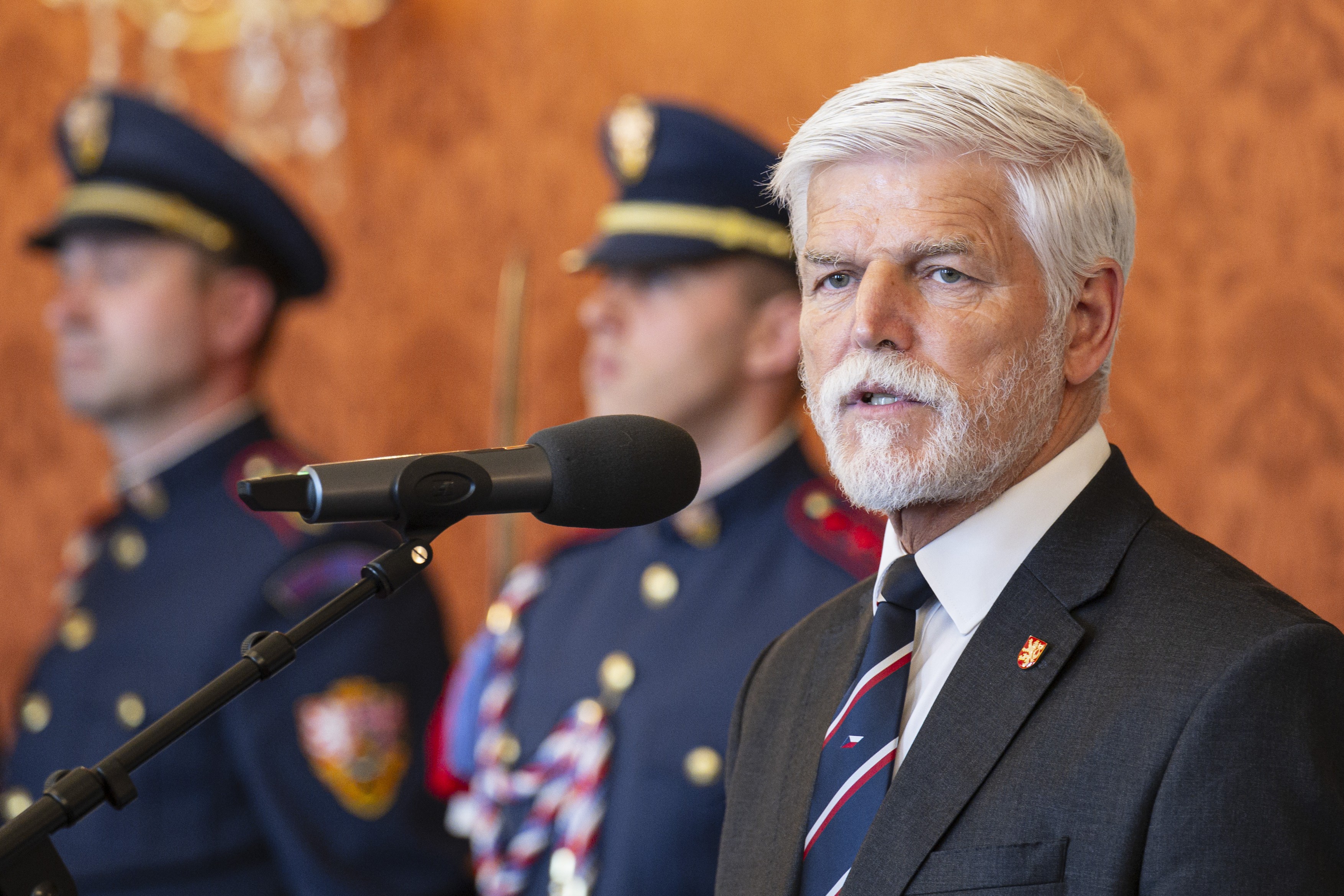
The president of the Czech Republic, Petr Pavel, has suggested to NATO a series of measures against Russia, including stopping access to the Internet, in response to repeated tests of the determination of the alliance by Moscow on the eastern flank, The Guardian reports.
Pavel, in a statement given to The Guardian in Prague, called for answers “decisive enough, possibly even asymmetric” to counter Moscow's provocative behavior towards the alliance, warning that, otherwise, the Kremlin will intensify its actions.
A retired general and former president of the NATO Military Committee, Pavel's military experience is rare among European leaders.
The years spent in dialogue with Moscow within the currently suspended NATO-Russia Council have turned him into an influential voice regarding the future of the alliance and the threats it faces, notes The Guardian.
The Czech president expressed his frustration at the “lack of determination of the United States to continue pressuring Russia”, although he avoided direct criticism of Donald Trump.
Previously, Pavel told the Czech press that “Trump has done more to undermine NATO's credibility in the last few weeks than Vladimir Putin has done in many years.”
He dodged questions about that comment, saying he didn't think “any direct criticism of the United States would help at this point.”
Instead, he focused on the need to get NATO member states to take a firm stance toward Russia.
“Challenges at the Limit of Article 5”
After the annexation of Crimea from Ukraine in 2014, he said Moscow learned how NATO works and “developed a style of behavior almost reaching the threshold of Article 5, but always keeping it slightly below that level.”
Article 5 of the NATO Treaty states that an armed attack against one member is considered an attack against all members.
Pavel said that Russian military leaders sometimes laughed at the decision-making deadlock within the alliance.
“When I asked them why they do these provocative actions in the air, dangerous approach or overflights of warships in the Black Sea or the Baltic Sea, their answer was: 'Because we can'. This is exactly the kind of behavior we have allowed,” he said.
A NATO fighter jet shot down a drone over Estonia this week, and similar incidents have disrupted daily life in Latvia and Lithuania. In most cases, it is believed that the drones were Ukrainian devices aimed at Russia, but which were jammed and redirected to NATO territory by electronic warfare, according to The Guardian.
“After the annexation of Crimea, we discussed many times the possibility of continued aggression, but my biggest fear was not an open military aggression against a NATO country, but rather a provocation under the threshold of Article 5,” the Czech president said.
If some European leaders “always prefer a diplomatic solution, even if the Russians show no readiness for such a thing,” NATO risks being divided and unable to act, he warned.
“Russia, unfortunately, does not understand the language of kindness. It mainly understands the language of force, ideally accompanied by action… if the violations of NATO airspace continue, we will have to make a decision to shoot down either an unmanned aircraft or a manned one”, concluded the Czech president.
Proposed measures against Russia
Pavel said that the alliance should also consider “asymmetric” measures, which “do not kill people, but are sensitive enough to make Russia understand that this is not the way it should go.”
“For example, shutting down the internet or satellites – you've seen the difference Starlink made on the battlefield – or disconnecting Russian banks from the financial system,” explained Petr Pavel.