Official US time was behind due to a power outage. A small delay, but with important consequences

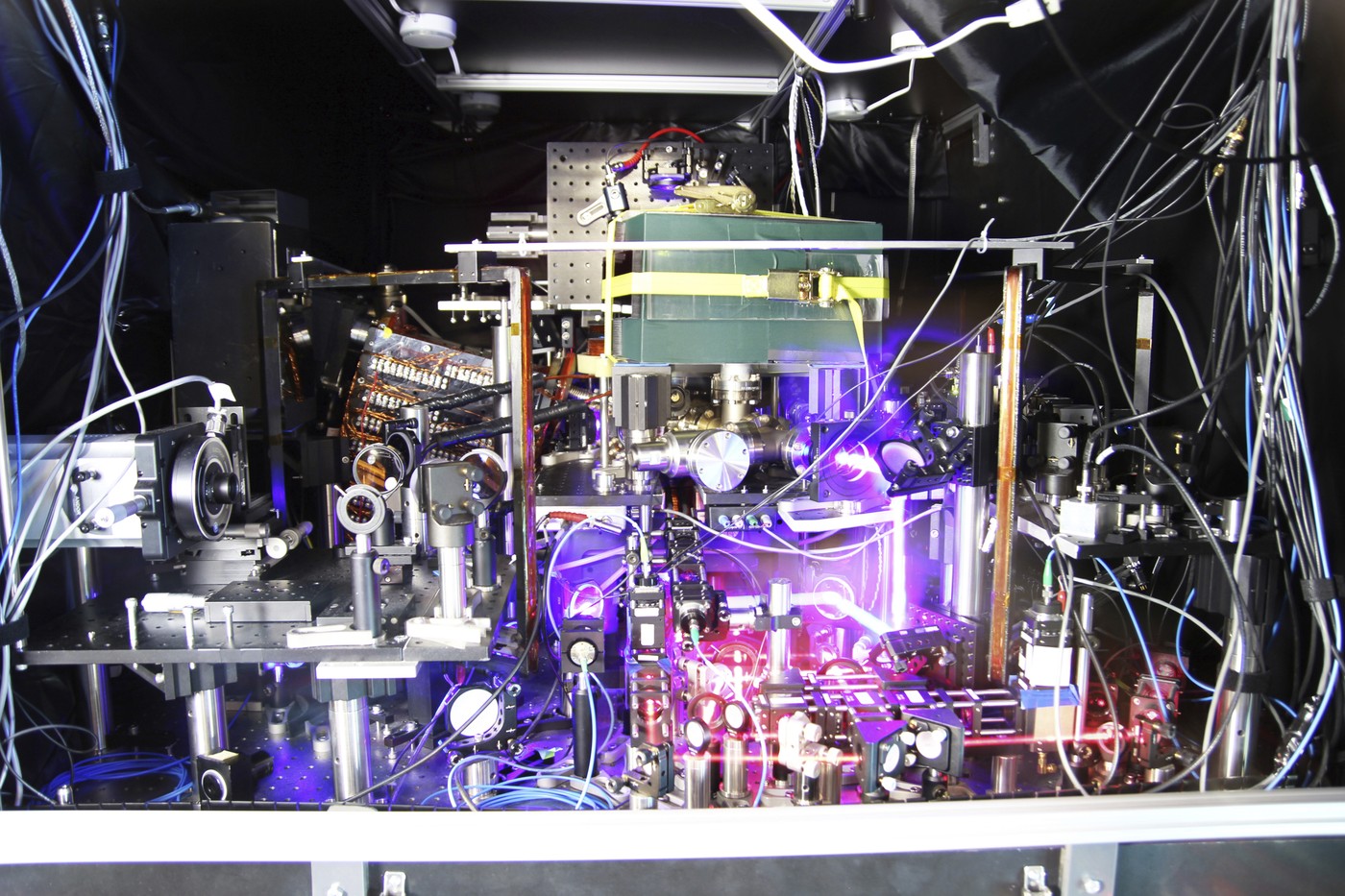
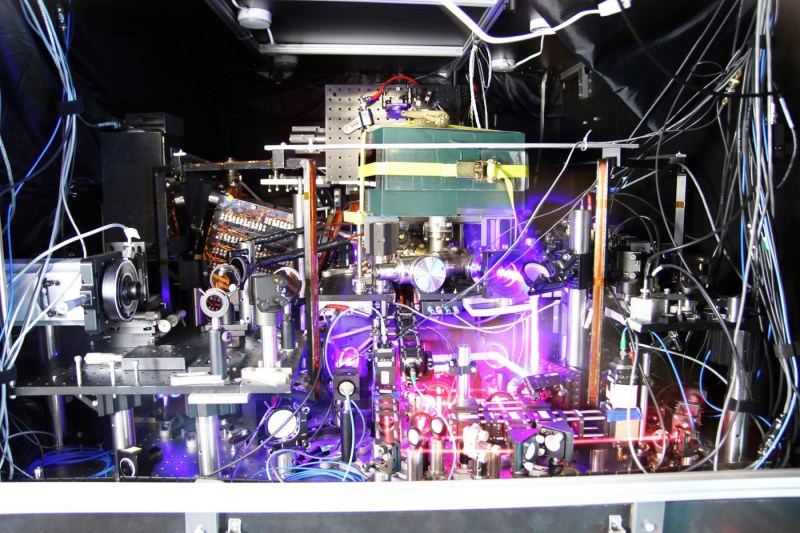
Atomic clock with strontium at the institute in Boulder Photo: Ye group and Baxley/JILA/NATIONAL INSTITUTE OF STANDARDS AND TECHNOLOGY / Sciencephoto / Profimedia
A strong storm that hit the American state of Colorado last week cut off the power supply to more than a dozen atomic clocks responsible for maintaining the official time of the United States, causing a delay in the national time standard by 4.8 microseconds, American media reported on Monday, informs Xinhua, taken by Agerpres.
Gizmodo.com, an American technology, science and sci-fi website, cited an email sent on December 19 by physicist Jeffrey Sherman, a supervisor at the US National Institute of Standards and Technology (NIST), which stated that the atomic time scale at NIST's Boulder campus failed on Wednesday due to a power outage.
According to a report by National Public Radio (NPR), since 2007, official time in the United States is set by the Secretary of Commerce, who oversees NIST, in coordination with the United States Navy. The national time standard, known as NIST UTC, is currently calculated based on a weighted average of measurements provided by 16 atomic clocks located on the Boulder campus.
Atomic clocks, including hydrogen masers and cesium beam clocks, rely on the natural resonant frequencies of atoms to measure time with extremely high precision. NIST's standard time serves as a reference for critical systems such as telecommunications networks and GPS signals.
“The agency has backup generators in case the local grid goes down due to, say, an unfortunate weather incident. But there was no backup generator for the backup generator when a severe storm knocked out power in Boulder last Wednesday,” Gizmodo.com reported.
Jeffrey Sherman revealed that during last week's massive outage, a failure of one of the key generators caused some clocks to lose connection to NIST's measurement and distribution systems.
This outage resulted in NIST UTC being 4.8 microseconds behind real time, said NIST spokeswoman Rebecca Jacobson, who explained that it takes a person about 350,000 microseconds (0.35 seconds) to blink.
As for the impact of the 4.8 microsecond deviation, Jeffrey Sherman told NPR that the effect depends on the user. Although the deviation would likely be imperceptible to the public, he said it could have more serious consequences for applications involving critical infrastructure, telecommunications, GPS signals and others.
On Sunday, power was restored to the NIST facility in Boulder, and assessment and repair work is underway, according to US media reports.