Top US commander in Middle East calls for more anti-bunker bombs: 'Everyone is hiding underground'

The US military commander in charge of operations in the Middle East said the United States needs more weapons capable of destroying targets deep underground, warning that Washington's adversaries are increasingly moving their strategic infrastructure to underground complexes.
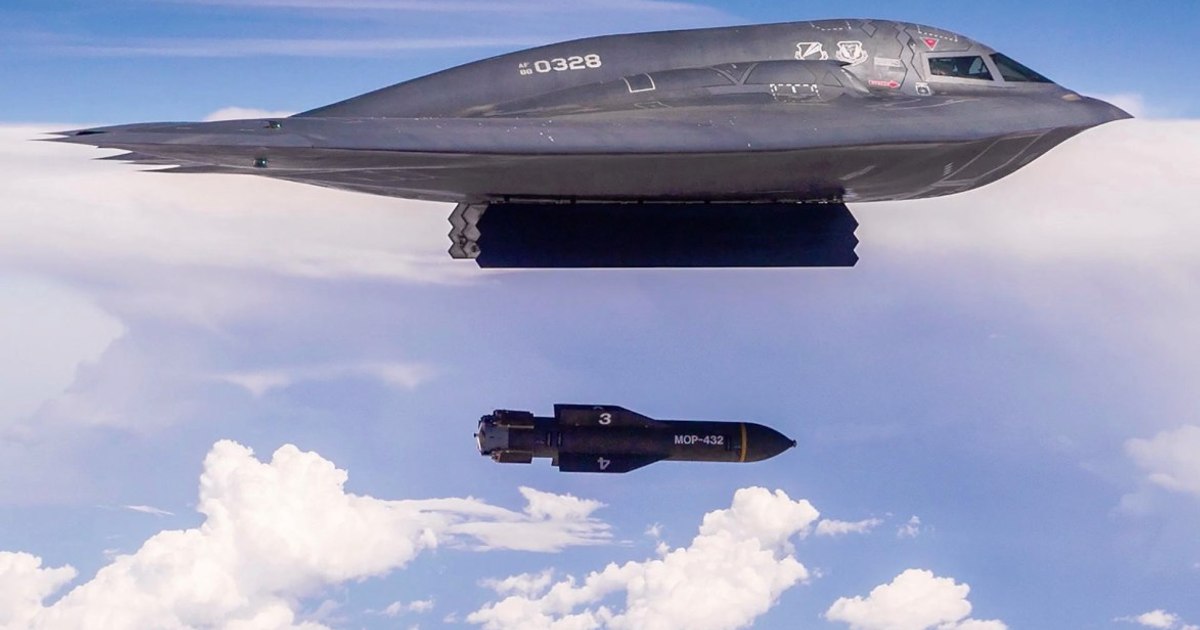
Bombardier B 2 launching an anti-bunker bomb/PHOTO: Archive
Admiral Brad Cooper, head of US Central Command, made the remarks during a hearing Tuesday before the House Armed Services Committee.
“Everybody is going underground,” Cooper said, explaining that the U.S. military needs additional investment in weapons and technology to identify and destroy fortified and deeply buried targets.
According to the US official, his priorities include strengthening electronic warfare capabilities, developing anti-drone systems and expanding the arsenal aimed at striking underground facilities.
The statements come after the United States last year used the GBU-57 Massive Ordnance Penetrator anti-bunker bomb for the first time in combat during Operation Midnight Hammer against Iranian nuclear facilities.
As part of the attack, US bombers hit nuclear sites at Fordow, Natanz and Isfahan.
A total of 14 GBU-57 bombs were dropped on Iranian targets. These munitions are among the most powerful conventional weapons in the US arsenal, each weighing approximately 13.6 tons.
The bomb was designed to penetrate up to about 60 meters underground before detonation, depending on the structure of the material struck, including reinforced concrete or other fortifications.
The GBU-57 can be carried exclusively by the B-2 Spirit strategic bomber, which can carry two such weapons in the internal compartment. Its successor, the B-21 Raider, is designed to carry a single bomb of this type.
The US Air Force has begun development of a new generation of anti-tank weapons
After the attacks on Iran, the US Air Force began the development of a new generation of anti-bunker weapons, called the “Next Generation Penetrator”. The contract for the prototype was awarded to Applied Research Associates, while Boeing will develop the guidance and stabilization components.
Full technical details have not been released, but the US Air Force required the new weapon to weigh under 22,000 pounds, have high accuracy and the ability to operate even in environments where the GPS signal is blocked.
During the hearing, Cooper also defended the results of Operation Epic Fury against Iran, saying it significantly reduced Iran's missile, drone, and naval and industrial defense infrastructure.
But US lawmakers have raised questions about the operation's long-term goals and regional consequences, including the fragility of the truce and lingering blockages in the Strait of Hormuz, a key route for global oil shipping.
Earlier in the week, Donald Trump said he was “an hour away” from authorizing further strikes on Iran, but backed off because of progress in negotiations.
For its part, Iran warned on Wednesday that renewed attacks by the US and Israel could trigger a conflict “beyond the region”.