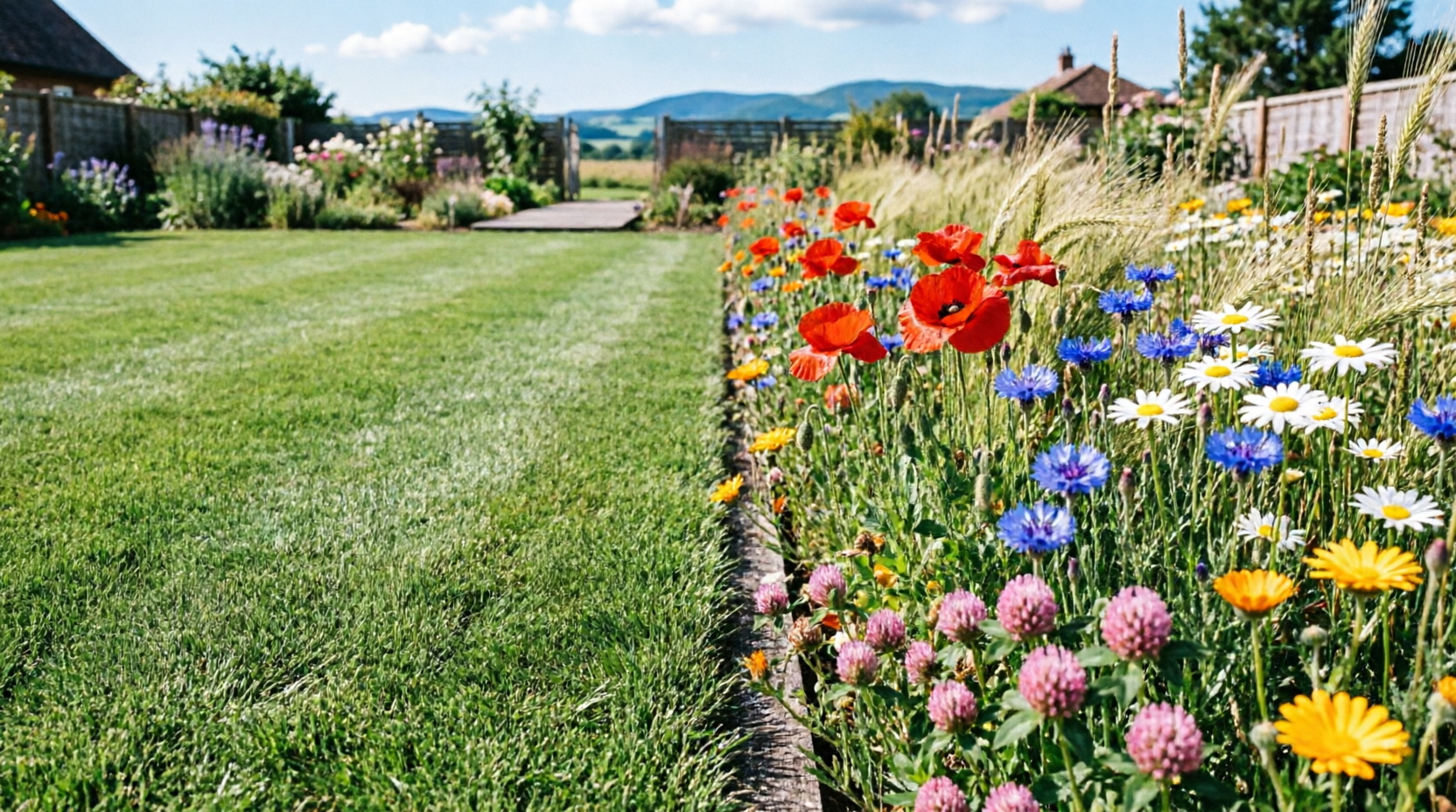
Moorish lawn is an area that is planted with cereal grasses and herbaceous plants that bloom until November. The author of the Procvetok project, Tatyana Kalinovskaya, spoke about its advantages and planting features.
Benefits of Moorish lawn
Firstly, it is beautiful and unusual. Such a lawn is a real motley mixture of cereals and flowering plants. They grow brightly, chaotically and at the same time attractive in their entirety.
Secondly, it is convenient and practical. You can prepare a lawn mixture with your own hands or buy a ready-made one, which contains all the basic grasses in ideal proportions, so you definitely won’t encounter voids and bald spots.
Thirdly, the Moorish lawn is a real bait for bees and butterflies. Biodiversity will improve pollination of all horticultural crops on the site.
How to choose a place
A suitable place is well lit. Since such a lawn only needs to be mowed once a season (at the end of September – so that the ripened seeds get into the soil and germinate next year), it grows chaotically. This means that it is better to set aside a small area for it – for example, next to the house or between fruit trees.
Also, such a lawn looks great on slopes, in tree trunks and in accent areas in the garden.
Important: the Moorish lawn is quickly trampled. It is not advisable to sow seeds in areas where you often walk or, for example, where your children play football.
How to make a Moorish lawn
The composition consists of 80% cereals and 20% flowering plants. But if you want to add more colors, then you can settle on a ratio of 70% and 30%.
For cereals, use bluegrass, fescue, fine bentgrass, ryegrass, and timothy. For flowering plants, hazel grouse, crocuses, tulips, daffodils, daisies, carnations, cornflowers, chrysanthemums, popovniks are suitable. The total number of plants per mixture is at least 10.
The optimal time for sowing is late spring or autumn. For 1 square meter you will need 10 g of seeds. Before sowing, moisten the soil well to ensure maximum seed survival.