The last stage of the defense of Mariupol took place between May 18 and 20, 2022.
For almost three months, fighters from the “Azov Regiment”, the 36th Marine Brigade and units of the Ukrainian Navy, State Border Service, National Police, National Guard and Air Force defended the besieged city despite being completely surrounded and the overwhelming advantage of the Russians in terms of numbers, air forces and firepower.
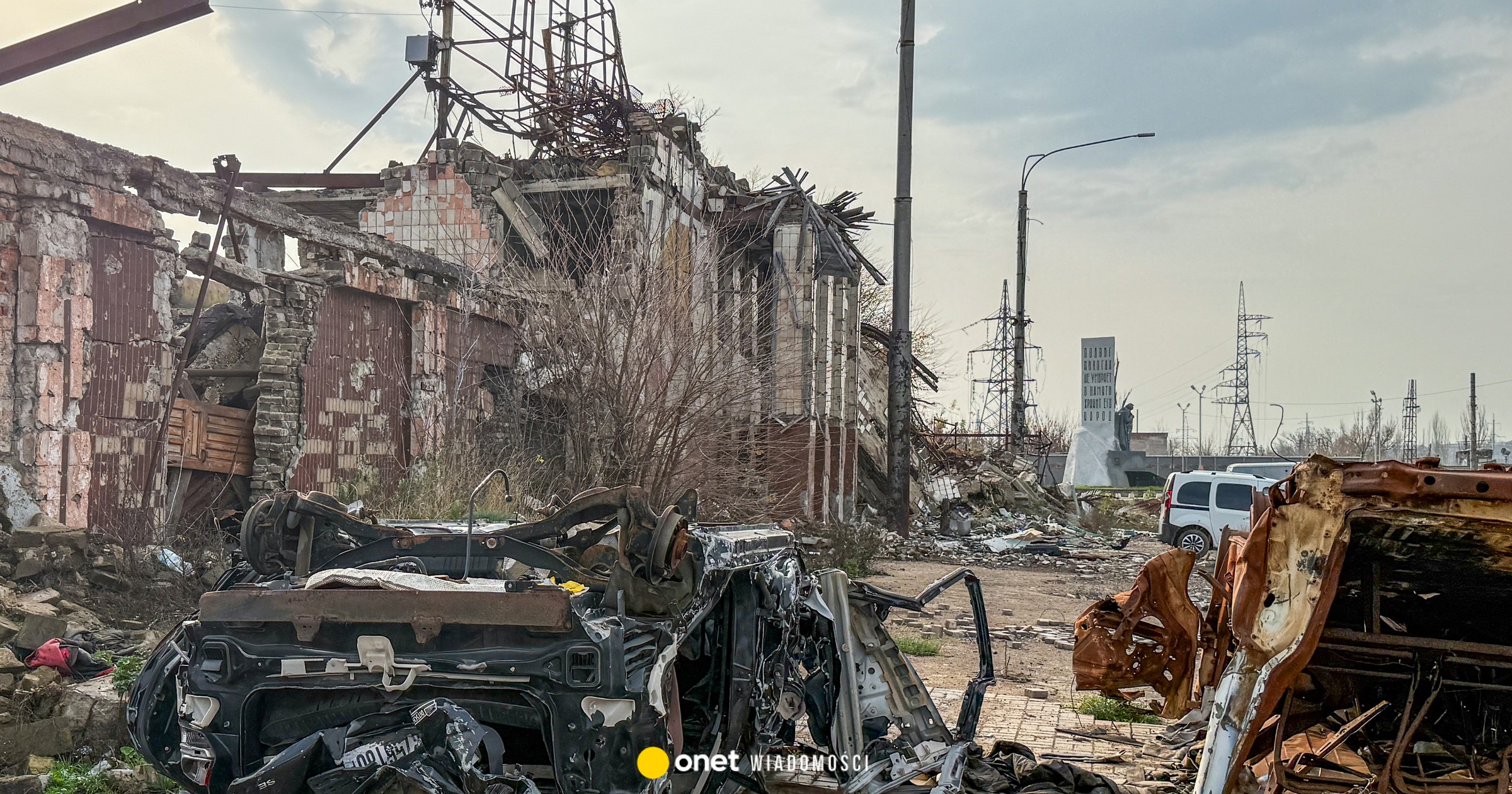
By some estimates, between 3,500 and 4,000 Ukrainian soldiers, policemen and volunteers defended Mariupol against over 20,000 Russian troops supported by full air support. Unable to capture the city quickly, Russian forces began systematically bombarding residential areas, destroying entire neighborhoods and killing an estimated 20,000 to 40,000 civilians.
On May 16, under a preliminary agreement, the evacuation of Mariupol's defenders from their last stronghold – the vast Azovstal steelworks – to Russian captivity began. Russian forces failed to take over the complex, but the growing number of wounded soldiers, dwindling medical supplies and an order from Kiev to protect the lives of defending soldiers forced the remaining units to lay down their weapons.
Among them was a fighter nicknamed “SP”, an officer and deputy company commander who had been living in Mariupol long before the full Russian invasion and joined the city's defense on the first day of the Russian attack.
SP: My friends from Dnieper joined “Azov” at the very beginning, back in 2014. My other best friend from Dnieper and I decided to join our friends in 2015. Then the three-month training began.
From what I understand, you have already trained according to the new methodology.
When I joined then, this training methodology did not exist yet. The level wasn't very high. It developed later. Then there were sergeant courses, which I attended in 2017. I completed them as a sergeant in accordance with NATO standards. In 2016, the School was established. Yevhen Konovalets. I completed the second course.
The article continues below the video
What were you doing in 2022 when the defense of Mariupol began, practically from the first day of the full invasion?
During this time, after the bulge in Svitlodarsk… I returned to the permanent deployment point in Mariupol and dealt with anti-landing defense measures. There was a battalion rotation system.
In the first month, the first battalion was responsible for defense against the landing, in the second month – the second battalion. In this way, they formed a combined group and practiced defense against landing.
What position did you hold then?
Deputy commander of the third company of the first battalion.
Were you aware of the seriousness of the situation when reports of Russian military preparations, strengthening and formation of military units began to emerge in December and January?
It wasn't the first time. This happened before, in 2017 and 2018. We trained, we practiced… Our official position as a country was that there would be no war.
One guy, who is unfortunately still in captivity, brought some signs to my attention. Signs that this was going to happen. And at that time I had an estate in Mariupol, a fiancée and a life that I was building before 2022.
It turned out that I even managed to evacuate my fiancée from there with the help of a friend and colleague. At the time of the invasion, my fiancée was in the Dnieper, which allowed me to focus on the war normally, instead of thinking about how to rescue her from the city.
From your perspective as a junior officer, what was the defense of Mariupol like?
From the outside everything looked apocalyptic. Literally within two days, the Russians entered and cut off the approaches from the north, which means that they surrounded the city very quickly.
That's what happened, unfortunately. Our battalion was responsible for the Left Bank district. So we took up defense there. Of course, war is a system… a combination of individuals with a purpose. But the infantry tasks were closest to me.
Why was Mariupol able to hold out for so long? We watched it from Kiev and were simply amazed.
In fact, almost every day involved extremely brutal fighting and titanic efforts by the staff performing their assigned tasks.
I think it was due to training, staff cohesion and understanding of the circumstances at the time. I think it's huge [czynnikiem] was that we tried with all our might to do what the commanders required of us, who assessed the situation quite accurately and quickly.
Moreover, at that time we had highly developed decentralization, which meant that we had a very developed corps of sergeants. Therefore, each group commander made decisions on the spot, which effectively influenced the implementation of the mission.
How did you get to Azovstal? How did “Azov” end up in Azovstal? Why Azovstal?
This happened within three months. It was about the bet itself. We were looking for a place where we could maintain continuous communication and control over our combat formations. Therefore, the Azovstal plant was one of the sufficiently fortified areas where uninterrupted command of these forces was possible.
What was life like behind the defense?
As far as we could tell, nothing had changed. The Russian Federation burns down every territory it enters. There was no electricity, no water, nothing in Mariupol. Civilians had to cook food at the entrances of buildings, near entrances, on fires. Plus Russian planes. They rarely hit military facilities. Civilians systematically hid, but it didn't always help.
There was one instance when I was driving and came under fire. We jumped out of the car, which at that point had all four tires flat. I ran to the basement of a five-story building. There were about 200 civilians there – people confined to beds, women, men, children, grandfathers and grandmothers. I asked what the food and water situation was and they said everything was terrible; that it was difficult to leave the basement because the enemy artillery was shelling the district very intensively.
I told them, “Listen, there are stores nearby that have been destroyed by the bombing, you have to go out and get food from them, because soon you will have nothing to eat. Let your people go out and get supplies, because the people have already taken almost everything. You have to do something! We don't have enough people to defend the city, so we can't help you with humanitarian aid.”
Later the shelling stopped. I went back to the 1st Battalion HQ and asked for food for these people… for some reason this district was under heavy artillery and air fire – I asked why and the HQ told me that they had probably detected a lot of telephone signals there, so the Russians thought there were a lot of military personnel there.
I loaded the car with as much food as I could. I took them back and at that point the artillery started shelling the area again. And once again we had to escape from the vehicle.
We immediately grabbed food, water bottles, canned meats and whatever else was there. And under fire, we took it to the basement of the building. When I ran in there, I realized that I had entered a different basement entrance in the next building that looked exactly the same, but was different. I ran in there and saw another 200 civilians sitting inside. I said, “Wow, I brought food for your neighbors. Look, we'll leave it here for you, please. I understand it's just a drop in the bucket for you, but please share it with them.” I don't know what happened to them later.
What was the situation in Azovstal? From what I understand, you must have spent most of your time underground somewhere.
Yes, there were ruins there, but of the three months I spent there, the only time I was in Azovstal was for the last month, when we moved through warehouses and train tracks, and our positions were under a bridge.
Over the past month, I have been at our company's command post. I have previously been in combat formations with my staff. At some points I stayed in shelters – when it was necessary to deliver or evacuate the wounded. Over the last month I have tried to help with all of them [sposoby]both performing tactical combat tasks and supporting logistics. Well, it was a huge underground city where you moved through tunnels to get from point A to point B, C and D. Basically like an anthill.
But as I understand it, this underground city was something the Russians couldn't reach. Although they bombed them brutally.
In recent days they have already managed to hit the bunkers. There were losses. Personnel losses. So it was really only a matter of time. Because they dropped very powerful aerial bombs there.
Bombs weighing one and a half tons?
Even bigger. If I remember correctly, three-ton bombs (3,000 kg) were used there. If I remember correctly. They dominated so completely that they even imported “Grad” systems and fired them directly. They used many resources there. I just can't think of another word for it other than the “titanical” efforts of the staff. Because our people did things that were simply unimaginable.
There was one case involving a guy… An armored group went out with an anti-tank gun [Next Generation Light Anti-Tank Weapon] NLAW [lekka broń przeciwczołgowa nowej generacji]to destroy the tank that was shelling the positions. Unfortunately, the tank hit these respectable people. Then one of the guys in our company took the NLAW, listened on the radio for instructions on how to use it, and as he ran around looking for a position from which he could hit the tank, he listened to the instruction manual. And he destroyed it!
Why did the Russians attack and destroy infrastructure?
Since they could not advance “through the fields”, they advanced through populated areas, where they were more successful than on open ground. That's all.
What was it like leaving Azovstal? How did you find out about it?
Well, how do I put this? Before this decision was made, it was announced to us. As ordered, we surrendered and were taken prisoner. Under certain preliminary agreements announced at that time.
I’m Ashley Davis as an editor, I’m committed to upholding the highest standards of integrity and accuracy in every piece we publish. My work is driven by curiosity, a passion for truth, and a belief that journalism plays a crucial role in shaping public discourse. I strive to tell stories that not only inform but also inspire action and conversation.