Why Europe would want to resume relations with Russia. Expert: “I've always suspected that Paris and Berlin have this weakness”

The Europeans are regrouping and planning a new strategy towards the peace negotiations with Russia. The experts interviewed by “Adevărul” interpret the latest signals sent from Brussels, Paris, Berlin or other European capitals.
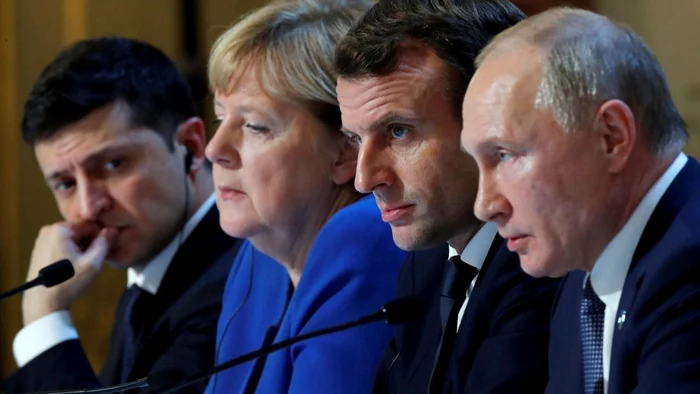
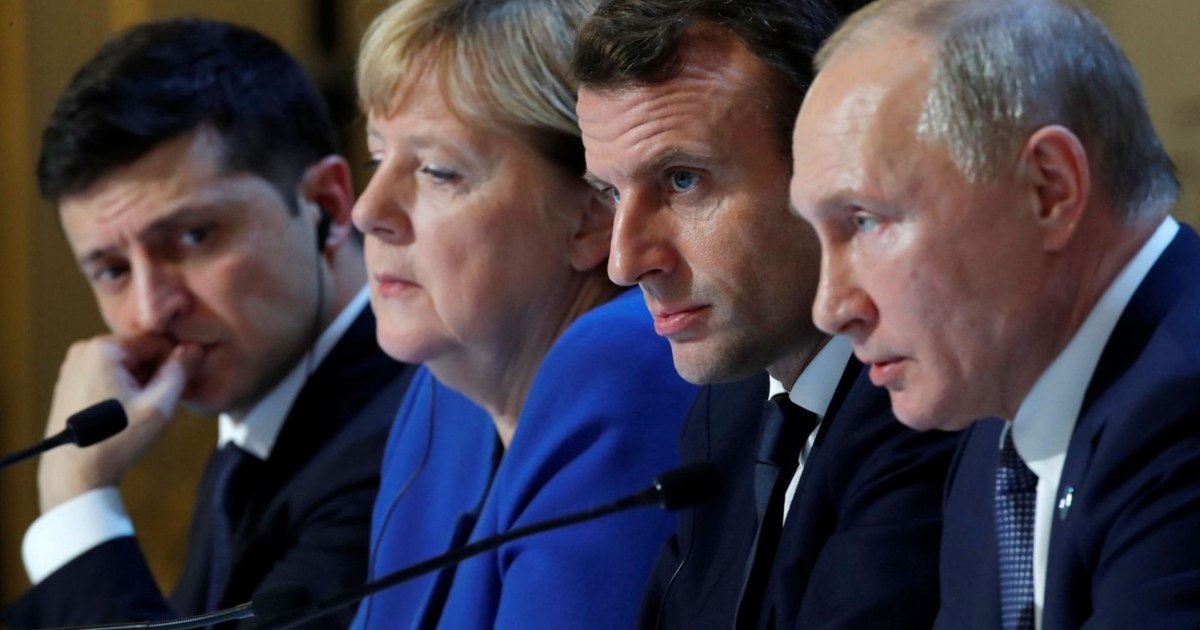
PHOTO: Germany and France want to negotiate with Putin as in the old days. PHOTO: EPA-EFE
Farewell the wind of change, after almost 4 years of war and with what experts call “the change of the world order”. After the Europeans permanently insisted on talks with Russia, on the idea that Moscow would not be ready for it, things tend to change, and important figures in the European Union demand that Europe be present at the table of discussions. French President Emmanuel Macron was the first European leader to say, at the end of last year, that negotiations should be held with Russia. His initiative was supported in a first phase by countries such as Italy, Austria, Luxembourg and the Czech Republic.
This was followed by Germany, which through the voice of Chancellor Friedrich Merz sent a similar message and insisted that Russia is part of the European space, which means that it cannot be completely ignored by the European Union.
After Macron's and Merz's statements, from January, there were others, from heads of state in the EU and NATO. Interestingly, such reactions also came from the leaders of the Baltic countries, as their countries have traditionally taken a tough stance towards Russia. Perhaps for this reason it seems surprising that this time they asked for the European Union to be at the negotiating table with Russia, they said that “the EU needs a special envoy for talks with Russia”. Latvian Prime Minister Evika Siliņa and Estonian President Alar Karis have called for the appointment of a special EU envoy to hold talks with Russia.
The Baltics enter the scene
Alar Karis and Evika Siliņa stated, in separate interviews, for Euronews, the Russian-language edition, that the European Union should designate a special emissary to restore diplomatic channels with Russia. The main goal would of course be a presence of Europeans in the ongoing peace negotiations.
The two heads of state have common visions and argue that the EU special representative should be a compromise figure that all member states can agree with.
Politologist Marius Ghincea, researcher at ETH Zurich University, is an expert in security policies and explains, from his perspective, the recent change of tone in the European chancelleries.
At the moment, he says, we have intense discussions and negotiations, including some about which absolutely nothing is known because neither the Europeans nor the Americans, the Ukrainians or the Russians want them to be made public, at least at the moment. The negotiations that took place these days in Abu Dhabi, between the representatives of the two combatants would, in fact, be only the tip of the iceberg.
“We are on the side of diplomatic negotiations that are taking place both in public and behind closed doors. Also, the main issue at the moment is related to these territorial concessions. Russia wants territorial concessions that are greater than the territories that it de facto occupies at the moment. It also wants territories that Ukraine currently controls, and that, obviously, is unacceptable to the Ukrainian government“, says Ghincea.
How far can the new relations with Russia go
He also commented on the statements of Emmanuel Macron and Friedrich Merz about the need for negotiations with Russia and about a possible restoration of relations. Marius Ghincea recalls that countries like France and Germany had some relations with the former Soviet Union during the Cold War, so a possible restoration of relations with Russia is not a big surprise.
“Regarding the renewal of relations with the Russian Federation, of course, we can restart a diplomatic dialogue, but the nature of this diplomatic dialogue and the dynamics it will take in the medium and long term are also very important. Because even during the Cold War, the Soviet Union maintained a diplomatic dialogue with Western countries, without that meaning that they are friendly or partnership relations”says Ghincea.
Regarding the statements of Ursula von der Leyen, the president of the European Commission, who said that the European integration of Ukraine should be accelerated, especially since Kiev will have to cede territories, Marius Ghincea qualifies.
“From this point of view, Mrs. von der Leyen's comment is obviously related to the fact that however bilateral relations with Moscow may be normalized or restarted, the situation in Ukraine and Ukraine's membership of the European and Western world is intended to be irrevocable. Far too many people have died to give up Ukraine, which will certainly become part of the European world. But what Mr. Macron says is completely true. In the long term, we must have a dialogue of one form or another with The Russian Federation because it is the largest country in the world geographically, it is on our coast and you cannot ignore it indefinitely, just not now and not under any circumstances.”
points out Marius Ghincea.
Statements and strategy
And political scientist Radu Albu Comănescu, professor at Babeș-Bolyai University in Cluj, interprets these reactions from European capitals.
“It is very difficult to draw the right line between statements that come from the inertia of a certain political culture practiced in Paris and Berlin — which for a long time included Russia in a collaborative way, but which was understood completely differently in Moscow — and an area where we can understand that Europeans have realized the nature of the regime in Moscow. A relationship with Russia no longer translates into the same stereotypes and lines of friendship as before. We can also have bad relations, but under control with Moscow. This means resilience, of resilience and sufficient deterrence to keep Moscow at bay”, says Radu Albu Comănescu.
The discussion would be, he also says, whether or not the Europeans are guided by certain economic interests to rekindle economic relations with Russia or whether it all depends on strategic calculations. For now, there are many interests in the European Union, and some of them are in conflict. Moreover, Hungary, Slovakia, the Czech Republic and Italy would not be the only countries that would like to restore relations with Russia as quickly as possible.
“The big question is whether Paris and Berlin — in addition to Rome, Budapest and Bratislava, which have also found areas of economic opportunism — have the ability to build some kind of consensus at the European level so that they cannot fall victim to Moscow's “divide and conquer” policies. If Paris and Berlin have the temptation, as Alice Weidel recently shouted on behalf of the AfD (a party high in the preferences of the German electorate), Germany-Russia relations may be resumed on the old Nord Stream 1 and 2 platform. Then we realize that we cannot speak of sufficient European credibility. The political culture in these countries must acquire a realism that integrates the security problems of Eastern Europe, neglected with great condescension by both capitals of the Franco-German engine”, adds Radu Albu Comănescu.
What interests would France and Germany still have
In his opinion, it would not necessarily be impossible for Paris and Berlin to pursue the resumption of economic relations with Russia, especially since the transatlantic relationship is in great distress. In fact, France and Germany, the two great European powers, have not hesitated on other occasions to pursue their own interests and benefit from relations with Russia, while the countries of Eastern Europe have almost always suffered from Moscow's policies.
Germany benefited from Russia's cheap gas and even chose to shut down its nuclear power plants and become completely dependent on this country for energy. And with Berlin's strategic blindness, the Kremlin expanded its influence in Europe and took full advantage of good relations with the last German chancellors, less Olaf Scholz and Friderich Merz. The German and French car industry, as well as the big companies of the two countries, have invested hundreds of billions in Russia and have made commensurate profits. Now, in a period of economic crisis in the countries of the European Union, multinationals are eager for the huge Russian market and are ready to return there at the first signal, to resume business, those that have left Russia, or to consolidate them, in the case of those that have never left this country.
“I have always suspected that Paris and Berlin have this weakness and that they will be the first capitals to reach out to Russia in favor of a reconciliation. Whether this new European construction will have the ability to sit at the table by legitimately obtaining its place and being able to punch the table – not just because it is left by Washington – remains to be seen. European solidarity is extremely fragile.” concludes Radu Albu Comănescu.