Under the specter of pressure from Washington, Iceland is considering abandoning its isolation and joining the European Union

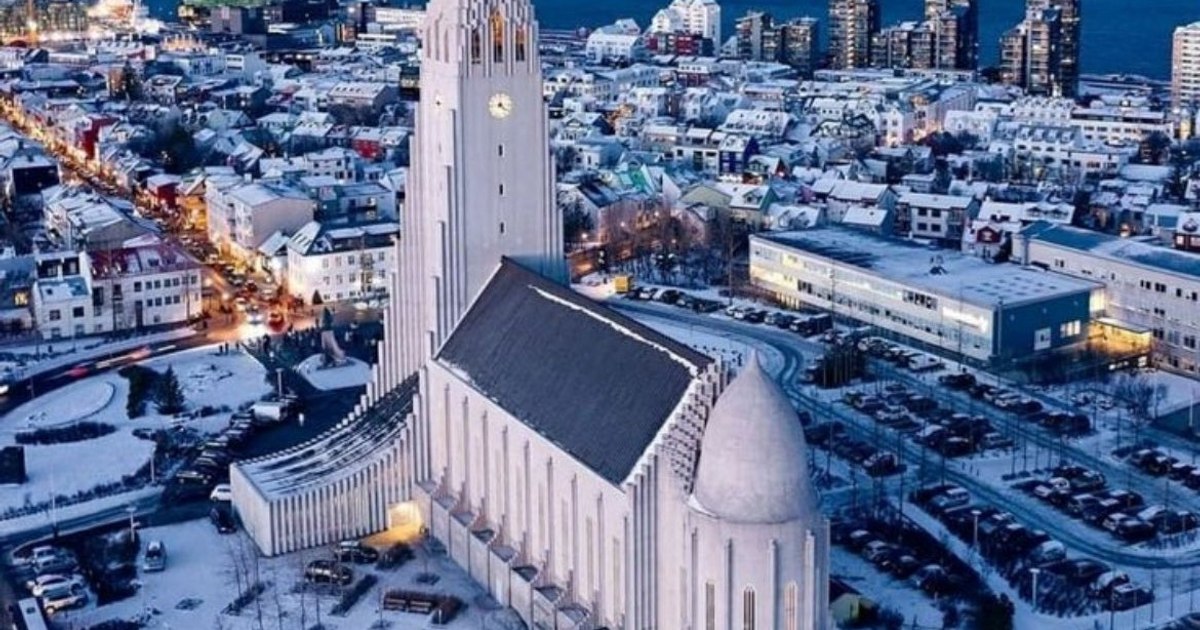
Iceland has historically chosen to remain on the fringes of the European construction, staunchly defending its independence and, above all, exclusive control over its territorial waters. But tectonic shifts in US foreign policy and President Donald Trump's unpredictable rhetoric have prompted an unprecedented strategic reassessment in Reykjavik.
Reykjavik, the capital of Iceland
In recent months, stability in the Arctic has become extremely fragile after Donald Trump has repeatedly hinted at taking control of Greenland, Iceland's closest neighbor. For a nation of roughly 400,000 people, this climate of uncertainty has turned an idea once considered unthinkable into a pressing national debate: Is it time for the country to seek protection from the community bloc?
“The Greenland crisis has definitely struck a chord,” Prime Minister Kristrun Frostadottir said in an interview in her office in Reykjavik. The Head of the Executive emphasized that foreign policy now occupies a central place in the electorate's options: “Things have changed radically”.
Iceland is fast approaching a crucial referendum, scheduled for this summer, in which citizens will decide whether they approve the start of exploratory talks with the European Union. Although the accession process could take years, the scale of the debate indicates a seismic shift in the collective Icelandic mindset.
A Geopolitical Flirt of Mutual Interest: The Strategic Stake in the North Atlantic
For Brussels, Iceland represents an extremely valuable geopolitical acquisition. First of all, strategic positioning. Located in the North Atlantic, at the gates of the Arctic, the island provides the EU with a crucial anchor in a region where major global powers compete intensely for dominance. The Nordic state is a prosperous economy, outperforming the bloc's average on structural indicators such as life expectancy and gender equality.
For Icelanders, the main stake of integration translates into one word: stability.
The public in Reykjavik watched with dismay the episodes in which Donald Trump confused Iceland with Greenland, but also the reports that Billy Long, the nominee for the post of American ambassador to Iceland, joked that the island could become the 52nd state of the USA (Long later publicly apologized).
While a direct military threat from Washington is unlikely, Iceland's vulnerability is real. It is the only NATO member country that does not have its own military, historically relying on US security guarantees. In the context in which Washington is perceived as an increasingly less predictable partner, Iceland is looking for an insurance policy. Even though the EU is not a military alliance, the defense partnership signed recently in March and the mutual assistance clauses in the European treaties provide a diplomatic safety net.
The umbilical cord of the economy: The big battle is around fishing
Beyond the security files, the final decision will be dictated by economic interests, specifically the fishing industry. In coastal communities like Sandgerdi, cod fishing is the very backbone of economic survival.
Many Icelandic fishermen are skeptical of possible accession, taking as a negative example the case of Ireland, an EU member state whose coastal communities have been devastated by drastic reductions in fishing quotas imposed by Brussels. In Iceland, where fishing has a much larger share of GDP, giving up control over territorial waters is seen as a red line. While there are signs that Brussels would be willing to offer substantial waivers to lure Reykjavik, the reluctance of local communities remains a major obstacle.
National currency and the cost of living: The arguments of the pro-European camp
On the other hand, the supporters of integration put on the table arguments related to the citizens' wallets. The Icelandic krona has historically been a volatile currency exposed to shocks, while the euro provides an anti-inflationary anchor.
Iceland is currently experiencing inflation of around 5.2% – almost double the eurozone average. Food and staple prices have risen alarmingly, partly due to tariffs on EU imports. For the average citizen, the adoption of the single currency and the removal of trade barriers would mean a direct reduction in the cost of living.
Early opinion polls point to an extremely close result in the referendum. The debate has divided Icelandic society in a way uncharacteristic of its consensual spirit. However, the moderate current tends to support the start of talks, citing the argument that the opening of negotiations does not imply a binding final commitment: first the “package” offered by Brussels is evaluated, and the final decision will belong, sovereignly, to the Icelandic people.