The Horsemen of the Apocalypse, Europe's most feared warband. It was believed that they had sold their souls to the devil

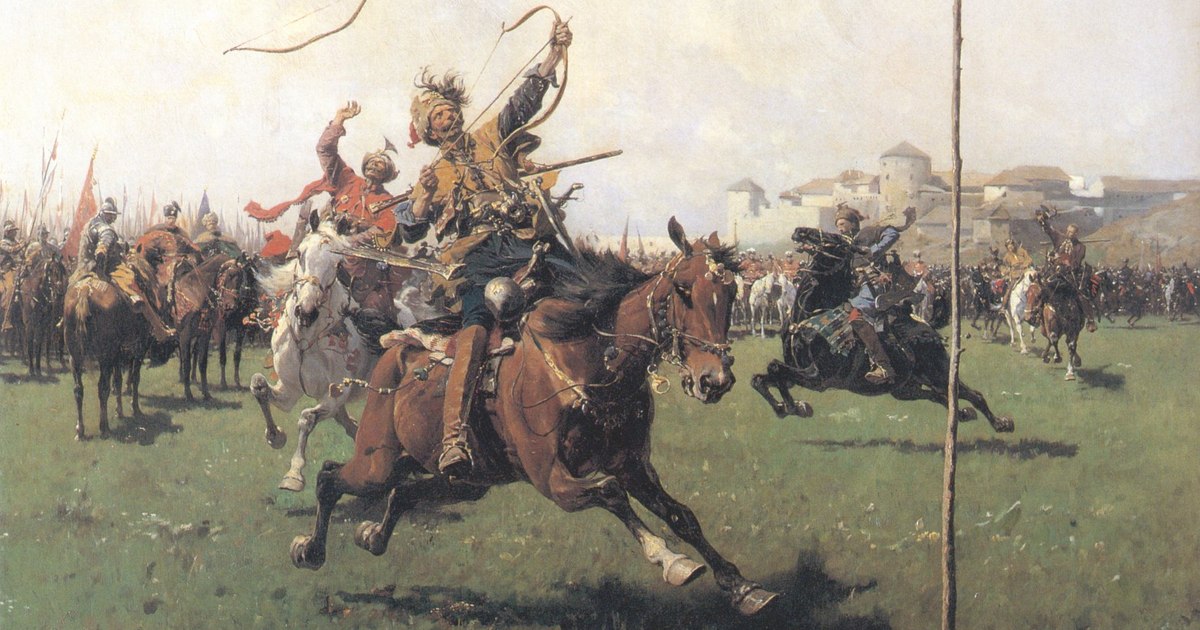
In the 17th century, on the battlefields of Europe, the most feared band of warriors on the Old Continent operated. Mercenaries who lived by robbery and plunder, with extraordinary skill in the use of weapons, and who went down in history as “Horsemen of the Apocalypse”.
Lisowczycy, the elite riders who terrorized Europe PHOTO wikipedia
17th century Europe was torn apart by strong conflicts between the great powers of the time. The Germanic Holy Roman Empire, Spain, France, the Polish-Lithuanian Commonwealth and the Ottoman Empire had turned the Old Continent into a battlefield. Obviously, the most devastating conflict of the time was the Thirty Years' War (1618–1648). Into this world of steel and gunpowder the Lisowczycys were born.
Their name is hard to pronounce, but fame was on everyone's lips. Some admired them, others regarded them as “devils”, “barbarians” and “bloodthirsty dogs”. In short, they were elite warriors, an admirable light cavalry, born from the Polish-Lithuanian territories, but who proved to be the nightmare of the enemies, as well as the civilian population. They lived only by plunder and war, they had no scruples and no mercy. They were paid to kill, and they did so with extraordinary talent. They were admired and imitated, and at the same time people feared them worse than the plague. Mothers in Bohemia and Germany threatened their unruly children with them until the 19th century. It was rumored that they acquired their almost supernatural skill in battle after making a pact with the devil, promising their immortal souls.
“Horsemen of the Apocalypse” born of hunger, injustice and need
An account of the Lisowczycy's feats of arms was written by their chaplain, Wojciech Dembolecki, in the work “The Deeds of the Polish Elearians Formerly Called Lisowczycy”. Basically, these Lisowczycy were Polish light cavalry in the service of the feudal lords of the Polish-Lithuanian Union from the beginning of the 17th century.
They came from among a poor population, but which had learned the trade of weapons in the fire of wars with the Turks, Cossacks, Tatars and other peoples of the area. In particular, they managed to create a unique fighting style by combining Polish martial elements with elements of the steppe peoples' way of making war. They were able to wield the sword with extraordinary skill, to shoot accurately with pistols, but especially with the bow from the horse's spur. They wore very little protection, and their main assets were this skill with weapons, their exceptional horsemanship, their fantastic speed in both attack and movement, and their surprise attacks. They would appear out of nowhere where you didn't expect them, cause significant damage and then disappear as they had come.
If you followed them, it was the worst mistake, as they could wreak havoc in retreat by firing at the horse's spurs or quickly encircling the enemy. They avoided classic head-on combat and relied on psychological shock and speed. They were very disciplined in battle, but famous for the fact that after the battle was over, they could not be controlled anymore, plundering and plundering. They were considered more feared than the Tatars and Cossacks combined. In fact, they had taken over much of the fighting style of the two peoples. Their story begins in 1604, in the early stages of the Polish-Swedish war. The Seimas of the Polish-Lithuanian Union (Parliament) failed to raise the money needed to pay the soldiers fighting in Livonia against the Swedes. Aleksander Józef Lisowski, the commander of a light cavalry unit, revolted with his men. They were hungry and desperate.
Lisowski became one of the leaders of the armed uprising in Livonia and decided, together with the others, to recover their outstanding balances, as well as food money, by pillaging and pillaging everything in their path, whether it was Swedish or Polish territories. Angered by the rioters burning down Polish villages and towns, Lithuania's grand hetman Jan Karol Chodkiewicz exiled Lisowski. This only added fuel to the fire. Lisowski created a veritable army of “rags” from the ranks of the Polish light cavalry. Although they were poorly clothed and many had weapons taken from loot, these horsemen had a special quality. They were experienced and very skilled warriors. They were named Lisowczycy, after their commander, and soon they would become the “horsemen of the apocalypse” in Europe, the people who made half the continent tremble. With his men, Lisowski joined the uprising against the absolutism of King Sigismund III Vasa. They lived exclusively on robbery and plunder.
They were able to appear out of nowhere and disappear without a trace at a time when movement or travel in general was difficult and slow, whether for an army or individual units. They always left behind their gruesome calling card: murdered men and women, ruins, charred remains of villages and towns. The bankrupt tycoons of Poland were no longer able to keep them in check. When they had money, they could buy their services, but only then. Meanwhile, Lisowski had been declared by the Seim a criminal who could be killed on the spot, without trial, by any noble. But who could catch and kill Lisowski, so long as he was surrounded by his terrible fog? Lisowski had under his command several thousand fighters during periods of campaign and several hundred during periods of peace (which were very rare and short-lived).
The “accursed” put Russia through fire and sword
Over time, the Lisowczycy were given many names, including elears (from the Hungarian “elu jaro”, meaning scouts or vanguard soldiers who were privileged to fight individually before battle) to “lost hope”, a kind of 17th-century “legion of the damned”. Historical accounts describe them as extremely agile, skilled, and bloodthirsty. “They were no ordinary soldiers, but a pack of warriors who lived by plunder and fed on war“, the contemporaries specified. A saying of the time in the Russian territories indicated that, in the “Trouble Times” (1598–1613), there were “three plagues: typhus, the Tatars and the Poles (with the meaning of Lisowczycy)”.
How the Poles Saved Western Europe. The elite troops who destroyed a huge Turkish army ready to invade the west of the continent
At first there were only riders from the Polish-Lithuanian Union, but their ethnic composition diversified. They became a true multinational force, with Poles, Lithuanians, Bohemians, Silesians, Zaporozhian Cossacks (Ukrainians), Tatars and even Germans. They were warriors from all walks of life. Taking advantage of the fact that in Russia, after the death of Ivan IV the Terrible, there was a period of anarchy and civil war, known as the “Trouble Times”, in which false tsars (false Demetrius, an individual who gave himself as the son of Ivan IV the Terrible) demanded the throne and hired mercenaries to win it, the Lisowczycy found work. Such a situation was their joy. They lived only on plunder, so a Russia ground by anarchy was a veritable Eden of plunder. Lisowski and his troops supported the Muscovite pretender Dimitri (false Dimitri).
The Lisowczycy reorganized and continued the ruin in Russia until around 1615 PHOTO wikipedia
In 1608, together with Aleksander Kleczkowski, leading a force of several hundred adventurers and mercenaries, mainly Poles, but also Lithuanians and Ruthenians, Lisowski defeated the armies of Tsar Vasily Shuisky near Zaraisk, capturing Mihailov and Kolomna, and advanced towards Moscow. They had pack horses full of loot. Moscow was saved at the Battle of Miedźwiedzi Brod, and Lisowski lost most of the booty. Hungry and bloodthirsty, the Lisowczycy reorganized and continued their rampage in Russia until around 1615. They fought everyone in their path, even the Swedes who had attacked Ingria. They reached the Obi River area. They looted cities, villages, monasteries. “Such an enemy does not fight like an army, but like a calamity”contemporaries said.
Roar like wild beasts over Europe
Lisowczycy returned to the service of the Polish-Lithuanian Union. Especially since the magnates and nobility of the Seimas found a convenient way to pay them. They were simply sent into enemy territory and allowed to wreak so much destruction as to destabilize it completely. The Lisowczycy received no pay, but were allowed to pillage at will in enemy territory.
The Polish kings appreciated their skills, but were increasingly keen to send them to fight abroad and keep them out of the Polish-Lithuanian Union for as long as possible. And after Lisowski's death, this formidable group continued to operate. They were usually armed with a sword, a spetum (a long spear with a point and two protrusions at the base), an arquebus, or alternatively a bow with arrows. Their horses were fast, relatively small, but agile and hardy.
The moment when Europe was one step away from Islamization. The leopard-furred warrior who saved the West
They traveled without wagons or mobile camps, procuring their supplies on the go, so they could cover up to 90 miles (150 km) in 24 hours—an impressive feat in an era when many regions had almost no roads. They are said to have killed their seriously wounded comrades to avoid capture. And that's because, for a Lisowczycy who became a prisoner, there was no mercy. They are used for border defense. In 1612 they single-handedly defended Smolensk and saved the borders of the Union. Then, from 1619, they were sent by Sigismund III Vasa to help Ferdinand II of Habsburg, the Romano-German emperor, against the Protestants in the Thirty Years' War.
They wreaked havoc in Bohemia, Silesia, Germany. Under Rusinowski, the Lisowczycy participated in the Battle of the White Mountain and made a sensation. They effectively captured 20 flags, putting the much better equipped and outnumbered opponent to flight. Under the command of Walenty Rogowski, they defeated the Transylvanian forces led by George I Rákóczi at the Battle of Zavada. They also participated in the Battle of Tuțora and Soroca in Moldova. They were used in numerous battles as harassing troops, designed to terrorize opposing armies and force their quick surrender. They also participated in the campaigns in northern Italy, in the Marquisate of Zuccarello, during the lifting of the siege of Genoa, then in the Flanders campaign of the Franco-Spanish War.
“They were considered worse than the plague”
Lisowczycy, however, were difficult to control. They were feared even by those who employed them. So they began to be excluded. “They were considered worse than the plague”said those from Silesia, complaining to the Romano-German emperor.
On May 7, 1621, the emperor paid them their outstanding wages and released them from service, due to numerous complaints about their behavior. Some returned to Poland, others served under Maximilian I. Finally, after the French refused to hire them as mercenaries, and the other camps of the conflict also rejected them, also due to the fact that they were difficult to control, in 1622 the Polish Seimas decided to disband the unit, and its members were to return to the Polish-Lithuanian Union. Some actually remained in the regular armies, others became bandits.