The moment Trump allegedly changed his mind about Putin. The mistake made by the Russian president

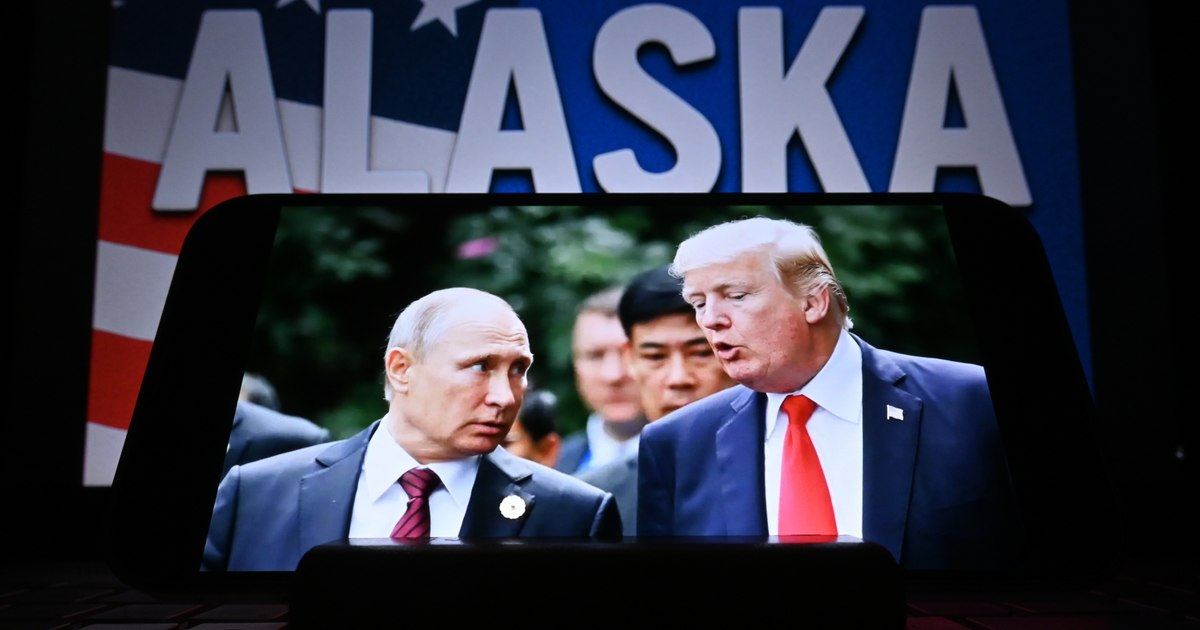
The Alaska summit was defining for relations between Donald Trump and Vladimir Putin, the Financial Times reports, citing people briefed on the closed-door talks.
The American president had the expectation that following the trip to Alaska he would reach an agreement with his Russian counterpart to end the Russian invasion of Ukraine. Instead, the Russian president launched into a long historical lecture and flatly refused the peace proposal.
Even though Trump and Putin agreed to meet in Budapest after Thursday's call, the Anchorage summit was more tense than the two sides let on publicly, changing the parameters of their relationship.
Putin was greeted in Alaska by Trump with a warm handshake and a big smile, and the situation seemed to favor him. But once talks began behind closed doors, the atmosphere cooled quickly, according to several people briefed on the talks.
In the presence of only a few advisers, Putin rejected a US offer to lift sanctions in exchange for a cease-fire, insisting that the war would only end if Ukraine virtually capitulated and ceded the remaining unconquered territory in Donbas.
The Russian president then engaged in a muddled historical discourse about medieval princes such as Rurik of Novgorod and Yaroslav the Wise, but also the 17th-century Cossack chief Bohdan Khmelnytsky – figures he often cites to support his argument that Ukraine and Russia are one nation.
Unpleasantly surprised, Trump raised his voice several times and at one point threatened to walk out of the room, the sources revealed. In the end, he cut the meeting short and canceled a planned lunch where the delegations were to discuss economic ties and cooperative relations.
Trump hailed a “great and successful day in Alaska,” prompting a hastily arranged summit between Ukrainian President Volodymyr Zelensky and European leaders at the White House in a bid to ensure Putin would not be left to set the terms of peace.
However, the summit proved to be a turning point: the cooling of the Trump-Putin relationship which then attracted a change in the US position in favor of Ukraine.
Since then, Trump's frustration has risen: His administration has allowed European allies to buy weapons from US stockpiles for Ukraine, helped guide attacks on Russian energy infrastructure and threatened Putin to sell Kiev long-range missiles capable of hitting Moscow.
Washington also imposed an additional 25 percent tariff on Indian imports in retaliation for purchases of Russian oil, while urging other countries to take similar measures.
On the other hand, the US left a door open. Washington has not followed through on its threats to sanction Russia's energy exports, apparently to leave room for Trump to act as a potential peace broker. But his policy went one way: to force Putin to return to the negotiating table regarding Ukraine.
The story of the Alaska summit is based on interviews with eight officials, Western and Ukrainian diplomats who were briefed on the discussion, as well as people in Moscow close to efforts to end the war.
“Trump really believed he could get a peace deal from Putin … the offer that was put on the table in Alaska was very good,” Arseniy Yatsenyuk, a former prime minister of Ukraine, told the Financial Times after talks this month with senior US officials. “But Putin outbid.”
Putin himself signaled that he was aware that the Alaska talks could have gone better. “It's not funny,” he said when asked earlier this month if he had explained Ukraine's history to Trump on that occasion.
“I've talked to the other American interlocutors about this. I won't hide: we've actually discussed different options for a deal, in a frank way. I don't know what will come of it. But we're ready to continue this discussion.”
A White House official characterized the summit as “productive” and dismissed the idea that it had gone badly. The Trump administration views any opportunity to better understand Russia's position as “useful,” the official said.
The negotiations stumbled
Trump's efforts to negotiate a deal stalled in the spring after senior Russian officials said Putin was not interested in discussing a US-drafted peace plan with input from Ukraine and the Europeans. A new meeting scheduled for May has been cancelled.
But in early August, US special envoy Steve Witkoff flew to Moscow to try to revive peace talks. After spending three hours in the Kremlin with Putin, their fifth meeting this year, US officials informed allies that a deal had become possible.
Putin has softened his stance on territorial issues. Officials suspected that the Russian president was concerned about US sanctions on India's imports of Russian oil. They decided that Putin and Trump should meet.
At the summit in Alaska, Trump said the U.S. was willing to recognize Russia's annexation of Crimea and pressure Ukraine to withdraw from some frontline positions in the eastern Donbas region if Russia halted hostilities, according to two people familiar with the situation.
But the alleged agreement was based on a misunderstanding. Russia's territorial “concessions,” as Witkoff presented them, meant accepting a freeze on the front in some areas it could not conquer — while demanding that Ukraine hand over all of Donbas.
“He misunderstood everything Putin said about the topic of the summit,” said a person familiar with the discussions.
The Russian leader insisted that no deal would be possible unless what he called the “root causes” of the conflict were addressed.
For Putin, Trump's offer was not attractive. He wanted the capitulation of Ukraine.
But, unaware of Putin's intransigence and Trump's reaction, European allies feared that the US president was leaning towards the Russian camp.
Trump dropped threats to impose additional sanctions on Moscow and appeared to back Putin's calls for a permanent settlement, and abandon the idea of an immediate truce.
To their relief, Trump said he would agree to support broad security guarantees for Ukraine, suggested the US could support European efforts to bolster Kiev's defenses and offered to broker a meeting with Putin and Zelenskiy.
At the same time, it gave Russia a reason to blame Ukraine and Europe for the lack of progress in Alaska.
Sergei Lavrov, Russia's foreign minister, said Putin told Trump at the summit that he was “ready to accept” a deal in Alaska, but that the US president had asked for time to consult with Washington's allies, putting Russia on hold.
“I'm putting pressure on him,” Lavrov said in an interview with Russian newspaper Kommersant published on Wednesday. “They are trying to convince him that it is not Zelensky and Europe who are wasting time, but President Putin who does not want peace.”
The US has pressured European capitals to “seize or otherwise use” frozen Russian sovereign assets to arm Ukraine, as the EU is now proposing. It also called for the EU to impose punitive tariffs on China on its Russian oil imports.
But what the White House has yet to do is follow through on Trump's repeated threats to increase US sanctions against Russia. Trump believes such a decision would compromise any mediating role with Putin, US and European officials say.
Moscow gets along well with Donald Trump
Putin has repeatedly praised Trump in his public appearances between the Alaska summit and this week's phone call.
In a lengthy foreign policy discussion earlier this month, the Russian leader offered his condolences to the US for the killing of conservative activist Charlie Kirk and said the war in Ukraine would never have happened if Trump had been president in 2022.
Last week, Putin said Trump should have won this year's Nobel Peace Prize, drawing public praise from the US president, who openly said he deserved the award.
Putin also flattered Trump during their conversation on Thursday.
Trump said Putin congratulated him on the “Great Achievement of Peace in the Middle East”, something he had “dreamt of for centuries”.
The Budapest Summit
It is impossible to predict what will happen in Budapest or that Trump will now be immune to Putin's attempt to influence him, diplomats say.
“With Trump it's a back-and-forth,” said a senior European official involved in talks with the White House on Ukraine. “You talk to him, you get him to a point where he understands that Putin is problematic, then you move on and he goes back to Putin's position. So you have to talk again. And so on and on.”
On the other hand, the Russian president seems to have calculated that as long as he has the advantage on the battlefield, despite the state of the economy, it is not necessary to make concessions.
“It's not about money for Putin. It's his legacy – he wants to go down in history as the best Russian leader since Peter the Great,” another senior European official said. “He figured he could give Trump a win, but he decided not to.”
Putin's military and security services have been giving him regular updates, praising Russia's tactical successes, claiming that Ukraine is experiencing higher casualties and emphasizing Russia's resource advantage, according to two people familiar with the situation.
“The whole thing is ideological for him. He still thinks he can win,” the senior Western intelligence official said.