“Cape Trafalgar” is such a reporter record of the collision of three powers fighting for power over Europe. There is no small, only 200-page booklet of a classic sensational plot in this small, only 200-page booklet, it is rather a journalistic reconstruction of one of the most important naval battles in history.
The Battle of Trafalgar, fought on October 21, 1805, off the coast of Spain, was part of the plan Napoleon Bonapartewho prepared the invasion of Great Britain. To achieve this, France and allied Spain had to gain control over the La Manche channel and neutralize Royal Navy. French-Spanish fleet under the command of Admiral Pierre Villeneuve So she set off from Kadyks, but was quickly captured by the British.
The English Admiral Horatio Nelson used innovative tactics-he hit the enemy's style with two perpendicular wedges, breaking the French-Spanish fleet into parts. The battle ended with a devastating defeat of Napoleon: allies lost 22 ships, not a single British, although Nelson himself died. Military Trafalgarowy determined the reign of Great Britain in the seas throughout the 19th century and prevented the French invasion. He politically strengthened the position of London, making England an imperial power from England.
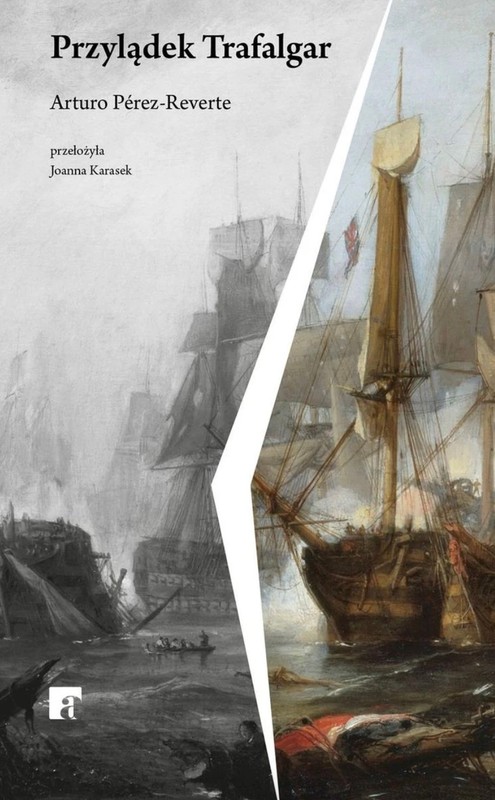
“Cape Trafalgar”Internet
Reverte, however, does not describe in “Cape …” of great politics, but she gives the voice to ordinary sailors and officers of the Spanish fleet, showing them not as cogs of great politics, but people of blood and blood – tired, scared, longing, but devoted to their service and homeland. The French are slightly worse, depicted by Reverte as cowards and kitny sailors. My favorite dialogue from the book is a fragment when two Spanish officers are talking about their French Comrade of weapons just before the start of the battle:
– How did you say in French?
– Zuamasse.
– Definitely?
– I swear on my mother!
The Battle of Trafalgar appears to Reverte as a start of not only two fleets, but also two eras: the old Spanish monarchy, plunged into decadence, against the powerful, modern royal British jacket. And all this in the curses of sailors, screams, smoke, bang of cannon guns and flooding blood ships.
The book is militarily impressive – every maneuver, every shot is described with attention to the realities of the sailboat era. Pérez-Reverte uses documents and diaries, but gives them in the form of literature. This will help you get involved in the book to those who have never studied military history.
In Poland, Pérez-Reverte is read mainly as a master of adventure and sensational literature, but this book reminds that his talent is much broader-this is literature on war, defeat and honor, which was and is still a universal value in every war.
Learn more