Between Trump and Putin. Europe in a trap. This is how the order we know collapses


For decades, Europe has convinced itself that geopolitics has certain rules, allies are reliable, and sovereignty is sacred – at least on the continent. On Tuesday, during a heated transatlantic debate, it turned out that these assumptions were finally falling apart.
During a panel at the American think tank Quincy Institute devoted to the effects of Donald Trump's threats against Greenland and Venezuela, senior analysts from Europe and North America presented a grim diagnosis: Europe is sandwiched between Russia, which it fears, a war in Ukraine it cannot resolve, and the United States, which it no longer trusts.but which he still desperately needs.
What emerged was not unity, but anxiety: about Russia's role in Europe's future, about Washington's credibility, and about whether Europe has quietly become convinced of its strategic powerlessness.
Pascal Boniface, director and founder of the French Institute of International and Strategic Affairs (IRIS), questioned what he called Europe's increasingly distorted threat perception.
Russia, he argued, was not close to conquering Europe. Moscow is struggling to subdue Ukraine – a country of about 30 million people – which makes the idea that it could militarily defeat the European Union of 450 million people deeply unlikely.
Russian threat
This does not mean, however, that Russia does not pose any threat. Boniface admitted that Moscow is capable of destabilizing Europe through cyber operations, political interference and proxy conflicts, especially in Africa.
However, the expert rejected the dominant narrative about Russia's impending invasion of Europe as exaggerated and politically harmful.
He warned that the danger was psychological. Europe, convincing itself that Russia poses an existential threat, has trapped itself in the belief that only the United States can guarantee its survivalwhich makes it unable to resist American pressure – even if that pressure undermines European sovereignty.
Zoltan Koskovics, director of the geopolitical unit at the Hungarian Center for Fundamental Rights, offered a more realistic perspective. He noted that Washington no longer expects Europe to have friendly relations with Russia, but that Europe will stabilize its relations with Moscow.
Koskovics emphasized that this formulation comes directly from US strategic documents. According to the long-term American assumption, Europe should be able to balance Russia's influence on its own – a view largely shared by Hungary.
Related to Ukraine
Zachary Paikin, a research fellow at the Quincy Institute, went further, arguing that Europe's rigidity toward Russia is more about status than security.
Ending the war in Ukraine through negotiations would take treating the Kremlin as an equal partnerwhich, according to European leaders, could weaken Europe's position in the international order.
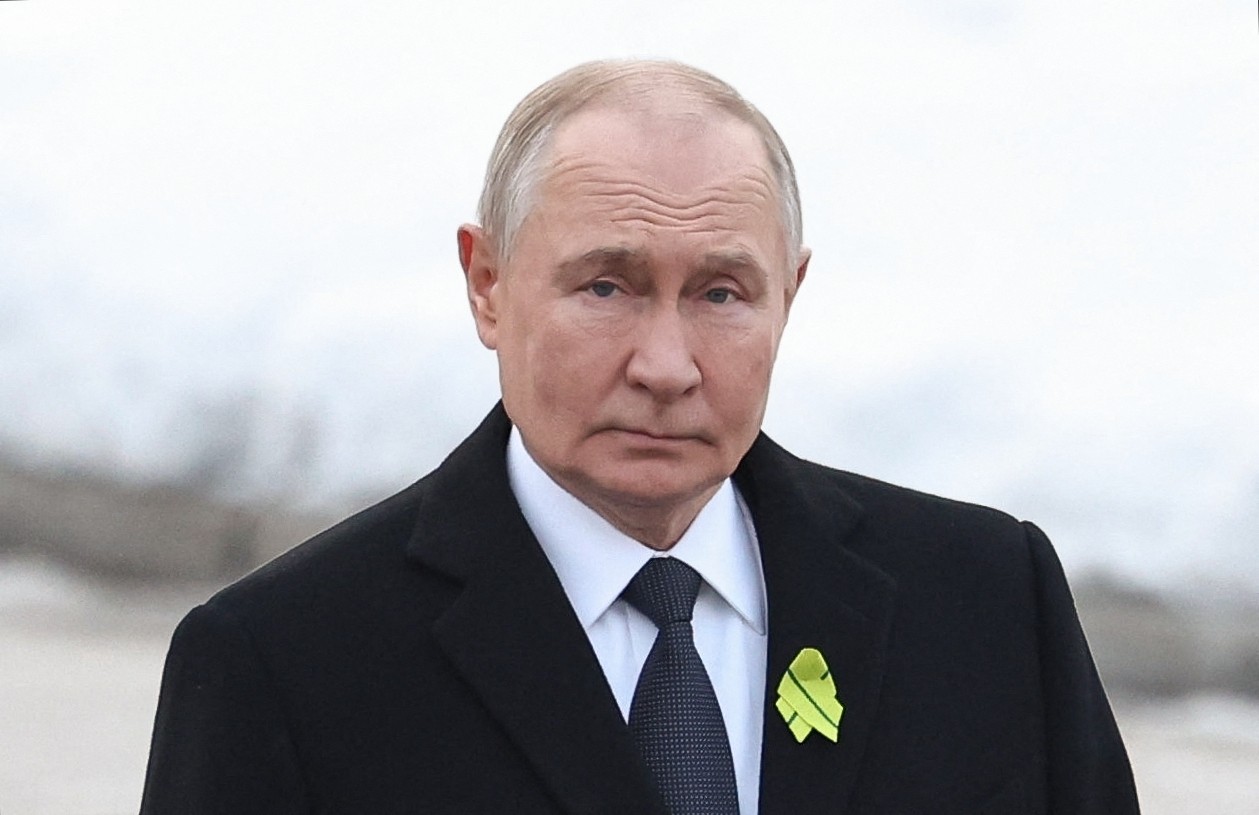
Russian President Vladimir Putin in St. Petersburg, January 27, 2026.ALEXANDER KAZAKOV / AFP
Paikin suggested that concerns about European status had caused a quiet hardening of the approach towards Moscow and a prolongation of the conflict.
Ukraine dominated every exchange — not just as a battlefield, but as a mental structure shaping European politics. Boniface argued that Europe had made Kiev the centerpiece of its strategic vision of the world, often at the expense of realism.
European leaders are talking as if Russia is ready to march on Berlin, he said, even as Moscow remains stuck in a stalemate in eastern Ukraine. Paikin described Ukraine as the issue through which Europe outsourced its strategic autonomy to Washington.
By tying its credibility and moral authority so closely to Kiev, Europe has ceded dominance to the United States in escalating the conflict, limiting its ability to maneuver on trade, diplomacy and even territorial disputes such as Greenland.
The American dilemma
Koskovics included Ukraine in a broader criticism of the situation in Europe. The war, he said, is part of a broader institutional and moral crisis — alongside mass migration, crime and declining trust in political institutions — that is fueling the rise of populist parties promising a less ideological, more interest-based foreign policy.
Paikin noted that for Canada, Ukraine presents a different constraint. Ottawa remains closely tied to NATO and is influenced by Ukraine's powerful domestic electorate, making any significant shift toward Russia politically difficult — even if Canadian elites privately view claims of a Russian invasion of the Arctic as exaggerated.
If Russia is Europe's terror, the United States is its dilemma.
Boniface did not spare critical words towards Donald Trump, describing him as a predator, not a defender.
The US president openly questioned Art. 5. NATO, ridiculed European leaders and showed more personal respect for Vladimir Putin than for Washington's traditional allies.
As Boniface stated, the idea of a united Western world is no longer realistic. Trump rejects multilateralism, international law and the system of values that Europe still clings to – even if imperfectly.
Koskovics opposed “funeral rhetoric” – he claimed that it was not the West that had fallen, but liberal technocratic ideology.
Trump's conflict with Europe is ideological, not civilizational. Washington wants Europeans to control migration, abandon bureaucratic rule and take responsibility for their own defense — including against Russia.

US President Donald Trump in Clive, Iowa, January 27, 2026.BRENDAN SMIALOWSKI / AFP
Highest stakes
Paikin offered a cooler interpretation. He stated that the United States is increasingly focused on dominating its hemisphere and competing with China.
Europe still matters, but much less than before. This shift leaves Brussels vulnerable, especially as it continues to rely on Washington while refusing to diversify its strategic relationships.
Behind the discussions about Russia, Ukraine and Trump there is a deeper concern: Europe's fear of losing its importance.
Paikin argued that the violent reaction to Trump's threats against Greenland — much louder than the European response to previous violations of international law elsewhere — reflected a sudden awareness that Europe itself was now vulnerable. Not only territory is at stake, but also status.
Boniface agreed, noting that Europe's unity against Trump was as much about public anger as it was about principle. The U.S. president is currently deeply unpopular across the continent, making compliance politically costly for domestic leaders.
Koskovics warned that Europe's current attitude risks accelerating it fall. He suggested that without reforms, the EU itself could collapse under external pressure.
Europe is caught between a Russia it cannot defeat, a war it cannot end, and a United States it can no longer rely on – but from which it cannot escape. It is unclear whether this will lead to true strategic independence or deeper dependence disguised as rebellion.
But analysts have concluded that the era in which Europe could simultaneously secure protection, prestige and moral authority is over.
This time, Washington may not come to the rescue.