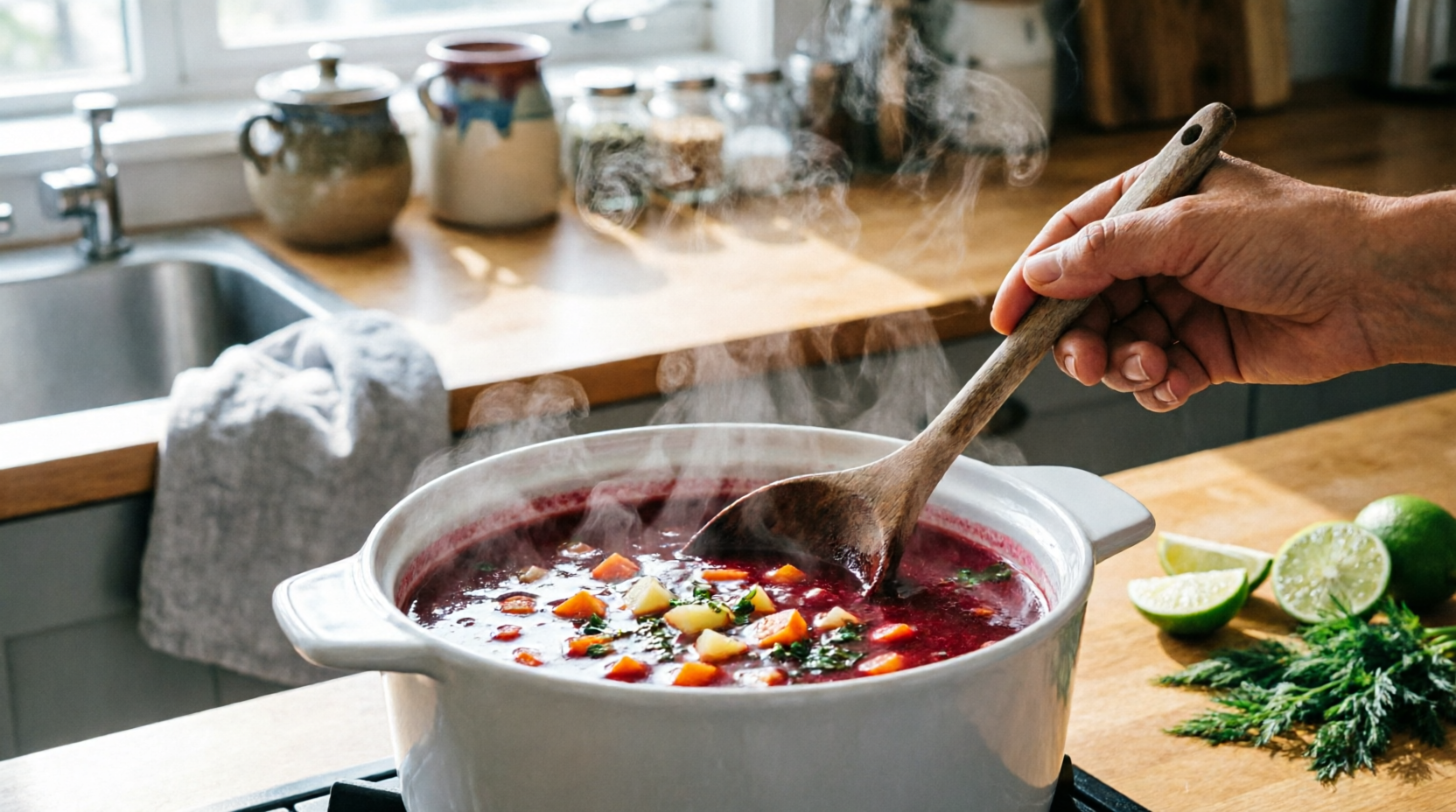
Every housewife knows that making borscht is not so easy. Even if you cook it with meat bones and selected vegetables, quite often the soup turns out pale and “empty”. It's all because of the familiar ingredient that our grandmothers advised adding. We're talking about vinegar.
Why do they put vinegar in borscht?
Traditionally, vinegar is added to help the beets retain their bright ruby hue. However, it is this acid that most often spoils the taste of the finished dish. The author of the blog “Culinary College” (18+), Elena Tarasova, advises against using vinegar for several reasons.
- Vinegar makes the taste harsh, and real acid has no place in hearty borscht.
- The acidity overpowers the natural sweetness of the beets, although it is the sweetish note that makes the taste deep.
- The aromas of garlic, fresh vegetables and herbs become flat and inexpressive.
How to Get Bright Color and Rich Flavor Without Vinegar
Grate the beets and fry them with a small amount of vegetable oil. Then add tomato paste, a little broth and simmer.
During the stewing process, add a little sugar. This way the beets will reveal their natural sweetness, and the taste of the borscht will become balanced, rich and without excess acid. These techniques will help you achieve that same ruby color and make the dish truly delicious.
Personal experience
For a long time I added vinegar to borscht, as my mother taught, and all the time I was perplexed: why the taste turned out to be harsh. One day I decided to try to do without acid, and simply stew the beets with butter, paste and a pinch of sugar.
Imagine my surprise when the borscht did not lose color, but on the contrary, it became soft, sweetish and very deep. Since then, I no longer take vinegar, and my family always asks for more, although they used to complain about the sourness.