“It was a shock.” A young Swedish woman on the arguments of opponents of conscription

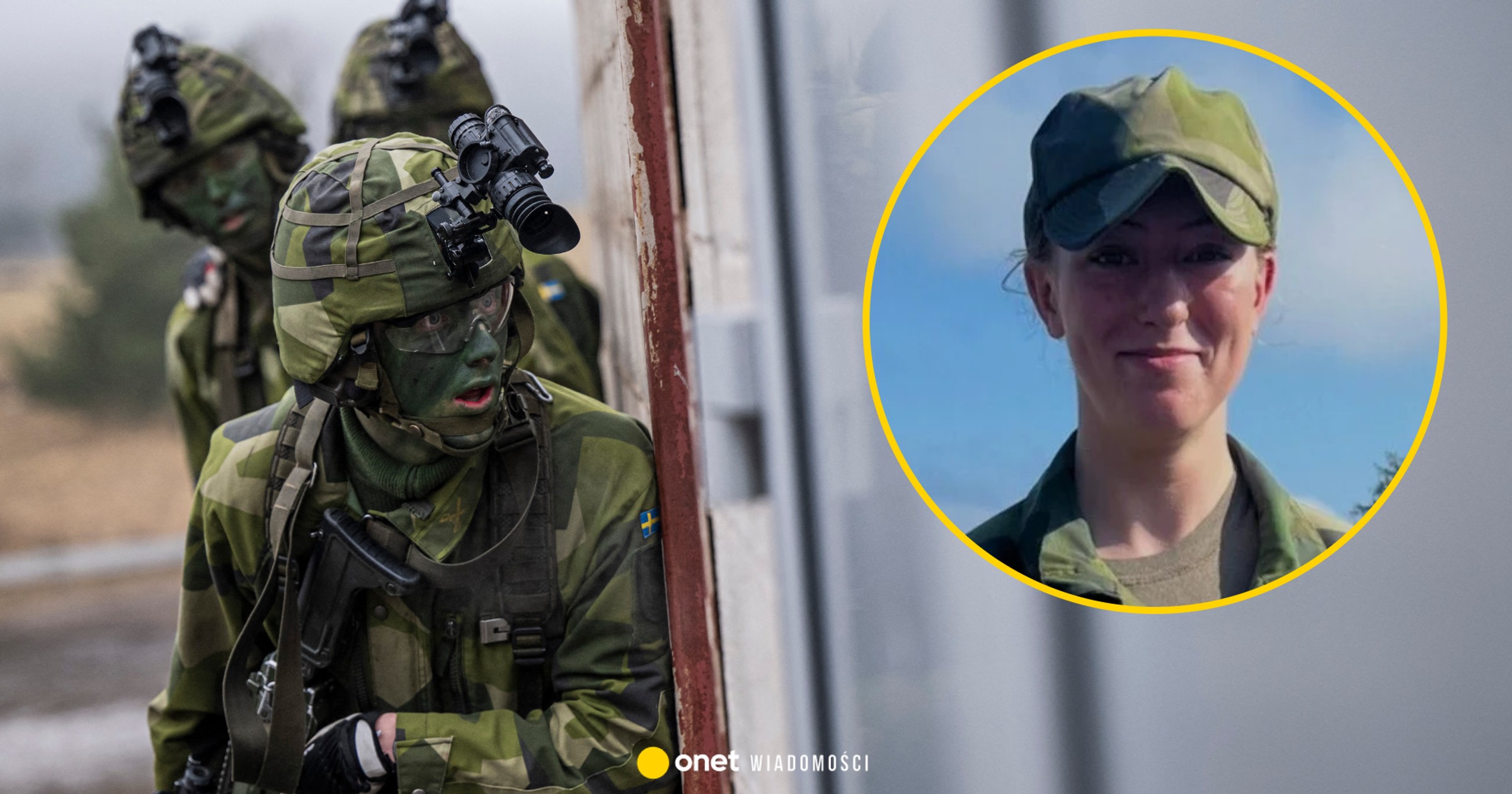
Already in 2017, Sweden reintroduced military conscription. This year, almost 10,000 are expected to be trained. young people, i.e. about one tenth of 18-year-olds. This will soon be joined by the civil service for tasks of systemic importance, such as rescue services and fire brigades. Lina Hedman is one of five people who are members of the Draft Board, a body elected annually by draftees to represent their interests. Previously, she completed nine months of military service in a reconnaissance unit in Stockholm.
WELT: The Swedish model of military service is often cited as a role model. You went through it yourself – do you think it's a fair system?
Lina Hedman: I have great confidence in this system, it is based on extensive scientific research results. Before being drafted, each 18-year-old must complete a questionnaire regarding health, social life, life history and motivation. There are certain questions there that are selective in nature to screen only those who actually have a chance. This is followed by a written, physical and psychological test, as well as a medical examination. [Wojsko] tries to assign the right person to the right position to get the best out of them. But of course, demand also needs to be met [na żołnierzy].
WELT: What is your generation's approach to military service?
Hedman: Perhaps I have a special perspective because of my job. However, the people I talk to usually demonstrate a great sense of responsibility. They are grateful for everything they have received from the Swedish system and are ready to give something back. This idea is very common here. It motivates them to work for something bigger than themselves. Of course, it's a shame that people have to do military service when they would really like to do something else. As the pool of people subject to conscription increases, their percentage will obviously increase as well. But even if you don't have the motivation, you understand the reason and do what needs to be done. Therefore, it is especially important to treat them well when they are incarnated against their will.
WELT: What incentives exist in Sweden to make military service more attractive?
Hedman: We consider it a highlight on our CV because we successfully pass extensive tests and prove that we can function under pressure and deal with conflict. Many also see it as an opportunity for personal development. He learns to be less selfish and pay more attention to the needs of others. Such qualities remain with us even after leaving the service. Of course, this is not the main reason for military service – it must always result from the needs of the armed forces. But the positive side effect is that people can gain something from it. After all, you're taking a year of someone's life away, so it's only fair that they get something out of it in return.
WELT: In Germany, there were large protests in schools against the reintroduction of compulsory military service. Can you understand this?
Hedmann: I understand resistance to any type of change because it is scary and you don't know if it is the right decision. I can't guarantee that everything will go perfectly because I don't know how the German system works. But if it were an exact copy of the Swedish system, I'd say it's a good thing. I was in Berlin in the fall and talked about military service with my counterparts from other Scandinavian countries and with German politicians. It was a kind of culture shock for me. I wasn't really prepared for their views.
WELT: What surprised you the most?
Hedmann: Different approaches to gender roles. I have often been asked how we can impose such a mental burden on women? I'm not used to this. We are talking about soldiers. Our physical fitness tests are the same for everyone. If physical requirements were lowered to recruit more women, this could result in young men entering the armed forces who are unable to meet these demands or who suffer injuries.
WELT: Sweden is one of the few countries in the world where compulsory military service also applies to women. What does it matter?
Hedmann: A group functions better when it includes a wide range of different perspectives. This gives you different approaches to solving the same problem. Plus, when it's only men, it can quickly become machismo. Women often help us get along better. However, I don't want this expectation to be automatically placed on every woman. She should just do her best and be judged based on her qualifications. Of course, there are also conflicts, but currently there is a large network of women in which they exchange experiences and provide help – also with specific problems, for example when menstruation occurs during a mission.
WELT: You've talked to a lot of conscripts in recent months. What do you hear from them?
Hedman: The overall impression is positive, especially when it comes to training. They are usually very satisfied with what they learn. They don't sit idle for too long, the time is very well spent. Even for those who were previously unmotivated, things often change after some time when they come into contact with other conscripts. But of course there are also challenges and things that need to be improved.
WELT: Like what?
Hedman: Equipment is an important topic. People in service want the best because they want to fulfill their tasks as best as they can. We are constantly working on it. Another issue that comes back is problems in the group or in relationships with superiors. During military service you are in a very sensitive situation – you cannot just leave if you are not treated well.
WELT: How do you help in such cases?
Hedman: We have a co-decision system: a person of trust at the local level, with whom we cooperate, discusses with the conscripts every week what went well and what went wrong. If problems arise, they try to solve them at the lowest level possible, but if this is not possible, they may go to the next level. All conscripts have the opportunity to contact us at any time. We visit each regiment at least twice a year and talk to conscripts, commanders and all units to get a full picture of the situation, then record this in a report. We then use this information during conversations with representatives of politics, the military or compulsory civilian service.
WELT: What specifically have you been working on this year?
Hedman: We have managed to make the future number of seven instead of five, so that we can better care for more people serving. The daily flat rate has just been increased from SEK 146 (about PLN 57) to SEK 200 (about PLN 78) to ensure that no one falls out of the system for economic reasons. We sought better legal assistance for people subject to compulsory military service. We also devote a lot of attention to education so that young people understand what they are actually called to do. Starting this fall, it's part of the high school curriculum. We consider this very important – the state demands a lot from young people, so it must also inform them well and transparently.
WELT: What does such a lesson look like?
Hedman: We have defense school representatives who visit classrooms and provide an authentic picture of what military service is really like. When we talked about this in Germany, we often heard: we cannot militarize school. But it's not just about the military or waging war. It's about national defense. We also talk about the civilian aspect: how to ensure that hospitals are prepared for disaster situations? What supplies should you have at home? It's about how everyone can contribute.
WELT: Why did you decide to run for the Draft Board?
Hedman: I loved my military service and I want everyone else to be able to say the same – to do it with good equipment and in good conditions. I was particularly interested in conscripts' rights because, in my opinion, we were not informed enough about them. Sometimes it feels like they can do whatever they want with us. But that's not true. We have a really good system, but more information is needed. If you have that much of an impact on people's lives, you need to make sure it's done well and that someone is actively working to make it even better.
WELT: What did you enjoy most about serving in the military?
Hedman: Of course I love Sweden and want to contribute to society. But the aspect of personal development also played a big role for me – testing one's own limits and realizing that one is capable of [robienia] so much more than could ever be imagined. You can't understand how far you can push your limits until you actually try it. One exercise was particularly memorable: I arrived there already sick, but I really wanted to take part in it. It was minus 29 degrees Celsius, I wasn't eating enough, I wasn't sleeping enough. I was completely exhausted and thought I couldn't do it. But I survived it. The most important lesson I learned from serving is mental toughness.