International Security Forum in Halifax, Saturday, November 22 this year. The US Senate delegation receives a call from Secretary of State Marco Rubio, who describes the peace plan as a Russian proposal, not an American initiative.
“He made it clear that we were the recipients of a proposal that was forwarded to one of our representatives,” says Mike Rounds, a Republican senator from South Dakota. — This is not our recommendation. This is not our peace plan. This is an offer we have received and as intermediaries we have taken steps to make it available – but we have not disclosed it. It leaked, he adds.
This is the beginning of a political storm. In Saturday's post on X [dawniej Twitter] Rubio denies that the United States was involved in developing the plan. State Department spokesman Tommy Pigott echoes his sentiments, publishing a sharp message on X: “This is blatantly untrue.” But the distinct disgust remains.
Glen Howard, one of Washington's most experienced strategists on Russia, does not mince his words. He says it is a form of “mental torture” for Ukrainians. We look behind the scenes of the creation of one of the most important diplomatic documents of recent decades.
According to a group of senators, Rubio tells them he knows nothing about President Donald Trump's plans to withhold intelligence sharing or military aid if Ukraine rejects the terms.
“He told me he didn't know anything about such a threat,” Rounds says. — The goal was to take what had already been publicly discussed in press reports and allow Ukrainians to respond to it.
The Secretary of State's reaction is immediate. “The peace proposal was prepared by the United States. It is presented as a solid framework for ongoing negotiations. It is based on information provided by Russia, but also on previous and current information provided by Ukraine,” writes X on the website.
The spokesman says in a similar tone: “This is blatantly untrue. As Secretary Rubio and the entire administration have consistently argued, this plan was developed by the United States, with the participation of both Russians and Ukrainians,” we read on X.
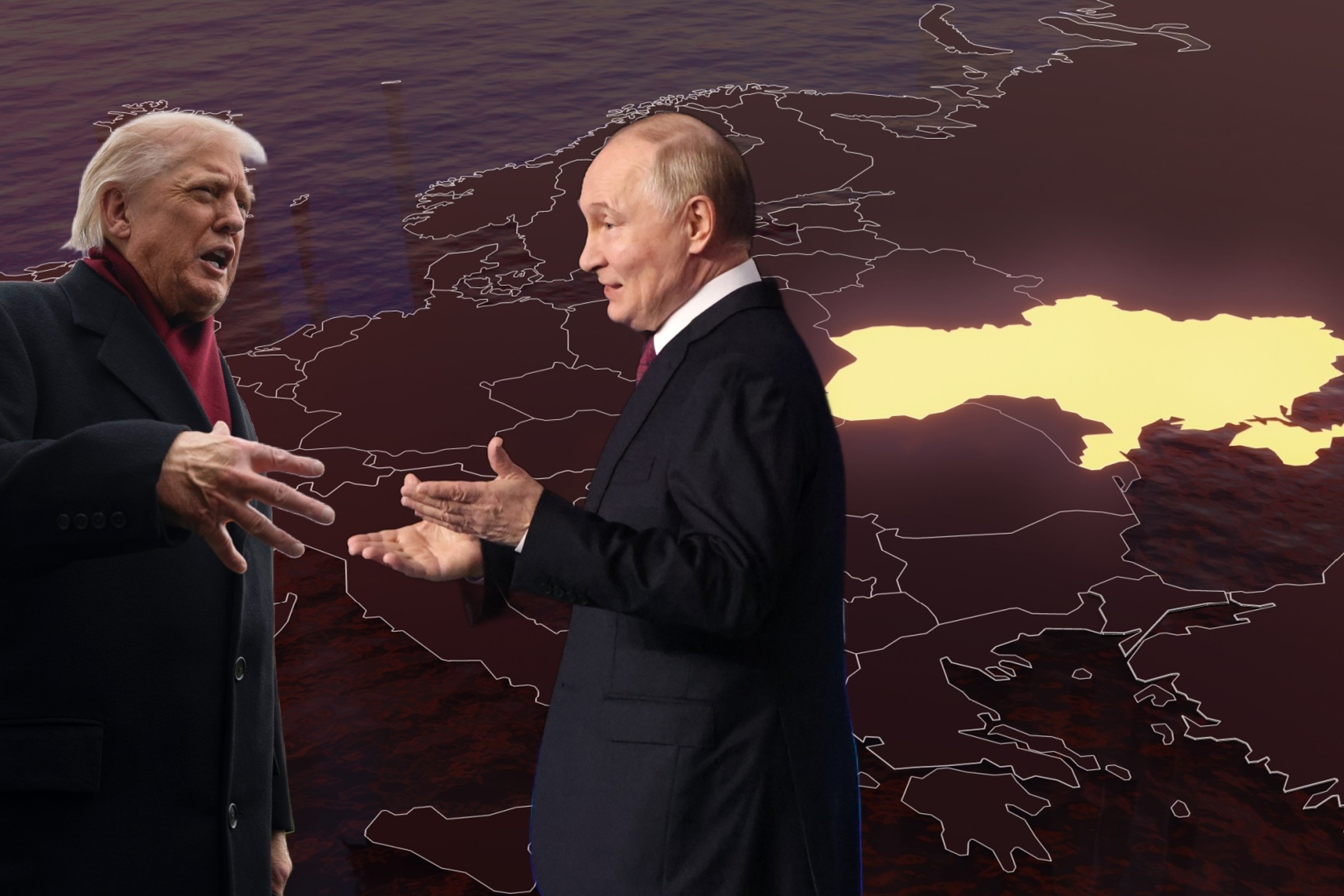
The immediate flashpoint is the revealed 28-point project, allegedly developed by Kremlin intermediaries without the participation of Kiev. Its origins immediately caused a political storm.
The article continues below the video
The document contains ultimatum for Ukraine: the surrender of large territorial areas – including areas in the eastern part of the Donbas region, currently controlled by Ukraine – a drastic reduction in the number of armed forces and the constitutional renunciation of all hopes of joining NATO.
Ukrainian President Volodymyr Zelensky has repeatedly rejected such conditions. Nevertheless, President Donald Trump is openly pressuring Ukraine to accept the agreement by Thursday, November 27 this year. [w USA Amerykanie świętują wówczas Święto Dziękczynienia]which further fuels tensions both at home and abroad.
Rounds even jokes that the lyrics “looked more like they were written in Russian,” implying that they came from abroad. Democratic Senator Jeanne Shaheen of New Hampshire calls the project a “Russian proposal […]. Many elements of this plan are completely unacceptable.”
In turn, independent Senator Angus King, a member of the Senate Foreign Relations Committee (SFRC), does not mince his words, comparing the proposal to British Prime Minister Neville Chamberlain's policy of appeasement towards Hitler in 1938. -It rewards aggression. This is a matter pure and simple, he thunders. — There is no ethical, legal, moral or political justification for Russia's claims against eastern Ukraine.
European allies are stunned
Washington's public breakdown in its diplomatic stance is baffling European allies who are wondering who is really driving U.S. policy. The spectacle of Washington contradicting itself in real time is quickly reverberating across the Atlantic.
For the US's foreign partners, this confusion is not only a communication problem, but also a strategic shock.
We are stunned. When senators say one thing and the State Department says the opposite on the same day, it looks as if Washington is negotiating with itself. How can Ukraine or Europe treat this as a real plan?
— says one senior Western diplomat anonymously in an interview with the Kyiv Post.
European politicians are increasingly vocal that Washington's position is too unclear to guide a unified Western approach. — We are preparing a counterproposal because, frankly, we cannot rely on the American document. Ukraine cannot negotiate on its own if the US position is unstable, says an EU diplomat briefed on the leak.
— Even by this administration's standards, the chaos around the “peace plan” seems… enormous. Tomorrow's talks in Geneva could bring clarity. They must do it – reacts Daniel Fried, an experienced American diplomat, former deputy secretary of state and former US ambassador to Poland.
Outrage: Appeasement and condemnation
Senators are opposed by the content of the proposal, which goes far beyond the usual terms of a ceasefire and, in their opinion, heads towards total surrender.
Five key senators, including Shaheen, King and Republican Sen. Thom Tillis of North Carolina, are sharply critical of the idea by President Trump's associates. “We will not achieve lasting peace by offering Putin further concessions and fatally weakening Ukraine's ability to defend itself,” they say.
The confrontation between Secretary Rubio and the U.S. Senate is more than just a communication gaffe; it is a structural fracture at the heart of American foreign policy that fundamentally undermines the credibility of the United States at a moment of critical negotiations.
The question now is whether the United States can present a coherent position.
If the senators' account is true, the State Department is misleading the world by claiming that it is the author of the surrender document drafted by Russia.
However, if the State Department's account is true, senior senators are publicly accusing the secretary of state of privately opposing official U.S. policy
In both cases the result is the same: The United States presents two contradictory diplomatic positions.
European allies, unable to trust the American position, may be forced to take unilateral action. This would be an attempt to fill the vacuum created by the dramatic split in Washington. This is a risky move and is proof of the breakdown of transatlantic solidarity.
Psychological effects
Glen Howard, president of the Saratoga Foundation and one of Washington's most experienced Russia strategists, plus something that is too often not talked about.
In an interview with the Kyiv Post, he questions why Army Secretary Dan Driscoll was sent on a 12-hour train ride to Kiev to “get Ukraine to accept a peace plan that is not final.” It's a “major effort” given the White House's suggestion that the document remains unfinished.
Howard emphasizes that the outline of the plan “wasn't even accepted by the Russians” and that this situation constitutes a form of “psychological torture” for Ukrainians, who are already “aerial bombarded by Moscow on a daily basis.”
He also points out that Vice President J.D. Vance suggested that The United States may end diplomatic efforts if the plan fails — an outcome he says he hopes will come true.
Rubio, Daniel Driscoll [sekretarz armii USA i nowy specjalny wysłannik Białego Domu do spraw Ukrainy] and envoy Steve Witkoff are in Geneva today on a mission to sell a “strong framework” that much of the U.S. Congress and U.S. allies see as the Kremlin's “wish list.”
The success of their mission will depend less on the documentary's merits than on their ability to convincingly present a united American front that does not actually exist.
I’m Ashley Davis as an editor, I’m committed to upholding the highest standards of integrity and accuracy in every piece we publish. My work is driven by curiosity, a passion for truth, and a belief that journalism plays a crucial role in shaping public discourse. I strive to tell stories that not only inform but also inspire action and conversation.