Taxation and law specialists consulted by “Adevărul” say that the exemption of certain natural persons from the obligation to issue e-invoices from June 1 corrects a legislative error that would have created unnecessary administrative costs for persons without actual commercial activity.
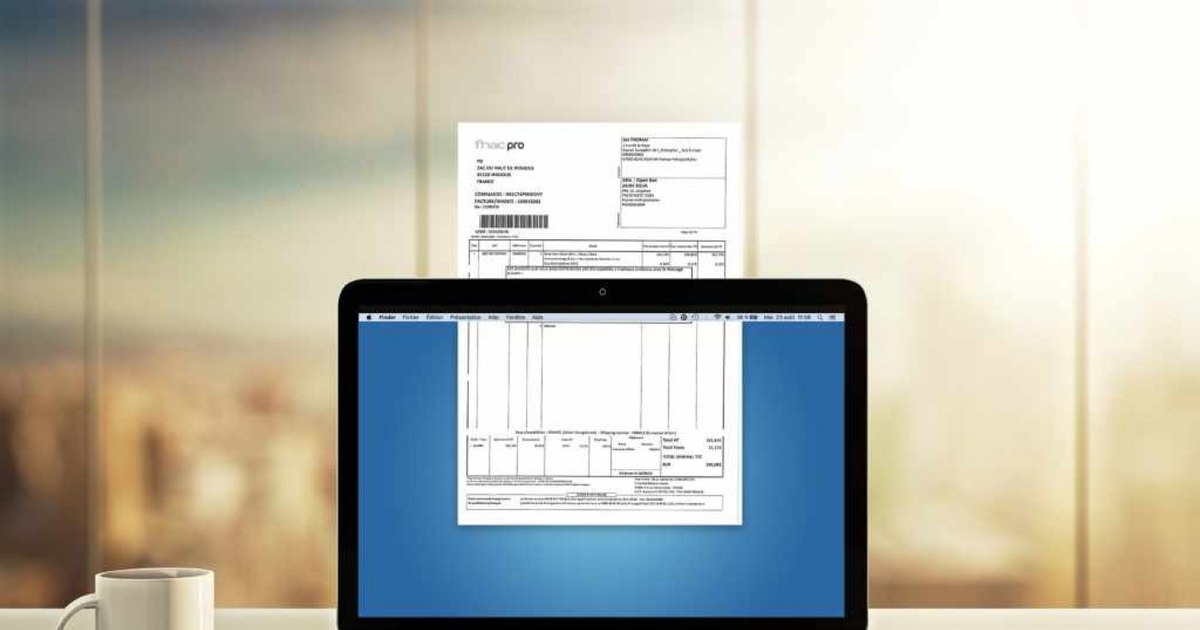
e-Invoice becomes optional for individuals. Archive photo
“The measure comes on time, the natural persons who earn income from self-employment they should have hired accountants to issue the e-invoice”accounting expert Cosmin Dumitrașcu declared for “Adevărul”.
Upfront obligations and the risk of additional red tape
It explains that, in the original form, the persons concerned, including those who derive income from copyright or agriculture, should have registered by June 1, 2026 with the SPV by submitting form 082 and submit the invoices through the electronic system, similar to a firm or a PFA. In his opinion, this change corrects a situation which, although necessary for the purposes of digitalisation, would have created excessive administrative burdens.
“Initially, confusion was created, but above all it would have created quite a lot of administrative tax burdens for a category of taxpayers, who essentially do not carry out economic activity in a commercial sense”stated Dumitrașcu, founder of ABS Group Romania.
The digitization direction remains, but with differentiated application
He points out that the digitization direction is right, but it needs to be applied differently so that it supports the fight against tax evasion without burdening small or occasional taxpayers.
“The trend must continue to be towards the digitization of taxation, as Romania needs tools to combat tax evasion, but also to help the business environment through measures to support it“, he added.
At the same time, he draws attention that the mandatory imposition of the e-Invoice for natural persons identified by CNP, under the conditions of using a system designed for economic operators, would have represented a disproportionate burden.
“However, a mandatory tax burden for natural persons who identify themselves with the CNP, in using an instrument designed for companies and PFAs (ie those carrying out actual economic activity), would have been an administratively unjustified burden”the tax consultant also said.
The tax regime remains unchanged for existing income
It specifies that, in the future, the income of these persons will be declared through the Single Declaration, in the case of those without full-time employment contracts, or the tax will be withheld at source and transferred to ANAF, as before. The use of the system remains optional, being recommended especially for taxpayers with higher incomes.
“Optionally, it is certainly possible to embrace the new declaration structure, which I recommend especially for those with high incomes in order to carefully monitor not to exceed the VAT ceiling“, he explained, adding that “it is very good that it remains optional, and it will not be a new tax burden”.
Lawyer Elena Grecu: “An error in the conception of the initial framework”
And lawyer Elena Grecu claims that the amendment is necessary, as it corrects an unjustified expansion of a tax instrument originally designed for relations between economic operators.
“The amendment corrects a design error in the initial framework. The obligation to use the RO e-Invoice system, introduced by Emergency Ordinance No. 120/2021, was designed as a fiscal control tool in relations between economic operators”she explained.
A translator does not carry out economic activity in the commercial sense
It shows that the extension of the system to individuals with income from copyright or agriculture has created an overlap between the commercial regime of e-invoicing and civil relations.
From June 1, people with income from copyrights are obliged to issue invoices
“Its extension to natural persons identified by personal numerical code, including those who obtain occasional income from copyright or from agricultural activities, has generated an artificial overlap between the commercial regime of electronic invoicing and reports of a civil nature regulated separately – as is the case with copyrights, governed by Law No. 8/1996”said Grecu.
She emphasizes that these categories cannot be treated as economic operators in the strict sense.
“An author or translator who receives remuneration for his work does not carry out economic activity in a commercial sense and cannot be treated administratively identically to an active economic agent”the lawyer added.
The EU did not ask us to implement e-Invoice for natural persons
In his opinion, the solution is in line with European regulations, which mainly target transactions between economic operators and not individuals with occasional incomes.
“The opportunity for change is also supported by European logic. Directive (EU) 2025/516, part of the 'VAT in the digital age' (ViDA) package, adopted on 11 March 2025, builds mandatory electronic invoicing around B2B and cross-border transactions between economic operators – not around individuals with civil or casual income”she explained.
At the same time, it shows that the extension of the obligation was not imposed by European legislation.
“The Romanian extension to the persons identified through the CNP was not, therefore, required by Union law, but represented an administrative task imposed unilaterally”said Grecu.
Ioana Rus Nastea: Farmers already use marketing cards
For her part, Ioana Rus Nastea, founder of Grup Agercont, explained to “Adevărul” that the changes announced by the Ministry of Finance bring an important clarification: the RO e-Invoice system was designed to combat tax evasion in the business environment, not to impose administrative obligations on natural persons who obtain occasional incomes or operate in special tax regimes.
“The exception of farmers who already use marketing books, copyright holders and foreign cultural institutes without a Romanian fiscal code represents a correct calibration of the instrument. Similarly, the possibility of deletion from the registers eliminates an unjustified rigidity of the current system.
New rules for renting out homes through Airbnb and Booking, from May 20, 2026
Tax digitization remains a legitimate goal. But its effectiveness depends precisely on proportionate enforcement — where the fiscal risk is real and where the administrative infrastructure allows for effective compliance,” explained Ioana Rus Nastea.
Exceptions and flexibility of the e-Invoice system
Individuals who obtain income from copyright or agricultural activities will no longer be obliged to use the RO e-Invoice system, after the adoption of an amendment initiated by the Ministry of Finance. The measure aims at simplifying the rules for using the system and reducing bureaucracy for natural persons and certain categories of taxpayers, given that it is considered that the initial obligations would have been disproportionate to the nature of the targeted activities.
The amendment also introduces clear exceptions: natural persons who obtain income from copyrights, natural person farmers who apply the special regime, as well as foreign institutes and cultural centers operating on the basis of intergovernmental agreements are exempted from the obligation to use e-Invoice.
Also, the elimination of the obligation for natural persons with CNP makes the system optional for them, and farmers benefit from an exception in the context of the existence of marketing cards, while cultural institutes are exempted due to technical difficulties and the lack of tax codes.
Another important element is the possibility of deletion from the RO e-Invoice registers for people who no longer have the obligation or no longer wish to use the system, a measure considered by specialists to be one of making the system more flexible and adapting it to the reality of taxpayers.