What awaits us if the president fails to form a stable government. Economist Radu Nechita: “Romania is following in the footsteps of Greece”

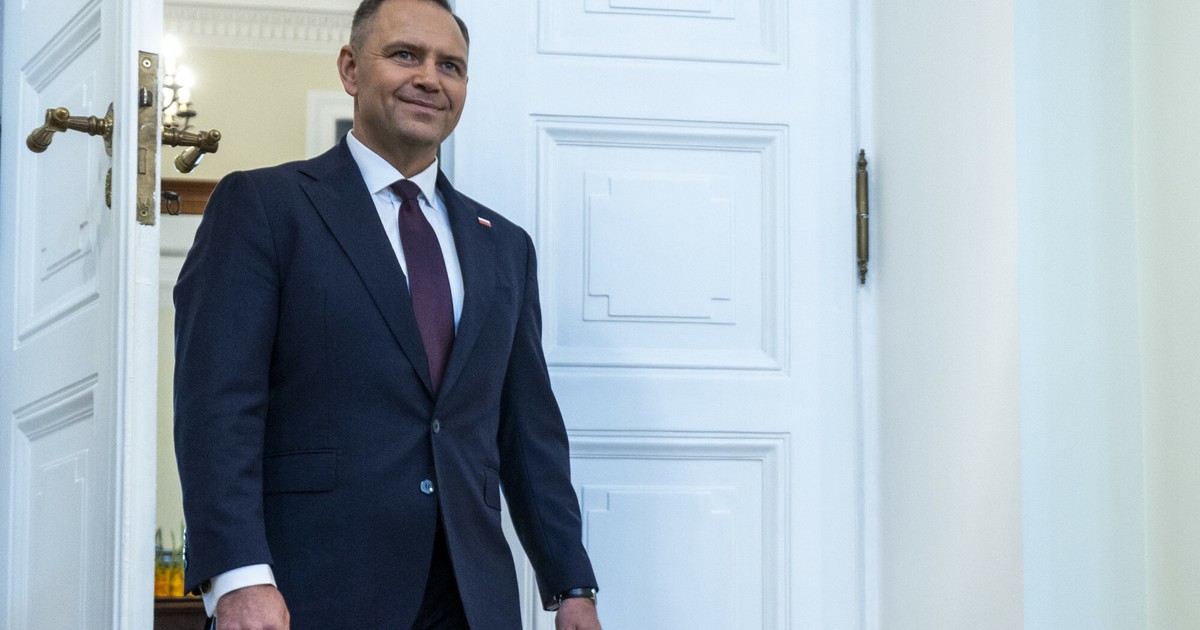
Romania has been left without a government and is heading inexorably in the footsteps of Greece, warns economist Radu Nechita. While President Nicușor Dan is desperately trying to form a government, the politicians remain caught in a trap of hubris, and this is leading the country to the precipice.
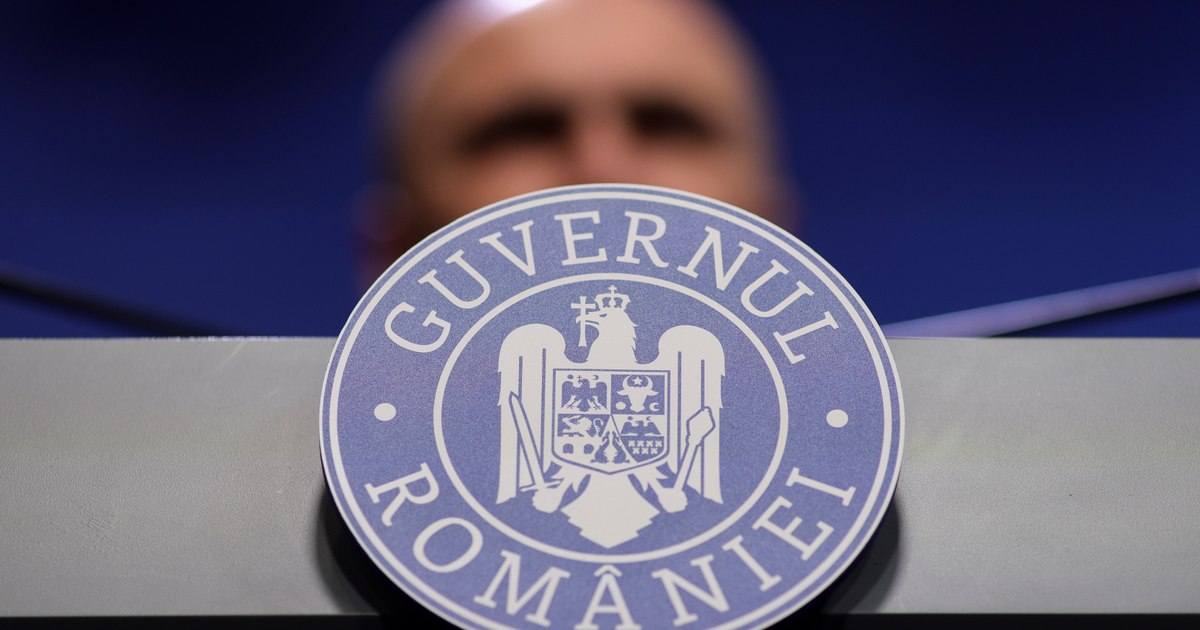
Romania has even more problems, after the fall of the Bolojan Government. PHOTO: Inquam Photos/ Octav Ganea
Economist Radu Nechita from the Babeș-Bolyai University in Cluj-Napoca shows that Romania exposes itself to huge risks due to the indolence of politicians, and the lack of reforms exposes us even more, especially since the patience of the European Union – the only one that still finances us and overlooks the economic and political slippages – is running out.
The truth: Romania has no government, is in recession and has the biggest deficit, respectively the biggest inflation in the EU. How is it that even the former Hungary of Orban, Slovakia of Fico and Babiš, do not have the problems that Romania has?
Radu Nechita: Well, Hungary had some problems, because the European Union blocked several billion euros, and now the new prime minister is trying to negotiate the unblocking of the money. But, really, no one has Romania's deficit and inflation, because they weren't as irresponsible as ours, what are we talking about? Our political class and the voters in Romania seem to be running a race in which politicians compete to see who promises more demagogic, more unsustainable, more damaging policies for long-term economic growth. And in the meantime they are chasing investors.
On the other hand, although there is so much populism in all parties, we are the poorest in the European Union. Why?
Because in Romania the productivity is lower than in other parts. We are talking about productivity divided by the whole population. We have the lowest level of occupancy and activity. There are people who could be working, but they don't appear anywhere in the records. Labor force from 15 or up to 65 years. People are engaged in something other than the productive work at least recorded in the statistics.
Millions of Romanians, as in the X Files
Does the fact that we have millions of Romanians abroad also matter?
There are a lot of people who are nowhere, actually. They are not at school, because they do not appear in the statistics of the educational institutions. They are neither on the labor market nor unemployed. A good part of the population we simply do not know where it is. But those people live, but it is difficult to understand where and how. If we strictly count the people who appear as taxpayers in the private sector, there are about 3-4 million Romanians. With 1.5 million budget holders. Plus children, plus pensioners, plus… So the situation – from a demographic point of view, from an economic point of view – is very worrying. And we have an auction of demagogic policies that talk more about allowance increases, and pensions, and early retirements, and all kinds of sinecures, black hole subsidies – instead of talking about privatizing them. We need hundreds of feasibility studies instead of closing black holes. Instead of creating a favorable environment for investors, we are competing to impose all kinds of taxes and duties. And we talk non-stop about austerity, but the public expenditures of the Romanian state are double in euros compared to how they were six or seven years ago. In fact, the Romanian state knows no austerity.
In the footsteps of Greece
Are we sinking into the abyss? Are we getting to where Greece was, near disaster?
We aspire to make the same mistakes as the Greeks, refusing to learn from them. Some screws have been tightened here and there, some things are made more efficient, but the speed is too low. The time is approaching when the patience of the European Union ends – because we are more than twice the maximum budget deficit allowed by the European treaties, we managed to convince them that we will try, and they closed their eyes. But the moment they see the exact same policies that brought us to this abysmal deficit, they will say, “Stop.” And the EU was very lenient with us, it applied more flexible sanctioning procedures than was the case.
Do you expect Brussels to actually move to sanctions against Romania?
At some point this rule, in order to have any credibility, will have to be applied, enforced. And the bad part is that Romania is a very good candidate. Best. That you will not come to apply it to one that has a deficit of 3.1% in one year. But someone who had a deficit of 9, towards 10% of GDP, attention, who barely managed to reduce it to 7% or we are still thinking about whether we reduce it to 7% or not, and who, instead of continuing on this trajectory or even accelerating it, puts it on pause, is a very good candidate who asks for it. Realistically, we are basically asking for the sanction or sanctions.
What lies behind the EU's historic new budget. Warning: Our fees may go to interest only
What sanctions to expect
What would this sanction mean for Romania?
It means that we can wake up either with the right to vote suspended or with European funds stopped. Or with both.
So the risk is higher than ever, including for the lion?
Well yes, there is a major risk. And those who now exchange lei for euros anticipate such a risk. That is why the exchange rate has reached where it has, despite the probable interventions of the National Bank, which should not have taken place.
Does this mean that the leu should not have been protected, that the BNR should have let it devalue even more?
Yes, because through these interventions, by selling the euro to stabilize the exchange rate, you are practically hiding from the electorate the consequences of this morning's political decision. And I believe that if the National Bank had not intervened, the deterioration of the exchange rate, the depreciation of the leu, would have been greater.
OK, we are talking about problems, or about some of the problems of the Romanian economy, but what would be the solutions to avoid this disaster?
The solutions are to control public spending, to bring it to a sustainable level, to a decent level. With that I would start the conclusions. Reduced the number, but really reduced the number of state employees — reduced privileges, reduced expenses. And the transition to administrative reform. And necessarily to close the black holes, corporate governance, to privatize including partially state enterprises. So a partial privatization, including of state companies that have a profitability just enough to be there, should not be noticed.
Disaster knocks at the door
What awaits us if we continue to hesitate or mimic the reforms as before?
If we don't do this, this whole extractive network — which you see how hard it squirms, how effective it is in taking down those who threaten its privileges — this extractive network will not yield and will perpetuate a system that threatens our future, our children's, threatens us, puts us on hold, puts our prosperity on hold. And they don't care about the consequences. He prefers Romania to lose billions, tens of billions, than to see his salary reduced or his pensions cut. That we wonder why many of them receive that money and why they stubbornly refuse to reduce their undeserved wages.
From what you see now, a country without a government or with a minority government, maybe in the future we can avoid the disaster?
I don't see, I don't see how other than the reform solution. And now I don't see what measures they will take to continue this reform. I mean, among the necessary measures, I don't think they will be taken anymore, I really don't see who will take them. That means the perpetuation of loopholes, the perpetuation of black holes, the perpetuation of the system with its many forms of inefficiency and possibly the cosmeticizing of some “they will do they will do”. All the milestones that condition the access to some money under acceptable conditions will be postponed, will be torpedoed, will be unfulfilled, so the money will not come. And they don't care. Because it's money, a lot of it, which I can't embezzle as easily as the state budget.
The plan with which Romania can checkmate Russia. NATO General: “I did much more for the US than others”
And then it's a hassle for them to come up with some money that's being spent under the microscope and that's having an impact, because that gives a term of comparison to how the money that's being spent opaque and disturbed is being spent. So we're basically done. We don't know what's next yet, we'll see what happens. But the threat is greater than ever.
Would you consider the scenario of restoring the governing Coalition to carry out the reform?
No, I can't comment here. I don't know what can happen. Romanian politicians have taught us that there is nothing, no rational element that they can reject if somehow they think they can gain from this matter. So I don't rule out even the most abysmal policies. I have no reason to hope for wiser policies because if there had been wisdom yesterday or this morning or last week or last month, those measures would have been put into practice. The risk is that investors will leave, that capital will flee the country, that no other will come, that investments will be postponed, that other countries will be preferred to investments in Romania, and that the tap will be closed — or at least temporarily, the tap of European funds. We now have some opportunities to access some money, to capitalize on it in an almost intelligent way. We are exposing ourselves, we have an artificially induced crisis because the extractive network felt threatened. I don't even know how threatened she really was by Bolojan, but she felt threatened and reacted as such. It's a cross-party network, it's not just from one party or another, and it's very hard to dislodge. And it will be hard to dislodge if the electorate doesn't wake up and get their hands on an economics book to understand what's going on. So, we can still hope, hope dies last.