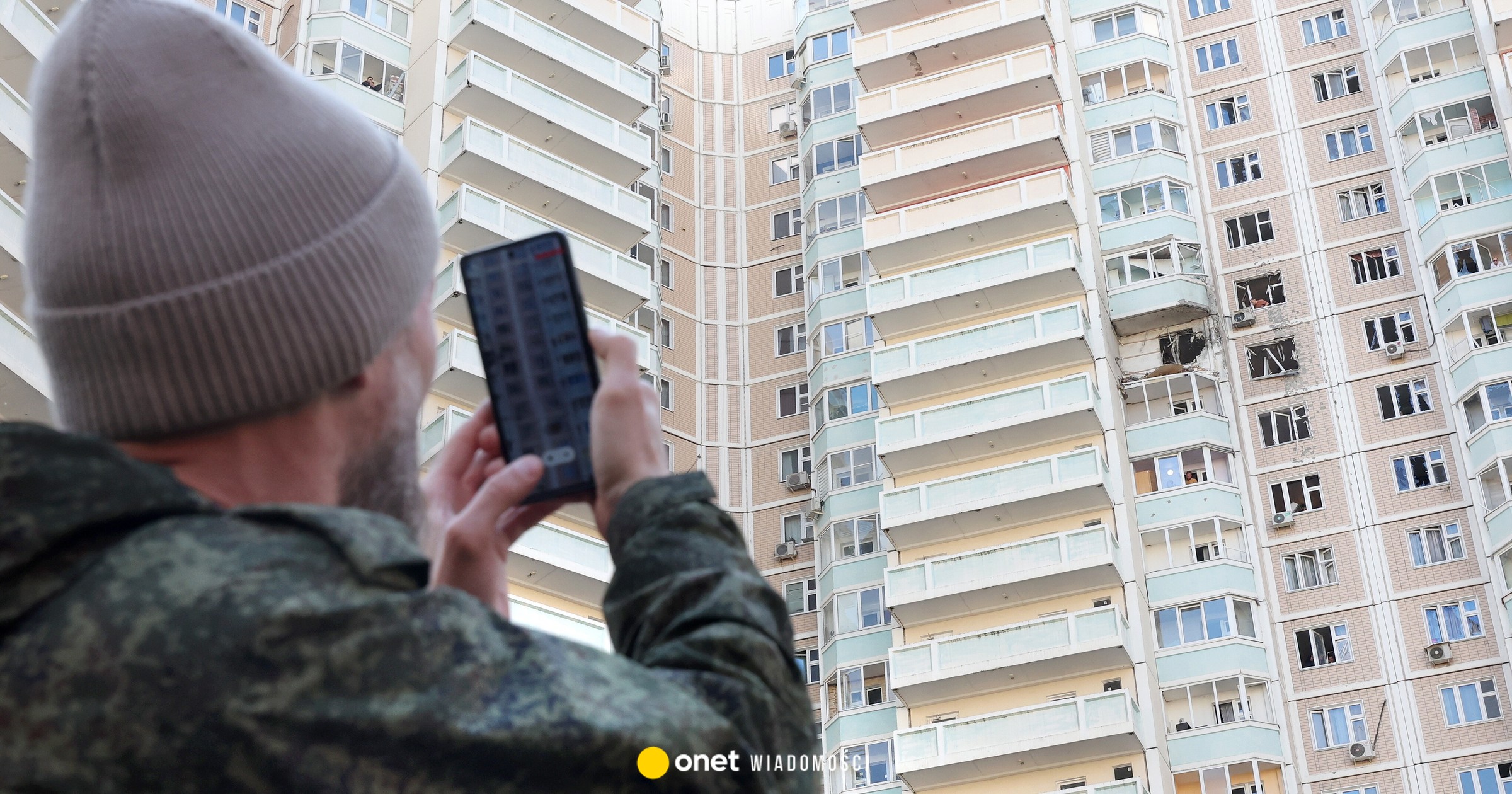
Gustav Gressel: This attack is a signal to Moscow. Before May 9, Russia threatened Ukraine with the destruction of Kiev if the parade was disrupted. According to the principle: “We can do it, you can't.” Ultimately, a temporary ceasefire and a prisoner exchange were reached – much smaller than planned.
The Russian attack occurred with a delay of several days. In Ukraine, there were fears that the Russian army would try to exhaust the country with constant shelling. It is known that it is becoming more and more difficult to resist such attacks. Now, however, Kyiv has set a clear boundary. The message is clear: mass attacks on us don't come for free – we can do it too. We can also wage war at this level of escalation.
“Russian weapons are very inaccurate”
Zelensky talked about a fair answer. Was she really like that?
Ukraine is certainly paying more attention to what collateral damage its attacks may cause. On the other hand, many Russian strikes that hit civilian buildings were originally aimed at weapons plants or military targets, but fail to hit them. Russian weapons are very inaccurate. Some of the attacks are simple bomb terror: libraries, cultural or medical facilities. However, if a cruise missile can reach Moscow, it is a clear signal to the Kremlin.
The article continues below the video
What goals does Kyiv pursue? Is it about putting pressure on the Russian regime, about moving the war to Russia and making it visible to Russians?
I would say that this last point is a side effect. When conducting these long-range attacks, the Ukrainians have two main goals. Firstly, it is about cutting off the Kremlin's sources of income by attacking oil and gas infrastructure, especially export infrastructure. The second target is military installations: the arms industry, ammunition warehouses and, above all, facilities producing long-range weapons.
Ukraine does not receive enough air defense assets to counter such weapons. Therefore, we need to attack the entire production chain. All Ukrainian attacks fall into these two categories. This is also a significant qualitative difference between these attacks: design offices and component manufacturers are often located in densely built-up areas. However, apartment buildings are not the target. The real target is military facilities.
“In Russia, the arms industry is highly centralized”
What determines Ukraine's advantage? Is this flexibility in the defense sector?
There is no clear advantage here. In production, Ukrainians use a very decentralized arms industry. This means that if the Russians locate and attack one plant, they only hit one of many, and they are not always successful. In Russia, however, the arms industry is highly centralized. If one plant is hit, the entire production line of a given weapon is destroyed.
Vladimir Putin during a visit to the Motovilicha arms plant in Perm, September 19, 2025.EPA/GAVRIIL GRIGOROV / SPUTNIK / KREMLIN POOL / PAP
So why are Ukrainians more effective today than before? These are medium-range attacks – up to a depth of 200 km. Reconnaissance drones at this distance have become very effective. Thanks to these strikes, the Ukrainians are increasingly hitting Russian anti-aircraft defenses. And if you manage to penetrate this defense zone, it is easier to operate deep inside Russian territory.
Ukraine is achieving these successes despite the suspension of American military aid. What does this mean for the US image in this war?
US reliability was the starting point for these attacks. The Ukrainian medium-range weapon was intended to replace the American Himars systems. There is no ammunition for these rocket launchers. Americans have a monopoly on production and they use it politically. Moreover, the Russians quickly learned to jam GPS transmitters in Himars, and the ammunition itself was extremely expensive. This prompted Ukrainians to invest in drones with such a range.
“If it's a big breakthrough in the war, I'd be careful.”
Are Ukraine's recent successes only symbolic or… we can talk about a breakthrough?
Ukraine is doing much better than a year ago, but unfortunately Russia is taking the initiative. The Russians are still attacking, trying to break the belt of fortifications in Donbas. For Russia, however, this currently means much greater losses in equipment and people. The question is what price Putin is willing to pay. As for a major breakthrough in the war, I would be cautious. We need to watch how the situation develops.
The coming winter could mean Ukraine's biggest shortage of anti-aircraft ammunition yet, and joint arms projects with Western partners are not yet operational. The next winter war may be exceptionally difficult. Russia will certainly wait and see what damage it manages to do.
Representatives of Russia they use the word “dialogue” more and more often. However, you are talking about “another winter of war”. So, is this Kremlin rhetoric not a change of attitude, but just a political move?
Russia is not giving up its war goals. Putin confirmed them. Such rhetoric is simply a continuation of warfare – this time in words.
I’m Ashley Davis as an editor, I’m committed to upholding the highest standards of integrity and accuracy in every piece we publish. My work is driven by curiosity, a passion for truth, and a belief that journalism plays a crucial role in shaping public discourse. I strive to tell stories that not only inform but also inspire action and conversation.