“If he's jealous, does that mean he loves me?” The toxic couple myth debunked by psychotherapists

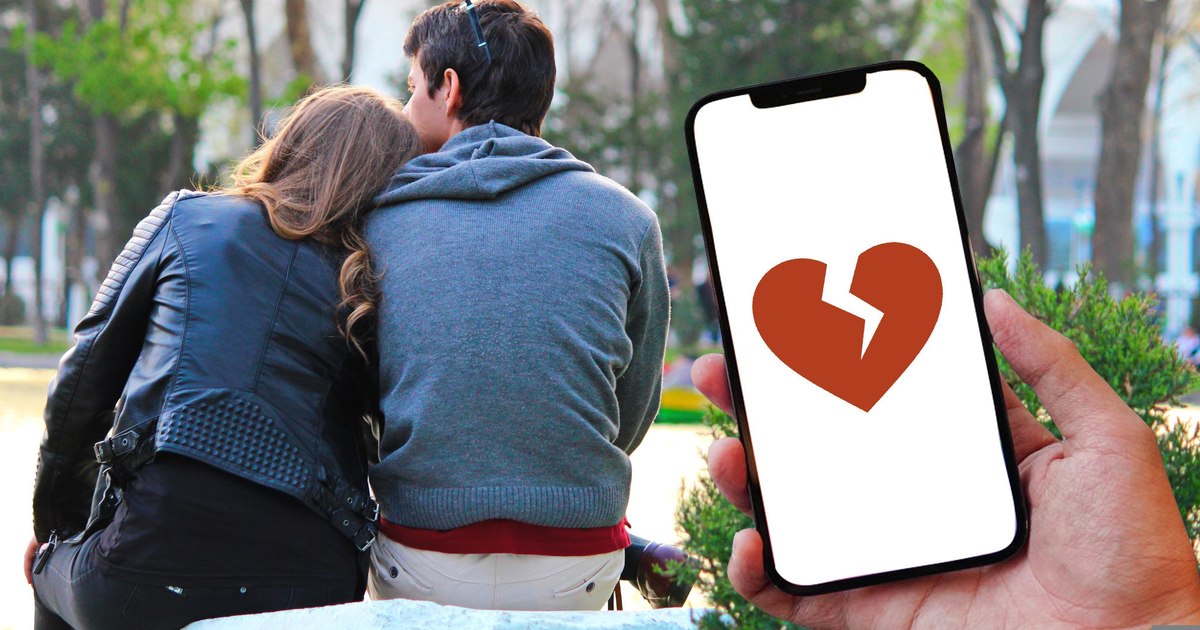
Jealousy does not come only with arguments, suspicions or obvious conflicts. Specialists say that it often begins subtly: through repeated questions, the constant need for confirmation, negative interpretations and the permanent fear of losing the loved one. Over time, however, these behaviors can slowly damage the relationship.
Many people confuse jealousy with love or emotional involvement Photo Source: Pixabay
A new study published in Journal of Social and Personal Relationships shows that when one of the partners feel threatened by another person, they end up investing more energy in “the defense” the relationship.
“I frequently notice that jealousy is one of the emotions that destroys relationships the slowest, but also the deepest. It doesn't always appear through obvious scandals or direct accusations. It often starts subtly, through repeated questions, the constant need for confirmations, suspicions, verifications or negative interpretations of mundane situations. However, over time, it completely changes the dynamics of a couple and the way partners end up looking at each other.” explains for “Adevărul” Laura Găvan, cognitive-behavioral psychotherapist.
Jealousy doesn't always mean love
Many people confuse jealousy with love or emotional involvement, but experts point out that things are more complicated.
“I often hear the idea: 'If he's jealous, he cares'. In reality, excessive jealousy is less about love and more about fear. In my experience, behind jealousy I rarely find 'too much love', but rather insecurity, anxiety, fear of abandonment and a deep need for validation.” says Laura Găvan.
According to research, when jealousy occurs, people no longer focus so much on closeness, communication and connection in the relationship, but on the fear of losing their partner. Thus, they become more attentive to things they perceive as threats and feel the need to control the relationship more
“Sometimes jealousy comes from childhood and the family behaviors in which the person grew up. If you lived in an environment where there was emotional instability, conflict, criticism or conditioned affection, you can come to view relationships as something unsafe and unpredictable. The child who did not feel emotionally secure often becomes the adult who lives in constant fear of being abandoned or replaced.”she points out.
Other times, jealousy arises after painful experiences in previous relationships. People who have been through infidelity can enter a new relationship in a constant state of alertness.
“Basically, they are no longer just reacting to their current partner, but also to old emotional wounds that have not been healed,” explains the specialist.
How the vicious circle of jealousy appears
Researchers from the University of Cologne analyzed the behavior of hundreds of people and observed that jealousy pushes partners towards defensive behaviors: constant checks, monitoring, suspicions or an excessive need for reassurance.
Signs that many mistake for love in a toxic relationship. Specialist: “Control can look like care”
The problem is that these reactions don't calm anxiety, they amplify it.
“There is also a very strong connection between jealousy and low self-esteem. When someone feels, deep down, that they are not valuable enough, there is a constant fear of being compared, replaced, or abandoned. In such situations, any delay in a message, any change in tone, or any mundane interaction of the partner can be interpreted as a threat.” says Laura Găvan.
This says that many people end up developing distorted thoughts about the relationship: “If he doesn't answer right away, he must be hiding something” or “If he's talking to someone else, it means he doesn't love me anymore.”
“The problem is that these interpretations become filters through which the person begins to view the whole relationship. Over time, they are no longer reacting to reality, but to their own scenarios fueled by anxiety and insecurity.”
Control destroys emotional closeness
The specialist warns that jealousy does not always manifest itself dramatically. Sometimes it appears through considered behaviors “normal” or romanticized: checking the phone, the need to constantly know where the partner is, repetitive questions or possessiveness disguised as care.
“At first, these behaviors may seem like evidence of interest and emotional involvement. But over time, they become suffocating and erode trust between partners,” says the psychotherapist.
In many couples, the more one person tries to control the relationship out of fear of abandonment, the more the other partner begins to feel monitored and deprived of emotional freedom. He becomes defensive, avoids certain discussions, or hides minor things just to avoid conflict.
“And these reactions are then interpreted as 'proof' that the suspicions were real. Thus, jealousy ends up creating exactly the distance that the person fears the most”explains Laura Găvan.
The study's findings confirm this dynamic. The researchers observed that people who were constantly focused on “protecting” the relationship became more jealous and emotionally insecure over time. Conversely, those who continued to invest time in communication and closeness had more stable and satisfying relationships.
The mistake many people make after being rejected. Specialist: “Many people come to believe that there is something wrong with them”
How can jealousy be managed in a healthy way?
The psychotherapist says that jealousy does not disappear by more control, but by understanding the real causes behind it: “Change occurs when the person begins to notice what activates this fear, what emotional wounds they carry, and how much they tie their self-worth to the validation they receive from the relationship.”
In therapy, one of the most important processes is the differentiation between reality and interpretation.
“People come to notice that any delay, withdrawal or change in behavior does not automatically mean rejection or betrayal. Just as important is rebuilding self-esteem and learning a healthier way to manage anxiety and insecurity,” points out the specialist.
She points out that occasional jealousy is normal and human. But it becomes dangerous when it starts to rule the relationship and turns love into a constant struggle for control and reassurance.
“From what I observe in my practice, many relationships are destroyed not by the lack of love, but by the constant fear of losing it,” concludes Laura Găvan.