The job coveted by IT professionals looking for new jobs: “There is enough work, but not in comfortable offices”

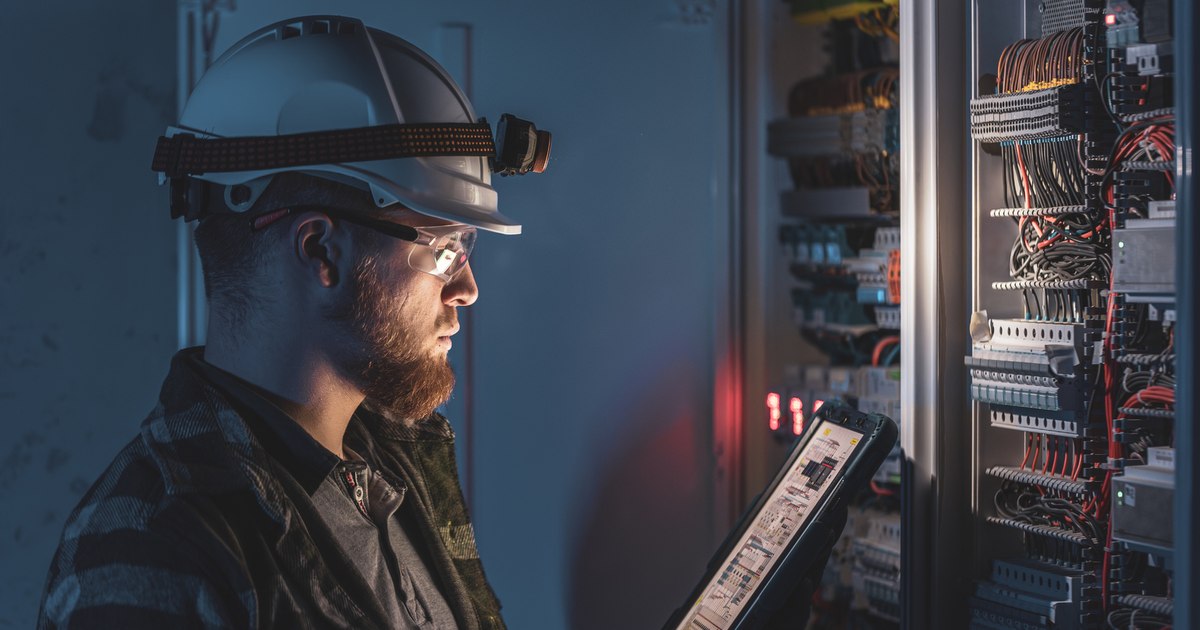
The ironic message of a Romanian who complained that more and more IT professionals want to re-profile themselves as electricians sparked heated disputes in the online environment. Many programmers claim that the job of an electrician would be within their reach, even if only with the help of a specialization course.
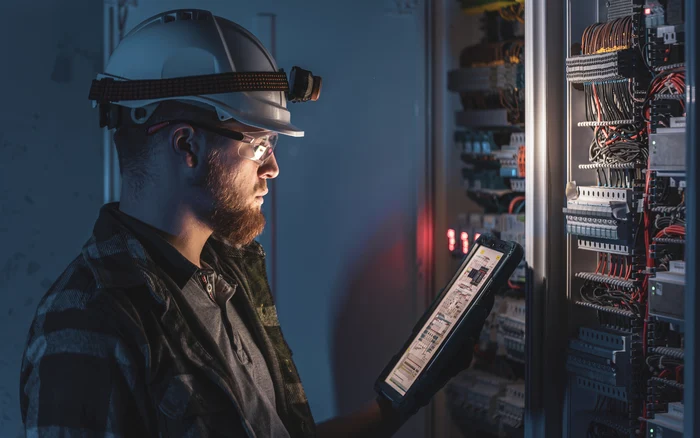
The job of electrician is wanted in Romania. Photo: Freepik.com
More than 220,000 Romanians work in the field of IT (Information Technology), according to the latest Eurostat reports, with the number increasing in recent years.
Until the end of 2024, the IT industry has benefited from an income tax exemption for the salaries of employees in this sector, but also from other tax facilities. Tax facilities, considered necessary to develop the software industry in Romania, have been eliminated from 2025, and many Romanians have felt the impact of the new measures.
The pressure on the labor market in this field continued to increase with the development of Artificial Intelligence (AI) programs, and the insecurity of jobs is also among the reasons that led many Romanian programmers to reorient themselves towards other jobs.
From IT-ist to electrician: how hard can it be?
One of the most sought-after jobs is that of electrician, where some IT workers find compatibility with the field in which they work. The field can offer attractive income, independence and mobility, but how ex-IT professionals could adapt to it with just an electrician's course is controversial.
The ironic message of a Romanian for IT professionals who want to re-profile themselves as electricians caused a wave of reactions on a group dedicated to programmers on the Reddit platform.
“All the re-profiling agencies have been filled with programmers who dream of becoming electricians after a six-month course. Well, let me ask you something. Those who did university + master's, that is, six years of electrical engineering, how much do you think they earn? The starting salary is around 4,000 lei, with waking up at 5 in the morning and going to work in a van, in the rain, in the cold, with a few salarymen who just finished high school. Do you think that your does anyone hire as industrial engineers with only one course? Do you think someone will call you to do a job of 2,000 euros in two days, when you have no experience? Wake up to reality, you who dream that you are going to sit in the heat and design systems for a corporation. Otherwise, you will wake up from brunch in Pipera to overalls.”he complained.
Some programmers agreed, saying that they couldn't trust the skills of a former programmer with an electrical degree.
“Who the hell puts the safety of their home or job in the hands of an electrician who has just finished a course? For “thousands of euros” he probably didn't just have to change sockets. I'm sure there are also successful re-profiling, really good people. But if he's already on the second re-profiling… I, for one, would think about it”. says a Romanian.
Someone else points out that some programmers who want to re-profile are forced by layoffs and don't do it willingly.
The job of electrician, accessible to IT people?
Many IT people, however, believe that the electrician job is accessible to IT people, and those who learn it can be more efficient than senior electricians.
“The stuff learned and then applied in Computer Science is orders of magnitude more complex than what the average electrician learns, knows or understands. The only reason electrician jobs pay so well is because there are too few of them in the market.” someone else thinks.
Another programmer claims that just as there are “programmers” who only connect two buttons on a website and have no idea how complex the software really is, there are electricians who only know how to connect two wires in a studio apartment.
A Romanian explains the desire of those who take electrician courses by the fact that people thus avoid spending large sums on work on electrical installations, which they could do themselves.
“Some do the course because you can't find a good electrician (or, if you do find one, it costs a lot and only takes over a month). So you better put your hand in and, with the labor money, do a better job or take two days in the mountains. You do something with two friends and you've also spent the money for the course. It's really cool to get your hands on a physical job, not just to hit the keys.” he says.
Another IT person complains about the quality of electrical work and believes that the job of an electrician is not complicated.
“A programmer-turned-electrician has every chance of being better than a dozen electricians who are paid thousands of euros and can't size the cables correctly. Many electricians can't read specifications, work according to regulations or consult the annexes. Or are electricians now afraid of competition? What did you think would happen to programmers if there are no more jobs in the field? That they go to work in restaurants? Also on technical jobs they will go, that's the truth, put up with the competition.” he states.
Electricity and IT, compatible fields?
Electricians are afraid of competition, someone else concludes. Some programmers say that they graduated from electrical engineering faculties and it would be very easy for them to work as electricians.
“I designed and executed the entire electrical installation of my house by myself, with automations, relays, everything. But I make money from programming. The electrician part is more of a hobby. I talked to many “electricians” who do installations in new constructions and, unfortunately, most of them are dust. I think there is a place in the market for well-trained engineers who know what they are doing: who understand what a voltage curve is, why you need a differential on each circuit, etc.”, states one of them.
Some say they plan to start electrician courses because they've had disappointing experiences with people they've hired for various jobs.
“The need for electricians in the country is so great that the demand is not even fully coagulated in the market yet. For those brave enough to retrain in such a complex and difficult job, I can only congratulate them. There is enough work, rest assured — but not in comfortable offices. Even a simple two-room communist apartment, where you work for about two weeks, can bring you 3,000-4,000 euro. And we don't even discuss more complex projects”, someone else adds.
Some argue that the money earned by Romanians specializing in electrical installation work is attractive.
“You can work on your own and have a very relaxed schedule. The same with money: you can initially earn even under 3,000 euros, until the world gets to know you. Depending on you, the quality of the services and the fee required for the interventions, you can build over time a solid base of clients who will recommend you further. From that moment on, the “salary” does not stop at either 4,000 or 10,000. But also as employed, you find a lot of attractive offers. And if you plan to go abroad, it's even better: as an electrician, you won't be without a job, regardless of the country — just like truck drivers or welders.” someone else thinks.
Romania is full of blocks built during the decades of communism, where work is needed on the electrical installations, which would not be too complicated for those who are reprofiling, adds another participant in the discussion. Programming is a difficult field compared to electronics, says another IT person.
What jobs do IT professionals want?
The profession of electrician is among the favorites of programmers who plan to re-profile themselves. But many of those who answered the question “what else would you choose to do outside of your field?” they had other options.
One of them claims that he wants to work in agriculture because he worked in the fields as a child. Someone else still prefers agriculture, because he idealized working in the countryside as a child. Another IT person thinks that working in interior design would suit him because it is a relaxing job.
“I'm a converted IT person, I was a mechanical engineer before. I've done a few things around the house, I could convert again as a painter, plumber, electrician or car mechanic. I cut my hair at home, my dad cuts my hair too; I'd also convert as a barber – how hard can a course be? I have a driver's license, I can transport people or goods”, states another programmer.
A programmer claims that carpentry is his great passion, while for others the profession of painter, plumber or tiler could be alternatives.