“China has never abandoned its intention to annex Taiwan by force and continues to expand its military capabilities in an attempt to change the status quo in the region and in China-Taiwan relations,” Taiwan President Lai Ching-te said on Sunday.
US arms sales and security cooperation “are not only necessary, but also critical to maintaining peace and stability in the region,” he added, calling for continued arms sales.
Trump said on Air Force One on Friday that he was suspending approval of arms sales to Taiwan. As he said, this is to be a “bargaining chip” in talks with Beijing. “I haven't approved it yet [sprzedaży broni]. We'll see what happens. Maybe I will, maybe I won't,” Trump told Fox News' Bret Baier.
Trump's U-turn caused shock not only in Taiwan and across Asia, but also astonishment in the Republican Party. Republicans cannot believe that the US president is doing so much to benefit China.
House Speaker Mike Johnson said on “Fox News Sunday” that the U.S. military and the president are “watching the situation closely” and Congress remains committed to supporting Taiwan's independence.
“It is in our interest, as it is in the interest of all freedom-loving people around the world,” Johnson said. “China cannot just come in and occupy this territory, and we will stand firm and strong in defending that position — I know Congress will do that.”
The article continues below the video
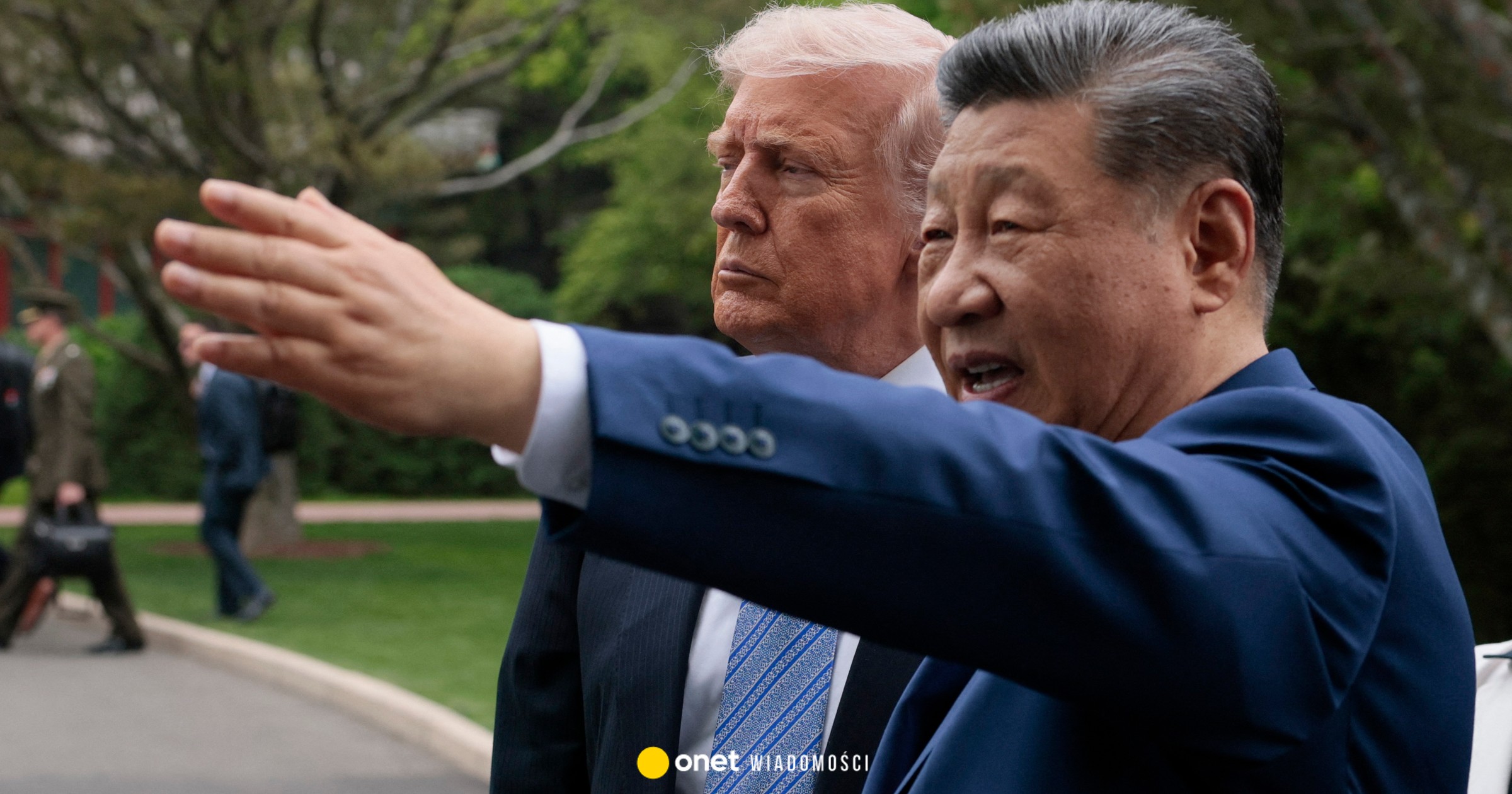
Trump made the comments after a two-day summit with Chinese leader Xi Jinping in Beijing that otherwise produced few concrete results. Ending arms sales to Taipei has long been a demand of Beijing, which recognizes the island as Chinese territory and is strengthening its claims by escalating military intimidation actions against Taiwan.
U.S. Trade Representative Jamieson Greer said Trump's comments do not mean he is withdrawing from U.S. relations with Taiwan. “The president has been very clear on this — there is no change in U.S. policy toward Taiwan,” Greer told ABC News on Sunday.
Trump said he had discussed U.S. arms sales to Taiwan in “very detail” with Xi. This is a clear violation of former President Ronald Reagan's 1982 commitment to the island.
These are the “six assurances” – a series of commitments made by President Ronald Reagan's administration that the United States will not consult with Beijing on arms sales to the island.
“What should I do, say I don't want to be with you [Xi Jinpingiem] talk about it because I have a contract signed in 1982?” Trump told reporters aboard Air Force One on Friday. “We actually discussed the whole arms sale issue in great detail.” He added that he would make a decision “very soon.”
Stopping arms sales to Taiwan would also violate the Taiwan Relations Act of 1979, which requires the United States to “supply weapons of a defensive nature to Taiwan” to deter potential Chinese aggression. The promise is “the most important deterrent against attempts to undermine regional peace and stability,” Lai said.
Trump has suggested that arms sales to Taiwan could embolden his government to declare formal independence — which could become a potential trigger for conflict with Beijing.
“We don't want anyone to [na Tajwanie] said: 'Let's declare independence because the United States supports us,'” Trump said. During a meeting with Trump last week, Xi Jinping repeated China's warning that such an action could risk conflict with Beijing.
“Taiwan's independence and peace in the Taiwan Strait region are as irreconcilable as fire and water,” Xi said, according to a statement from China's Ministry of Foreign Affairs.
Lai reiterated Taiwan's position that it is already a “sovereign and independent democratic state” to which Beijing has no legal claims. He also warned of the consequences of a possible Chinese invasion attempt, which Defense Secretary Pete Hegseth described as potentially “imminent” in a speech last year.
“Any action that undermines peace and stability across the Taiwan Strait is not only a flagrant challenge to international rules and order, but will also have a significant impact on the security of the Indo-Pacific region, global supply chains and the global economy,” Lai said.
Trade Representative Explains Trump's Weapons Remarks to Taiwan
On Sunday, U.S. Trade Representative Jamieson Greer tried to explain President Donald Trump's recent threat to halt arms sales to Taiwan, downplaying suggestions of a split in U.S. support for the island.
“The president is very focused on making sure nothing happens there,” Greer said. “That's why, when he spoke to the media later, he said, 'I have not made any commitments to President Xi on Taiwan.'” The president will keep his views on the sale [broni] and when and if it will happen at all.”
Greer also stated: “In fact, a stable relationship between the United States and China is really important. They are two significant economies. The issue of arms sales to Taiwan is something that the Chinese always raise. So the president is wondering how to approach it.”
In December, the Trump administration approved a record $11 billion package. (over PLN 40 billion) for Taiwan. Now this issue is in question.
In an interview with Fox News' Brett Baier, the US president stated that the decision would be up to China, which would constitute a significant change in US foreign policy.
I’m Ashley Davis as an editor, I’m committed to upholding the highest standards of integrity and accuracy in every piece we publish. My work is driven by curiosity, a passion for truth, and a belief that journalism plays a crucial role in shaping public discourse. I strive to tell stories that not only inform but also inspire action and conversation.