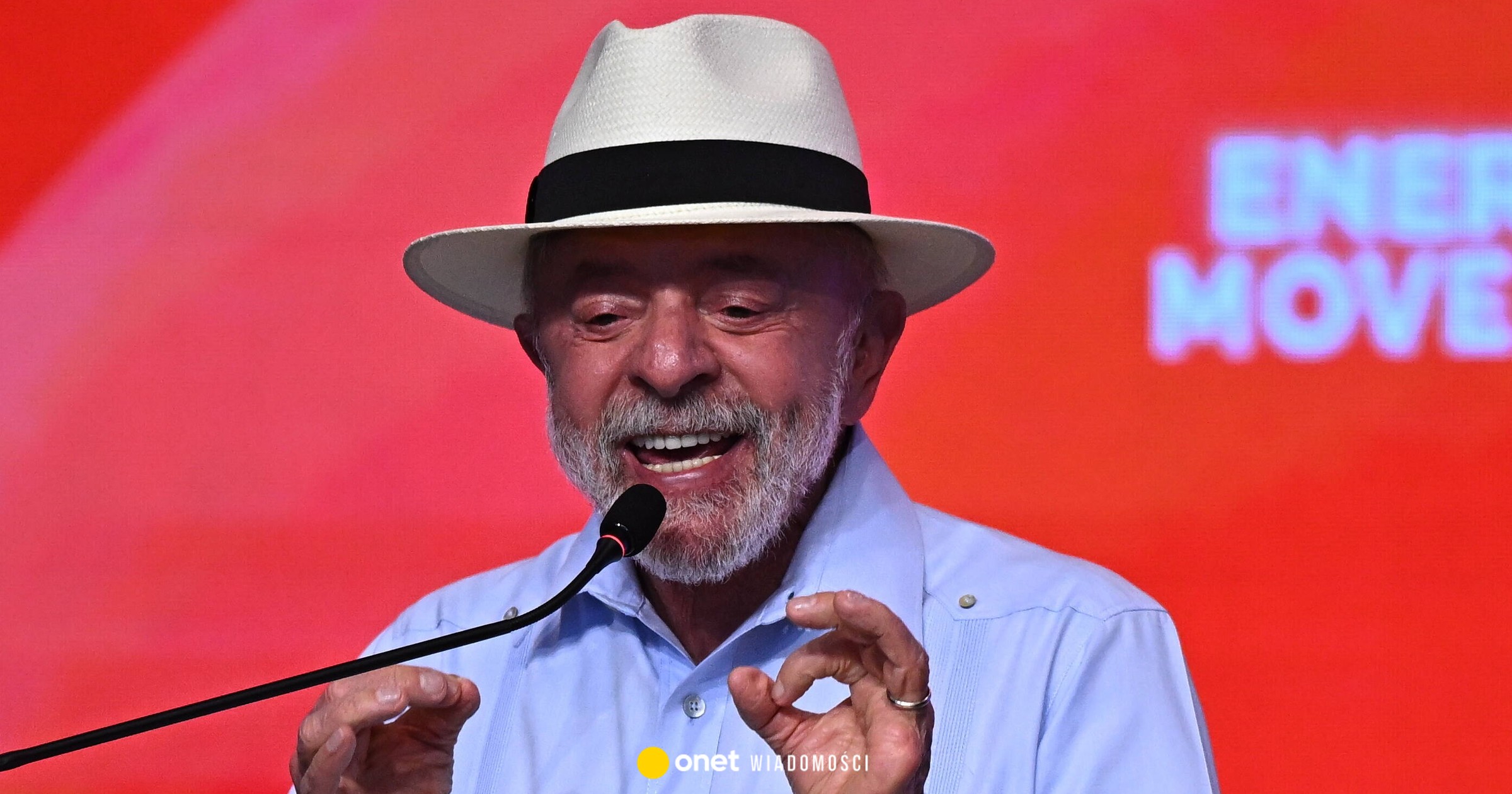
On October 4, Luiz Inácio Lula da Silva, the last Mohican of the socialist, workers' left, who moved from a large industrial plant to even larger politics, will again fight for the presidency. Back in December last year his victory seemed almost certain, even if structural factors do not work in the favor of the current head of state. The economy is growing, but slowly and below expectations. According to data from the Brazilian central bank, growth at the end of the first quarter of this year was only 1.9 percent, which was below last year's forecasts. This is important from the point of view not only of statistics and macroeconomics, but also of the political balance of power.
Brazil, the largest and economically strongest country in South America, has a significant class of entrepreneurs, often associated with traditional industries: oil extraction, metallurgy and the wood industry. These people are rather conservative, but in the previous elections, in 2022, they unanimously supported Lula, and not his right-wing opponent Jair Bolsonar. The expert consensus was that the “Trump of the tropics” lost because his disastrous management of the coronavirus pandemic crisis brought the economy to the brink of the abyss. Then, when he tried to prevent a change of power by even organizing a military committee to carry out a coup, the entrepreneurs and latifundists made him understand that they would not support such an idea.
Jair BolsonaroSebastiao Moreira/EPA/PAP
For this reason alone, Lula should be worried about the slow growth, because business people are a barometer of social mood, and the less willing they are to publicly declare support, the more likely it is that they will not provide it.
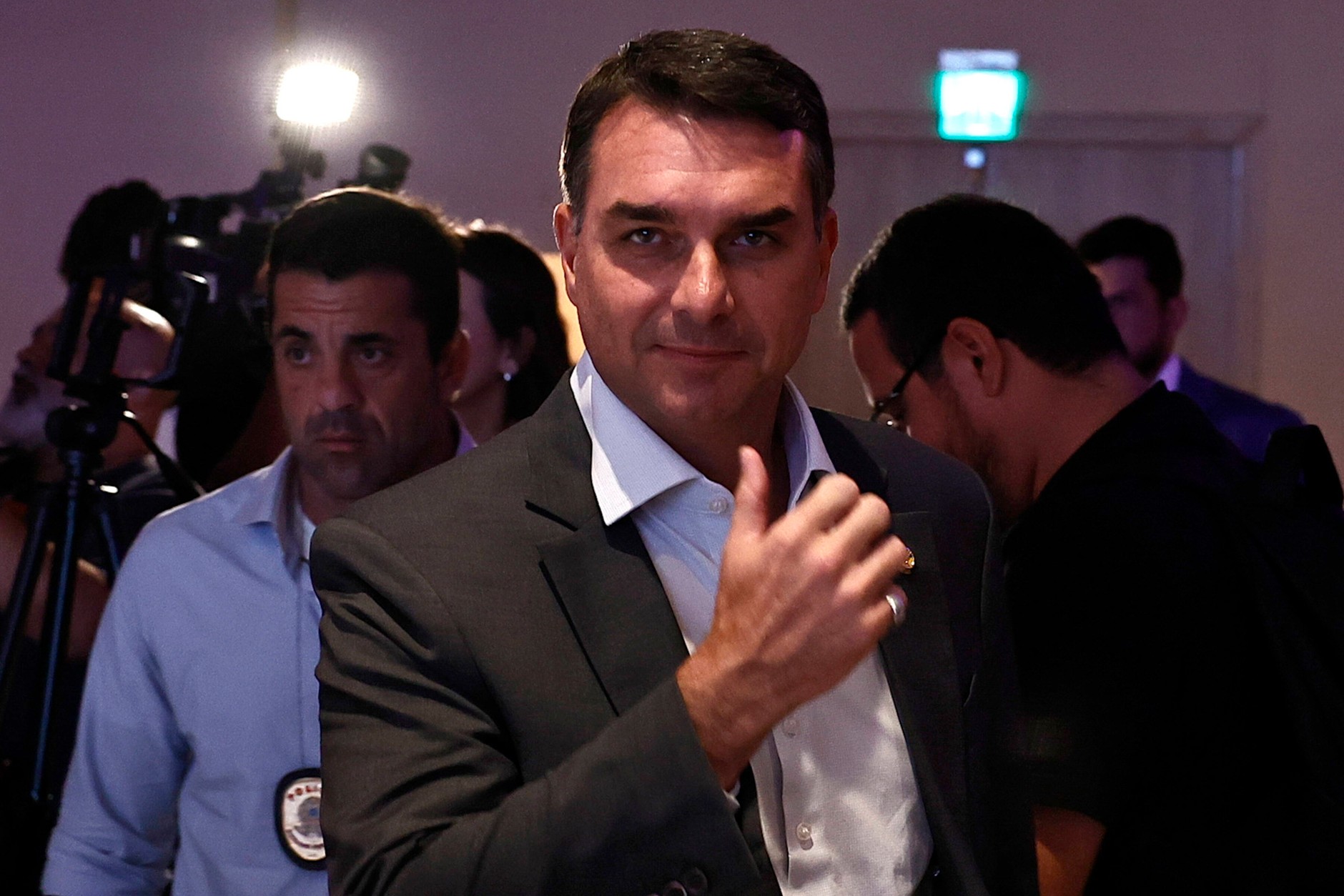
Despite this, Lula held up bravely in the polls. Back in November, 45.1% of people declared their intention to vote for him. Brazilians – according to data from the Americas Society and Atlas International. At the same time, Flávio Bolsonar, the former president's son – a candidate that is still hypothetical because his participation in the elections has not been confirmed – was supported by only 23 percent. Half a year later, the picture doesn't look so rosy. Lula has 43 percent. , Bolsonaro advanced to over 40 percent. And individual polls, even from such reputable studios as Datafolha, show even draw results, sometimes even an advantage for right-wing politicians.
This is not a reason to panic yet, Bolsonaro Jr. is inexperienced, it is not even known whether he will survive until the elections. However, Lula and his staff cannot feel confident of winning. Especially since in the last published poll, where respondents were asked about the second round of elections, Bolsonaro is leading with 47 percent. up to 46 percent
Flavio BolsonaroEPA/André Coelho/PAP
However, it would be wrong to conclude that there is enormous polarization in Brazilian politics. In presidential systems such as this one, modeled on the United States Constitution, it is easy to create a false dichotomy. Since representatives of two camps usually clash there: progressive and conservative, it is tempting to say that there are two separate tribes. In fact, we are dealing with something more serious and more dangerous to the survival of democracy itself: the rejection of the political class as such.
The same Atlas International database that simulated the runoff results also provided a measure of the negative voter — the percentage of voters who would never vote for a particular candidate. This is a slightly different study from a methodology perspective, as more than one answer can be given. It shows enormous social tensions and frustrations. 51 percent respondents would never support Lula, 46 percent Bolsonara. In total, as many as five leading candidates in this year's campaign had a negative result exceeding 40 percent, including activist Renan Santos, who is popular among the youngest part of the electorate. It is therefore justified to say that Brazilians want a new beginning in politics, which does not portend anything good for Lula, who is running for a fourth presidential term.
Better cards
But it must be said that he is still struggling. He tries and even shows greater vision than most of today's politicians of the liberal-progressive camp. In the summer, he was, not for the first time, the object of European leaders' desires, because he was one of the few who openly opposed Trump, building considerable political capital on it. But to better understand what exactly resulted from such a confrontational attitude towards the White House, we need to break down the entire process into its prime factors. It is then clear that the Brazilian authorities, to use the favorite phrase of the current American administration, had better cards in their hand.
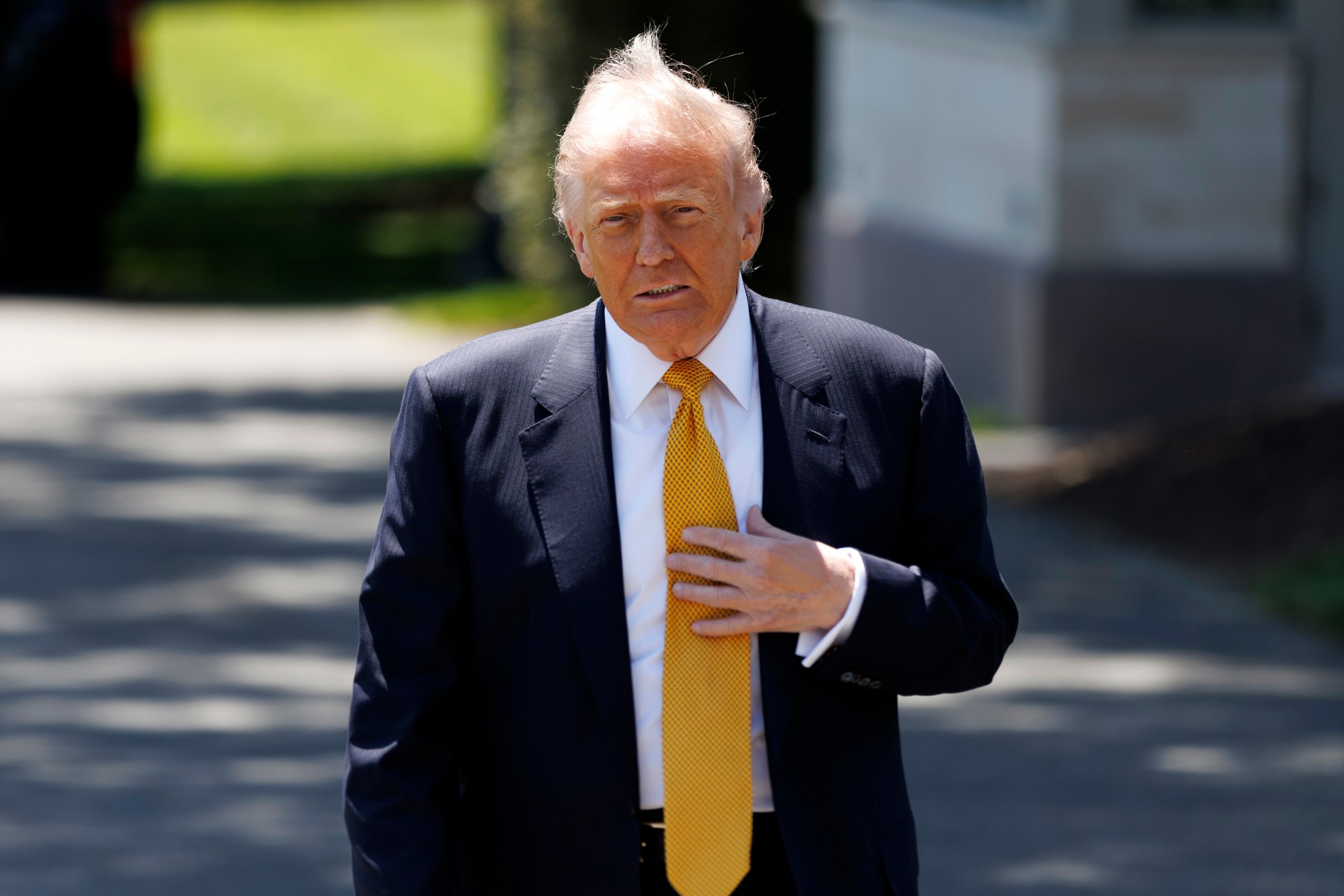
First, in May, Trump threatened to impose 50% tariffs on Brazilian products imported into the US. Economists found this to be excellent evidence of the US president's ideological, not economic, motivations in the trade war he has just declared on the entire world. America had a trade surplus with Brazil, so there was no reason to punish Lula's government – especially since the products bought from Brazilians are important to Americans. This may seem trivial, but coffee is not growing in the US, but it is an important element of the basic consumer basket. When the price of a pack of coffee beans could increase by $7. Within three weeks, the president's tariff policy was simply hurting even his own electorate. In addition, the US imports a lot of steel and related products from Brazil, today of strategic importance, and it made no sense to pay more for it in the name of the White House's ideological skirmishes.
Donald TrumpPAP/EPA/WILL OLIVER
And indeed, these were strictly ideological skirmishes – Trump, in his typical way, only rhetorically and mainly on his own social media, tried to defend Jair Bolsonar in the then ongoing trial for an attempted coup. He threatened sanctions, imposed tariffs, and even withdrew the visa of controversial Supreme Court Justice of Brazil Alexandre de Moraes – all so that the Brazilian justice system would cave in and leave Bolsonar alone. Elon Musk, who was then still on the rise, more willingly involved in politics than now, was also involved in the matter, present at videoconferences with Matteo Salvini, Reform UK, AfD and a few other places. Musk also has his own history of conflict with de Moraes, who forced Platform X to remove hateful accounts and entries directly related to Bolsonar, the far right and inspiring the failed coup in 2022.
However, the American offensive had the opposite effect to that intended, and Lula received a “Trump bonus”. Like other politicians attacked by MAGA: Mark Carney in Canada and, more recently, Mette Frederiksen in Denmark, Lula has gained in the polls, perpetuating the image of an ideologue committed to a progressive identity, a relentless trade unionist fighting against imperial American hegemony. Maybe it was even easier for him because he is a politician formed during the Cold War, when the Latin American left was formed primarily as an opposition to Yankee neo-colonialism. So opposing Trump came naturally to him, and he was also credible in it.
Then, once again, Lula came closer to realizing his greatest desire – to become the leader of a leftist – or today progressive – international. At a time when, to quote the Bulgarian politician Ivan Krastev, far-right politicians (including Bolsonar's sons) have become the “new globalists”, and their opponents do not have the resources, infrastructure, joint conferences or institutions to coordinate a response to the actions of the reactionary right, Lula smelled an opportunity.
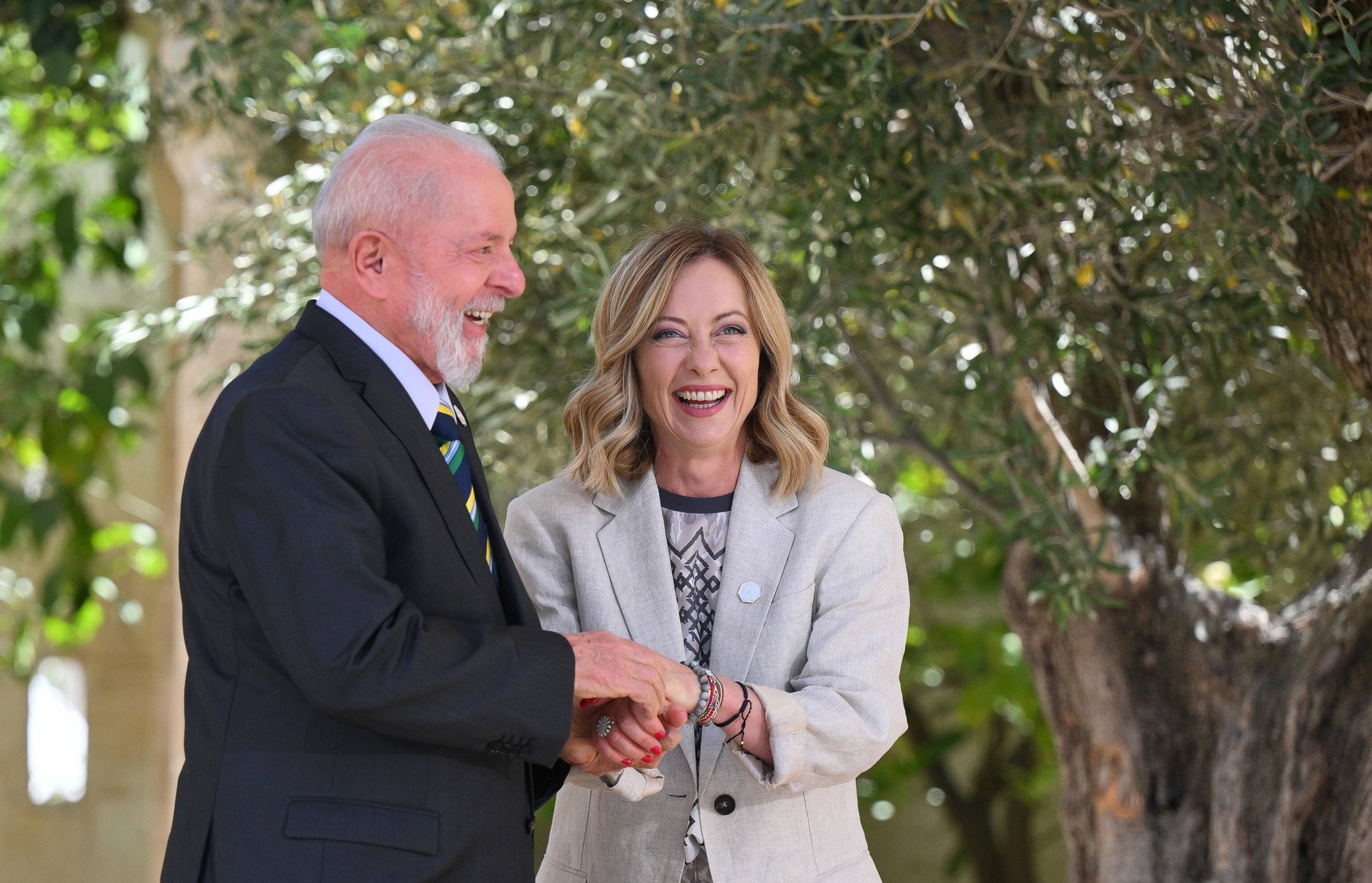
Luiz Inacio Lula da Silva, President of Brazil, and Giorgia Meloni, Prime Minister of Italy, at the G7 Summit in Borgo Egnazia, June 14, 2024.EPA/ETTORE FERRARI / PAP
He stayed on the wave for a long time – so much so that Harvard economist Dani Rodrik wrote on the Project Syndicate website that the Brazilian leader is “the leader of the emerging global mobilization against Trump.” It is true that the essay was written in a tone of complaint that there are few politicians like Lula, but the Brazilian was pointed to as an example for the rest of the world. Rodrik was echoed by Nathalie Tocci, head of the Italian Institute of International Affairs (IAI), who shouted into the microphone at the ERSTE Foundation conference in Vienna in December: “Why can't we, Europeans, be like Lula?!”
The problem is that the Trump effect works like a stimulant – it is strong, but wears off quickly. Mere opposition to the American administration – which in the case of Brazil also means falling deeper into China's arms, especially economically – will not get you far. And this is the main reason for the decline in support for Lula in the polls and Bolsonar Jr.'s credibility as a potential rival. The left-wing leader is starting to behave a bit like Emmanuel Macron during the 2022 presidential elections. He is so focused on foreign policy, trying to play the role of the leader of a continent rather than a country, that he forgets about the pain of his voters. And although the poll discounts are all too visible, the Brazilian left is still trying to internationalize.
Silence over Barcelona
In April, in Barcelona, Lula organized, together with Spanish Prime Minister Pedro Sánchez, the first rally of the world's progressive political network. However, the media paid little attention to this event because there was not much to talk about.

“Tygodnik Przegląd” No. 20Weekly Przegląd / mat. press releases
The rally of the new left from around the world highlighted the differences in this movement rather than the similarities. For example, American senator of the Democratic Party, Chris Murphy, came to Barcelona and spoke only about the crisis of democracy in his own country. Lars Klingbeil, German vice-chancellor, delivered a fiery speech about the European economic collapse and the lack of opportunities for young people. Sánchez focused on migration, which, for example, the Germans of the SPD do not support at all. Lula, on the other hand, hit the high notes – he talked about the new working class, the collapse resulting from the climate catastrophe, global inequality growing at an alarming rate. Lots of words, but little specifics.
And this is what his re-election campaign is starting to look like. Lula, of course, travels around the country, making reels for Instagram and TikTok, but she uses well-worn arguments. Direct transfers, subsidies for the poorest – these development policy tools have always worked in Brazil. Especially back when society was much poorer. When Lula first governed, from 2003 to 2011, he lifted millions of people out of poverty with his social programs. Today, however, this will not work, because Brazilians have different needs. So it seems that neither they nor even the world anymore needs a trade union hero who was always ready to sacrifice everything in the name of social justice. It's time for even this trade unionist to finally understand this.