An American woman about life in Paris. “The social benefits system is great”


This first-person account is based on a conversation with Sarah Pardi, a 35-year-old who moved to Paris in 2023. The conversation has been edited for length and clarity.
For as long as I can remember, I have been fascinated by France. I don't even know where it came from – there are no French in my family. Maybe I saw a movie about France as a child. However, I grew up poor, so I had no idea how I could ever fulfill this dream.
When I turned 18, I thought, “Okay, I need to figure out how to start traveling.” At that time, I had never been on a plane or even traveled outside of my small hometown in Oregon. I only knew that I wanted to see the world, especially Europe. I have always been fascinated by its history and architecture.
I Googled — probably not the smartest solution, even 15 years ago — “how to go to Europe and make money.” Then I found out that I could become an au pair, i.e. a caregiver.
Read also in BUSINESS INSIDER
In the summer of 2013, I flew to Madrid and worked as an au pair for four months. I liked it very much. When I returned to the States, I began to wonder if similar work existed in France. Just a year later, I moved to Toulouse and taught English in the south of France as part of a temporary contract.
I wanted to stay there permanently, but after finishing my job I had to return to the US because I had a temporary visa. For some time, I completely abandoned the dream of living in France. It took another 10 years before I found a company based in France that was willing to hire me and relocate me there permanently.
Paris is a vibrant city made for walking
I moved to Paris with my husband in 2023. I no longer work for the company that brought me here, but the city has become my home.
I don't know if the French would be thrilled with such a comparison, but Paris is like the New York equivalent of France. It is a huge, international city. Therefore, part of the cultural differences for me were simply related to adapting to life in a big city and its pace.
Paris, view of the Eiffel Tower
|
Sarah Pardi (private archive)
I live in Montmartre, in the 18th arrondissement of Paris – the city has 20 districts, each with its own atmosphere and character. The 18th arrondissement is very famous; Impressionists lived there at the end of the 19th century, so it's a very artistic part of the city.
My area is popular with young couples – often with a child or a dog. It also attracts many tourists.
Buying real estate in France by someone from outside France or the European Union is different than in the US. Mortgage options are not the same, that's why I rent.
Finding an apartment in Paris is also very complicated. First of all, the competition is huge. Secondly, you need to prepare the so-called dossier – something like a biography or folder containing information about you and your private life.
Read also: My life after college is completely different than I expected. I wonder if I made the right decisions
I live in a one-bedroom apartment and pay $1,770. (almost PLN 6.4 thousand) per month. It's quite expensive, but Paris is much more expensive than other French cities – at least in my experience. In another city I was considering, I could rent a five-room apartment for the same amount.

Sarah Pardi in front of the Eiffel Tower
|
Sarah Pardi (private archive)
My daily life in Paris mainly involves walking. I think this is true across Europe, but especially in France – their cities were designed with pedestrians in mind, while American cities were built primarily around cars. I sold my cars before moving to France because I didn't need them and parking here would cost a fortune.
I'm lucky because I work remotely most of the time, so I don't have to commute to work. However, from time to time I take the train to Normandy to visit the office and meet colleagues. Paris is great in this respect – no matter where you live, it's very easy to find a train connection.
The USA and France have many similarities, but also differences
Even though the United States and France are separated by thousands of miles, I believe that Americans and French people are more alike than you might think.
Politically, we are long-time allies. Socially, we also have a lot in common in the way we approach things – but even so, there are stark differences.
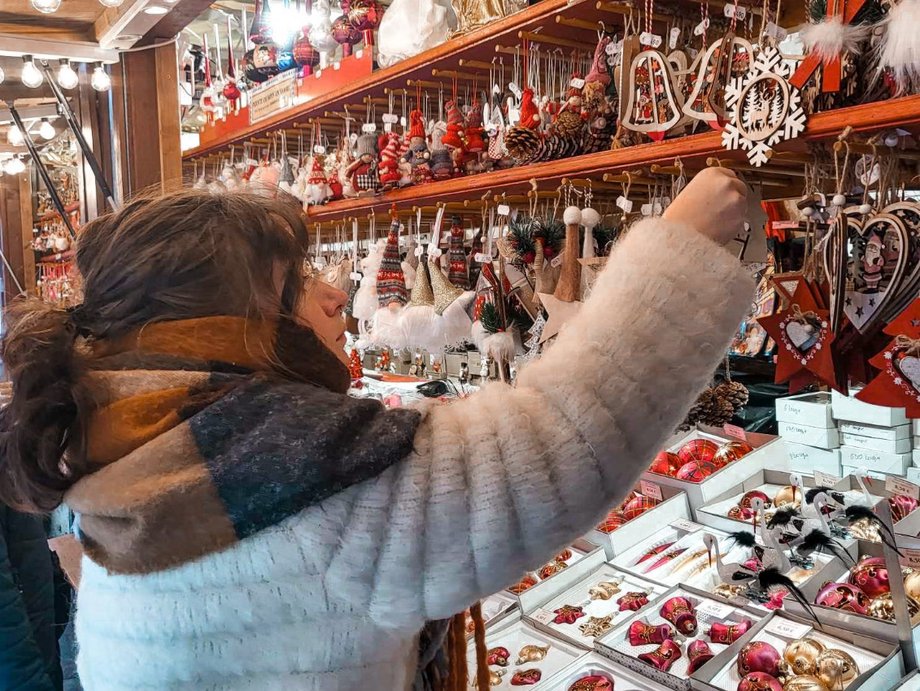
Sarah Pardi at the Christmas market
|
Sarah Pardi (private archive)
In France, working hours are quite long, but the pace of life is much slower. Lunch breaks are longer and when you finish work you are truly off work.
Work and private life are also much more separated in France than in the US. For example, you don't usually meet your co-workers' spouses there. In the United States, it would be completely normal to go out to dinner with your partners.
Another thing – and this mainly applies to Paris, because the rest of France is a little different in this respect – is small talk. If I order coffee in the States, someone might ask, “How's your day going?” or say: “I like this coffee, good choice.” In France, everything is more businesslike. It's simply a matter of culture.
Communication can be difficult and sometimes I feel homesick
During my studies, I had additional French classes. Still communication with the French was difficult at first.
When you meet new people – at a bar or in a noisy place – and they speak a language other than your native language, it's really hard to connect because you're constantly thinking, “I have to translate this in my head.”
My husband and I were a bit lucky because he works in a bicycle shop that also has an English-speaking cafe. The owners are Americans and for some reason there are a lot of people from different countries speaking English there. Over time, we've built a great little immigrant community.
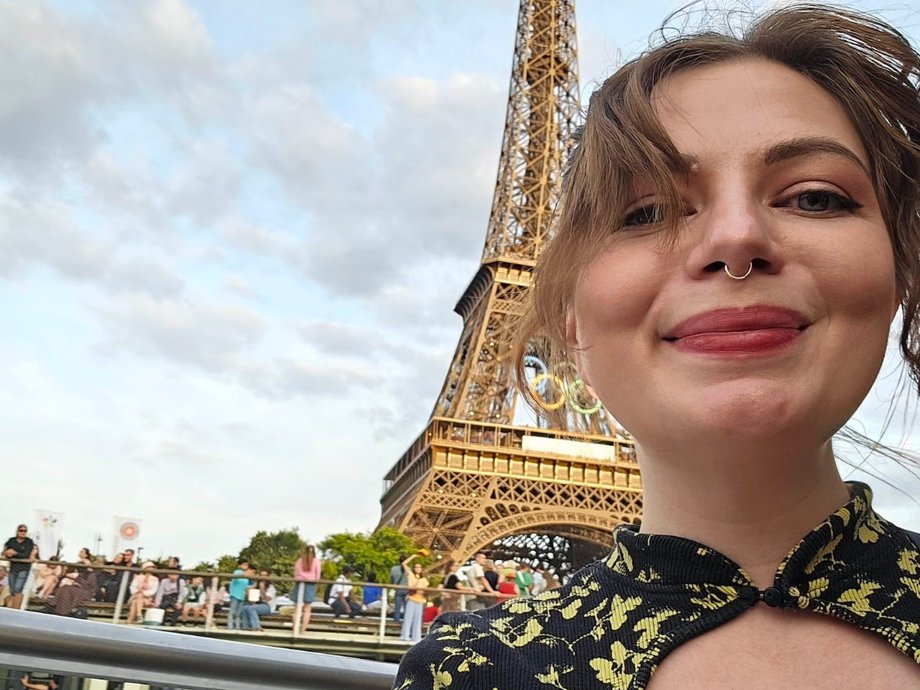
Sarah Pardi in front of the Eiffel Tower
|
Sarah Pardi (private archive)
Still, sometimes I miss home. There are three things I miss most about the US.
First of all, my entire family lives on the West Coast, and even though we talk on FaceTime regularly, I miss them very much. Secondly, small talk. Americans are really very friendly, but after living there for so many years, I stopped noticing it. And finally, food. It sounds silly, but I often crave refried beans and jalapeños.
Many young Americans want to live abroad—and that doesn't surprise me at all
More and more people are moving abroad, especially young Americans. I definitely see this among my friends. Funny thing is, most of my friends here are Americans.
When I come back to the United States to visit, many people ask me, “How do you manage to live abroad permanently?”
I think people want to move because they're looking for a better work-life balance, or because they're not happy with the political situation or the benefits system and believe they can find what they're looking for elsewhere.

Sarah Pardi at the cafe
|
Sarah Pardi (private archive)
We always say “if and when” we return to the States. If we did it, it would be for the sake of the family.
What keeps us in France is our love for the culture. We also really like our work and the community we have built. And, as I mentioned, the social security system is great here.
In about two years, I will be eligible to apply for naturalization, which simply means that I will have lived here long enough – and paid taxes long enough – to be able to apply for citizenship. This is our next goal.
The above text is a translation from American edition of Business Insider