Mr. Adrian returned from emigration. “I made money, but at what cost”


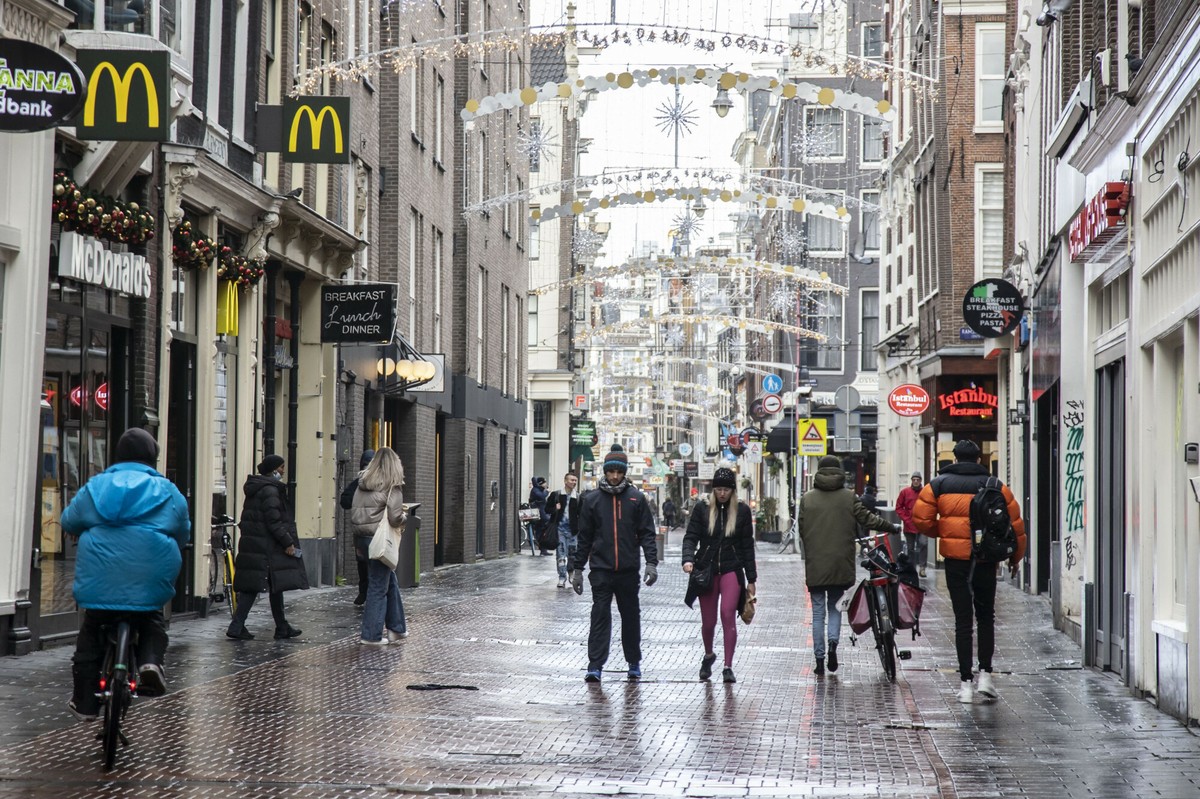
Thus, the Netherlands joined Great Britain and Germany, from where more and more of our compatriots are fleeing. And, as scientists from the Center for Migration Research at the University of Warsaw note, there are more countries in the queue.
We decided to give a voice to those who returned to their homeland or have been planning to do so for a long time. It turns out that it is not money or politics that are the most important factor when making such decisions. Number one are family matters and the prose of life far from home.
Work, work and more work
Mr. Adrian left for the Netherlands in 2010. He settled near Alkmaar near Amsterdam.
— From the very beginning, I was obsessed with not wasting the fact that I had left. And it's probably not just me, because the life of many Poles was like that there, the man tells us.
That's why he jumped at every opportunity to make money. — Of course, I started with the worst-paid jobs, mainly manual ones. Then I worked as a taxi driver, in removals, and in accounting and administration. Most of my clients were Poles, he reports.
Only a little later did he enter the real estate industry, where he rented rooms. It was in this business that he earned the most money. “I just noticed that there was a lot of demand,” he says. — Later I got a job in the commune as a professional driver, which was a huge feat for a Pole.
See also: Poles are leaving another country en masse. The change is rapid
However, he still worked long hours. — In the beginning, we worked basically from 6 a.m. to 2 a.m. And so every day, he recalls.
Today he claims that financially it was worth it. — I bought an apartment in the Netherlands, which I later sold. I also have two properties in Poland. Not to brag, I managed to earn extra money on this trip, I have some savings. I'm also starting to work in the industry in Poland, says our interlocutor.
So why did he decide to come back? Family issues were the deciding factor. — My marriage broke up and that was the reason I even started considering returning. Besides, life as an emigrant was bothering me, I also wanted to slow down a bit and work less for health reasons, he explains.
Due to his intense work at the beginning of his emigration, Mr. Adrian developed back problems and receives a Dutch pension.
— Today I wonder if it was worth leaving. On the one hand, the Netherlands gave me money, but on the other, it took something very important away. Marriage and health – says our interlocutor.
See also: They went to Scandinavia to work 20-30 years ago. Today they have such pensions [KWOTY]
The difficult fate of an emigrant
Mrs. Barbara left for the Netherlands in 2020, at the height of the coronavirus pandemic. — Due to lack of prospects, I decided to emigrate. I have never felt so good about this trip. I wanted to stay for six months, and it's been over five years, she tells Business Insider.
Today she wants to return, but the traumatic events of the past stop her. — After arrival, it was still okay, but okay two years ago I joined a sect and was molested. Today I am a mental wreckalthough fortunately I managed to break away from this sect – he confides.
As she reports, she reported the matter to the police, but she felt that she was treated worse because of her origin. — For many months, no one even questioned the witness, and the police kept asking if I wanted to withdraw my report, he says.
The woman's health deteriorated, and To receive treatment, he claims, he must return to Poland. And this despite the fact that he works and pays health insurance contributions.
After 13 years of working in the Netherlands, Mr. Robert also claims that Poles are not treated fairly there. — We're here to work hard and move forward. When we speak Polish at the plant, the management gets angry and orders us to speak Dutch. In the case of other nationalities, they are not so decisive, he says.
— When someone comes here for a holiday or a few weeks, they think that the Netherlands is great. Bicycles, smiles, tolerance. In the long run, however, it is not so good, says our interlocutor.
See also: They went to work “for tulips”. We know the Dutch pensions of Poles [KWOTY]
“Everywhere is good, where we are not”
Mrs. Agnieszka returned to Poland at the beginning of 2024 after 20 years abroad. First in Great Britain, then in Belgium and finally in the Netherlands. Her story is similar to those we often hear from emigrants. Hard work from morning to evening, homesickness and complaints about unfair treatment by the Dutch.
However, it draws attention to a slightly broader context. — You're asking me if I came back because it was so bad there, or if things are so good in Poland. A little bit of everything, he says.
— Sometimes I have the impression that the Poles who speak loudest about how bad things are in Poland are the Poles themselves. That the work isn't that bad, that it's poor, that it's expensive, that the schools are terrible, that the roads are full of holes. Wherever we are, it's good. It is known that we have some delays in development compared to Western countries, but these complexes are really a bit exaggerated. We have nothing to be ashamed of, says our interlocutor.
He admits that wages are indeed lower than in many Western European countries, and that the Polish health care system, for example, leaves much to be desired, but in many respects we have nothing to be ashamed of.
— Anyone who complains about Poland should go abroad and see if it's really that bad here. What do gas stations, shopping malls, highways and even regular grocery stores look like in our country? And if he can't go there and compare, let him remember what it was like here 20 or 25 years ago. It's a gulf and I don't understand how you can say otherwise, says Ms. Agnieszka.