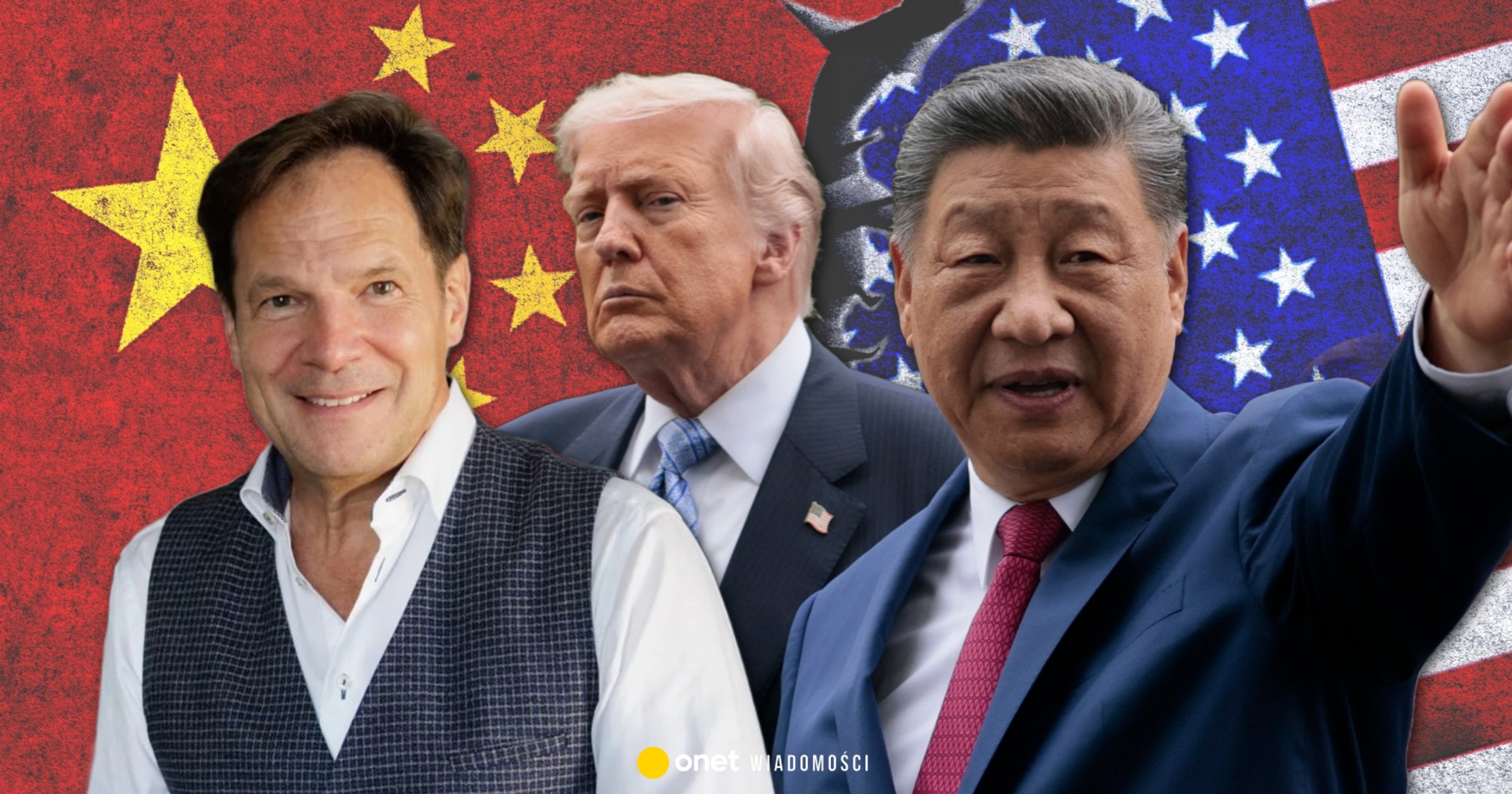
Christopher Frei has spent the last 35 years combining work in academia and the private sector. His professional experience includes extended research and teaching in France, the United States, Chile, Japan, Uzbekistan, Iran and Oceania. The interview was recorded at this year's edition of Impact. This is one of the most important economic and technological conferences in Central and Eastern Europe, bringing together leaders of business, science, politics and startups. Further down in the article you will find a video of the entire conversation.
Bartosz Oleszko-Pyka: China has rebelled and is not complying with US sanctions imposed on Chinese companies purchasing Iranian oil. Some experts say this is a sign of the decline of American imperialism. Do you agree with this?
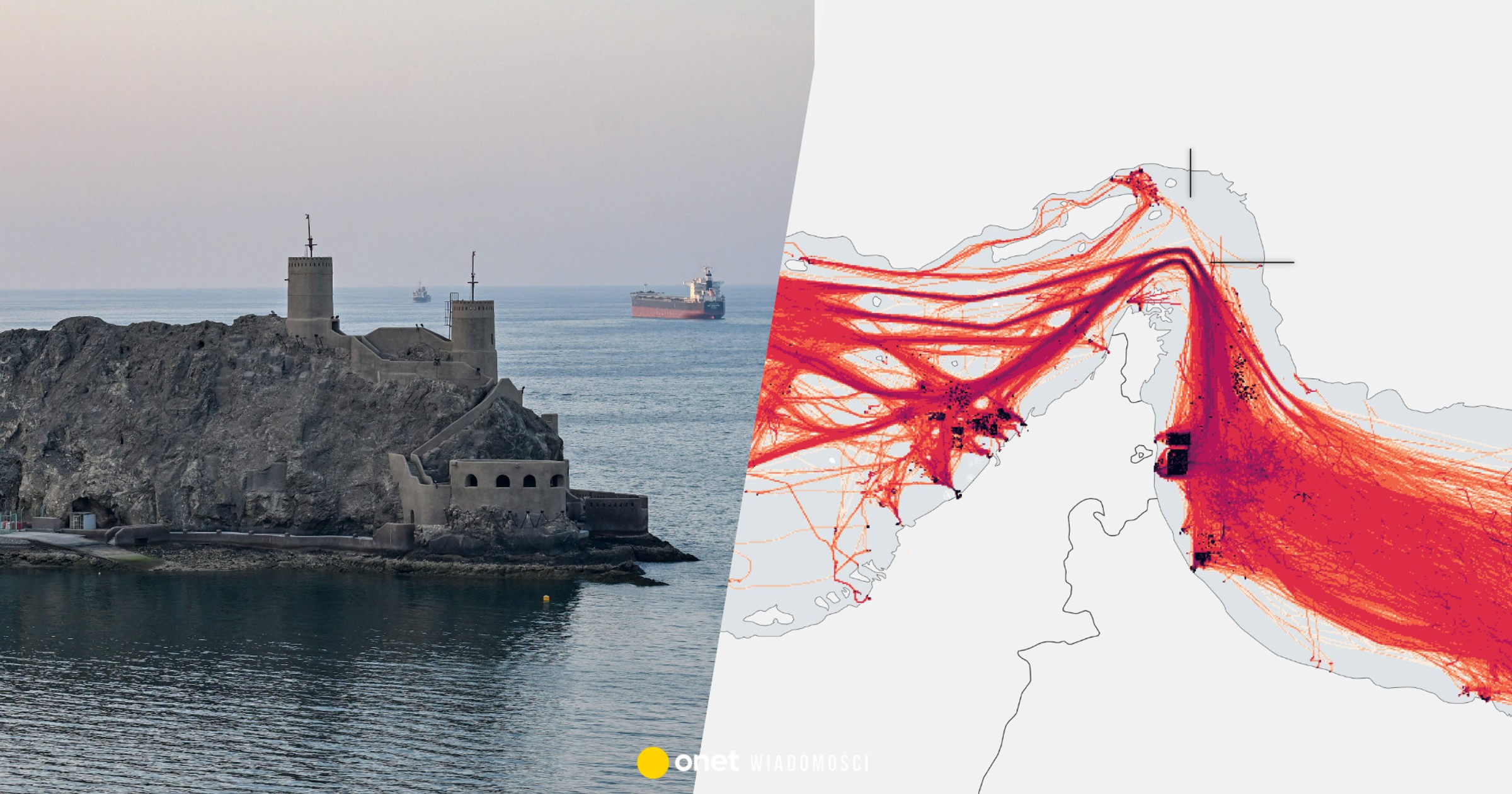
Christoph Frei: I would be cautious about declaring an abrupt end to American imperialism again. This narrative began with the Vietnam War. However, the situation in the Strait of Hormuz is quite a clear indication of current geopolitical dynamics.
Donald Trump visiting Xi Jinping. The Chinese leader shows the US president around a garden in the former imperial Zhongnanhai district in Beijing, May 15, 2026.Evan Vucci – Pool/Getty Images, China pool/Getty Images
This is good news for China. Donald Trump, in my opinion, is a real blessing for China, a gift from fate. However, China is not the only player that benefits from what Trump is doing. The President of the United States is doing quite a few things that are not in the interests of the United States. Many of Donald Trump's political maneuvers simply don't make much sense.
A strategic question should be asked: what is the ultimate goal of using American power? When it comes to Ukraine, Donald Trump is a tool in the hands of Vladimir Putin. He is a tool in the hands of Binyamin Netanyahu when it comes to Iran. Donald Trump, although he tries to present himself as a strongman, is largely a tool in the hands of others.
The article continues below the video
This also applies to national politics. Just look at immigration policy – it's Stephen Miller's work [zastępca szefa sztabu Białego Domu do spraw polityki i bezpieczeństwa wewnętrznego] and J.D. Vance [wiceprezydenta USA]. When it comes to foreign policy, Venezuela and Cuba, it is largely the agenda of US Secretary of State Marco Rubio.
What do you think about Trump's policy towards Russia? He said he would end the war in 24 hours. Now more than 12 months have passed since the beginning of his presidency.
I hope to live to see the day when Donald Trump actually harms Vladimir Putin in any significant way. I haven't seen it until now. In my opinion, Donald Trump is largely playing to Vladimir Putin's advantage. His whole attitude proves it. It's sad because I don't think it's in the interest of the United States.
“It's obviously an illusion.”
We mentioned China. This country, as the EU claims, is, on the one hand, a partner for Europe, and on the other, a strategic rival. What should be the European strategy towards China?
Pragmatism requires seeing opportunities where they are. Stop preaching. Stop preaching about human rights. China will not change its political system because it is not consistent with European values. China is an old civilization with its own pride.
So stop preaching, stop moralizing and start looking for common ground, looking for common interests. And we have a lot of common interests. China continues to surprise me in many ways because it does many things differently.
This country should be looked at in terms of procedures and decision-making. The key to understanding this process is hierarchy, autocracy. But let's look at what China has achieved in the last 25 years. Let's then compare it with Russia, we will see the difference. Let's look at what Putin did to Russia and let's see what happened to China. I try to look at a broader perspective, I do not focus solely on the human rights situation. China is a huge market, 1.4 billion people. We would be quite foolish not to take advantage of the opportunities we find in China.
What are the most important challenges for Poland now and in the next few years?
I'm not an expert when it comes to Poland. In my opinion, however, the greatest challenge for Poland in the coming years is social cohesion.
What about the danger from Russia?
European societies are currently very divided. For this reason, to some extent, Vladimir Putin is a blessing to us because he reminds us of the real problems we face.
Poland, however, is one example of a society that is very divided internally. The challenge is to unite. Open societies are never completely unified, but at least some coherence must be found in terms of the foundations.
Russia exploits differences in our societies, not only in Poland.
That's right. Perhaps Putin's greatest talent is exploiting fragmentation, dividing people. He's a very intelligent player when it comes to what we call hybrid warfare. In this respect, Putin is currently a very real threat. I hope that in the coming years, European societies will be less divided and will find common ground and common foundations.
We discussed Europe, the USA and China. In the last question, I will ask about your country, Switzerland. Given all the conflicts taking place in the world, will Switzerland become more involved in building a security architecture in Europe? Are there any changes in security cooperation in your country?
That's a great question. We must separate the emotional, psychological and cultural state of mind of Swiss society, on the one hand, from what we should do, on the other. The Swiss are in love with the status quo because it has been to their advantage. Switzerland has been a stowaway for a long time. When it comes to security, Switzerland has long been cherry-picking from the European common market.
As for us, the Swiss think: oh, let it continue, let everything stay the same. Let nothing ever change. But this is of course an illusion. It's a damn illusion. At some point we have to admit that the world around us is constantly changing and we have to change with it. So in terms of what we should do, yes, we should communicate with our neighbors.
Yes, we should make a greater contribution when it comes to financing security, creating security as a public good, but also in regulating relations between the European Union on the one hand and Switzerland on the other. But it's easy to say. It is much more difficult to convince taxpayers in Switzerland to act.
I’m Ashley Davis as an editor, I’m committed to upholding the highest standards of integrity and accuracy in every piece we publish. My work is driven by curiosity, a passion for truth, and a belief that journalism plays a crucial role in shaping public discourse. I strive to tell stories that not only inform but also inspire action and conversation.