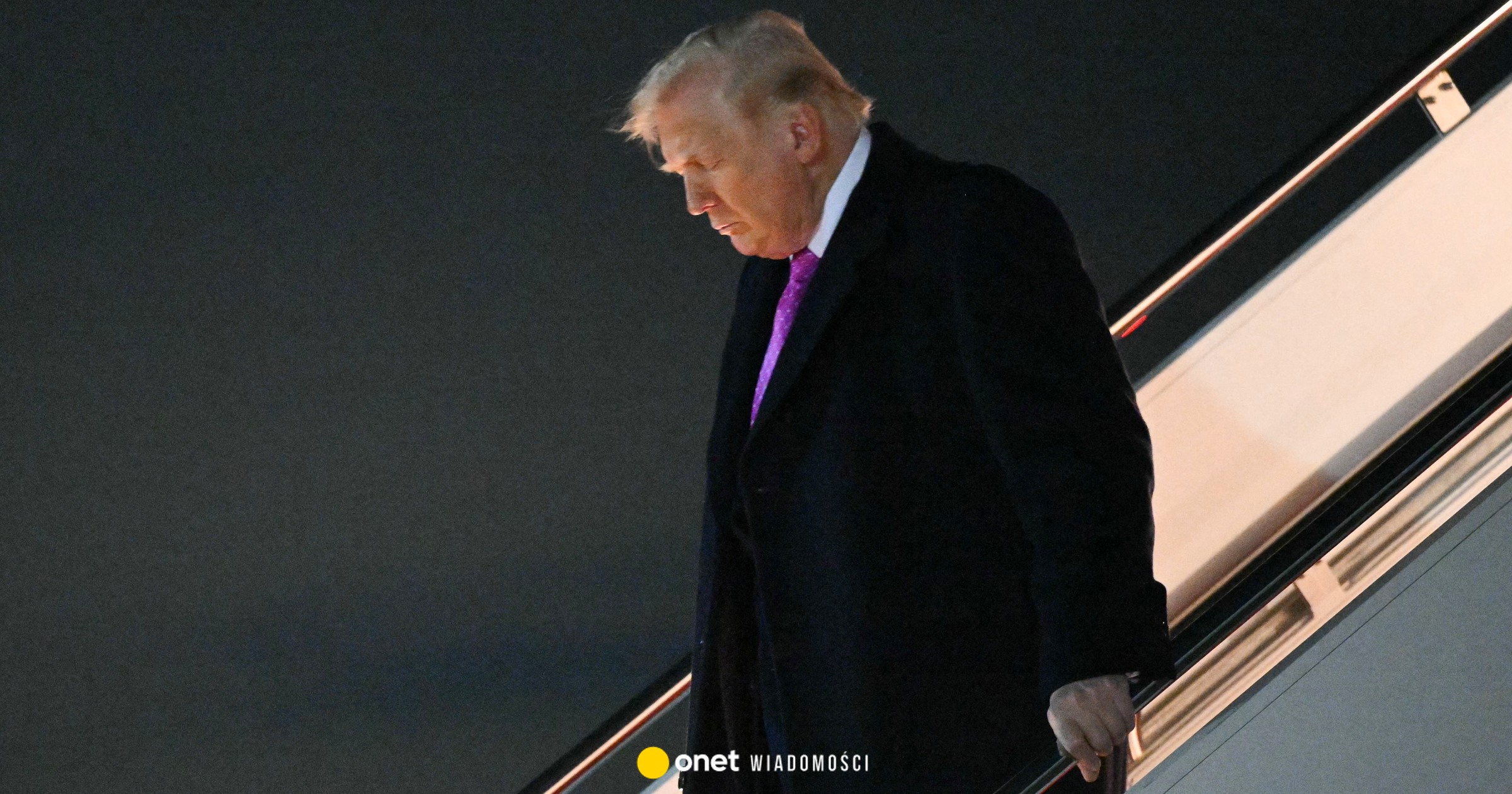
The US and Israeli attacks on the terrorist regime in Tehran have been ongoing for over a month. Trump's successes so far have been limited. The mullah regime in Iran is still in power, the Strait of Hormuz has been blocked for weeks, global oil prices are rising and the global economy is in crisis.
The world according to Donald Trump is different: the US has taken over air control over Iran, and the regime's missile system has been completely disabled. The shooting down of American fighters (an F-15 fighter and an A-10 attack plane) shows that this is not true, and the White House is putting a good face on a bad game. He may not know everything about Iran.
Two US fighter jets were shot down over Iran – probably by the regime in Tehran. One of the F-15E Strike Eagle crew members is still missing. A dramatic search continues – on both sides. According to NBC News and the Washington Post, Iran also hit two Black Hawk helicopters, which were also reportedly involved in the search and rescue operation.
The article continues below the video
Already a month ago – on March 4 – Trump administration Secretary of War Pete Hegseth said: “Starting last night and probably in less than a week, the two most powerful air forces in the world (the US and Israel, eds.) will take complete control of Iranian airspace.” The fact is that the US has a clear military advantage over Iran – but not as absolute as Trump constantly makes it out to be.
Is this just excessive presidential rhetoric? Or maybe he just doesn't know everything? Three sources familiar with the intelligence tell CNN that almost half of Iran's missile launchers remain intact, and the regime still has thousands of combat drones.
Within the US state apparatus, almost all experts who could have corrected the course were fired. Moreover, the intelligence services have been politicized – which means that the American intelligence services no longer have the courage to inform the president about things he does not want to hear
– says Iran expert Ali Vaez in an interview with the weekly “Der Spiegel”.
The shooting down of US fighter jets puts additional political pressure on Trump at home. Polls show that the majority of the American population does anyway is critical of Trump's actions in Iranand criticism appears even within his own camp. Now it may become even louder.
What happens after an American warplane is shot down?
There were two crew members on board the F-15E Strike Eagle fighter shot down over Iran. One of them was rescued by American forces. The second one is still wanted. Iranian state media reportedly called for the pilot's capture. The New York Times also reports a second accident near the Strait of Hormuz. According to this information, an A-10 Thunderbolt II (“Warzenschwein”) aircraft crashed at approximately the same time as the F-15, and the pilot was safely rescued.
The US military is prepared for such situations. Every step is planned. Routines are carefully defined and practiced regularly. It's basically about two things: saving your own people – and preventing American military technology from falling into enemy hands.
The basis are the guidelines regarding the so-called “Personnel Recovery”, i.e. rescuing soldiers behind enemy lines. Simply put: “Our people are important.” And we continue: “In addition, in the past, adversaries have used captured people for intelligence, propaganda purposes or as a means of pressure during negotiations.”
First goal: finding the missing person
If a plane is shot down over enemy territory, prepared rescue plans are immediately activated. Search and rescue teams are on the move – on the ground and in the air. For the pilot, after leaving the plane, the fight for survival begins. He must hide. Cannot be detected. He tries to establish contact with his own units.
Aircraft crews are prepared for this. Before missions, they undergo SERE survival training, a special course on survival, evasion, resistance and escape. There they learn how to break through enemy lines and survive. Special forces can secure the mission. They are escorted and protected from the air. Quickly locating the missing person and ensuring his or her safety are of key importance.
Second goal: hardware protection
The crashed jet is of great interest to adversary intelligence. Radar, communications and weapons systems provide clues about capabilities and potential vulnerabilities. This is why the military is trying to quickly reach the disaster site and secure it.
If this fails, the wreck can be attacked from the air and destroyed – for example by missiles or drones. This is to prevent adversaries from analyzing or reproducing this technology.
Such a shooting down has consequences – reaching far beyond the military sphere. If the pilot is captured, it could spark political tensions. Photos of fragments of the wreck or prisoners of war are also often used for propaganda purposes.
The effectiveness of these rescue plans was already demonstrated in 2012, when a US Army helicopter crashed in eastern Afghanistan. American soldiers rescued both pilots shortly thereafter, even though Taliban fighters were in the area.
I’m Ashley Davis as an editor, I’m committed to upholding the highest standards of integrity and accuracy in every piece we publish. My work is driven by curiosity, a passion for truth, and a belief that journalism plays a crucial role in shaping public discourse. I strive to tell stories that not only inform but also inspire action and conversation.