Harsh warning from the head of ROMARM. Romania must not remain just an “assembly workshop” for drones

Romania is in a race against the clock until May 30, the deadline by which it can conclude individual procurement contracts through the SAFE program, without being obliged to joint procurement with other member states. The declared objective of the authorities is for 60% of the production to be carried out in Romania, in an attempt to thus stimulate the domestic defense industry. In this context, “Adevărul” discussed in an interview with Răzvan Pîrcălăbescu, president of the Employers' Organization of the Defense Industry and general director of ROMARM, who warns that cooperation models based on assembly under license, without real transfer of technology, do not work.
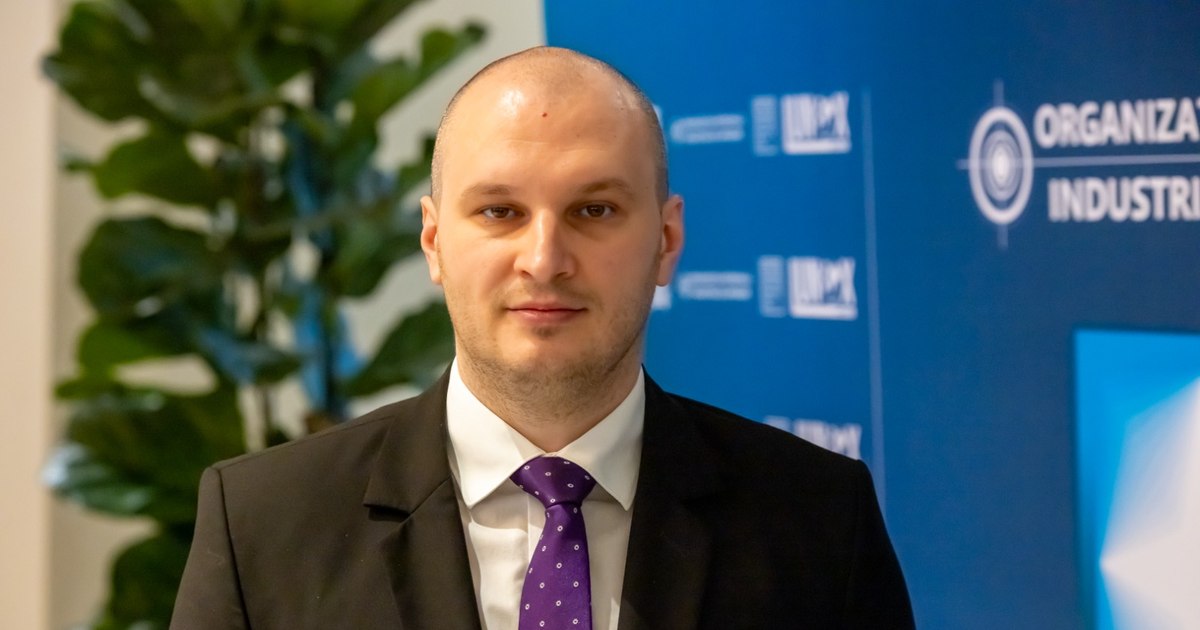
Răzvan Pîrcălăbescu, president of the Employers' Organization of the Defense Industry. PHOTO: OPIA
In his opinion, salvation comes from partnerships with major European manufacturers, such as Rheinmetall, which would integrate Romanian companies into the continent's production chains, and from capitalizing on ROMARM's existing infrastructure for projects such as the co-production of military drones with Ukraine.
The truth: You recently publicly stated that none of OPIA's member companies were consulted in the development of the SAFE project list, and the organization was not invited to formal discussions with the responsible authorities. Has anything concrete changed in OPIA's relationship with the state since then?
Răzvan Pîrcălăbescu: Compared to the time of the previous statements, there is a positive evolution in the relationship with the authorities. Recently, the Employers' Organization of the Defense Industry has been present in applied consultations and discussions, which represents an important step in the targeted direction.
It is essential that this dialogue continues and consolidates into a predictable and structured mechanism. The defense industry cannot be developed without a real partnership between the state and industry, with an essential focus on the financing component.
We have actively assumed the role of partner in relaunching the industry and believe that, in the current security context, there is an increasingly clear understanding that the development of national industrial capabilities must urgently become a priority.
Senator Nicoleta Pauliuc, president of the Defense Committee, warned that Romania risks turning SAFE into a simple foreign shopping list and that the 65% EU production rule benefits Rheinmetall, Airbus or Leonardo, not Romanian industry. Are there any guarantees at the moment that the real beneficiary of the 16.68 billion euro loan will be the Romanian economy?
SAFE is undoubtedly a major opportunity for Romania. It is a very good program, but the results directly depend on how it is implemented.
If these funds are used exclusively for foreign purchases, then the domestic economic impact will be limited. On the contrary, if they are correlated with the development of local industry, SAFE can become a real accelerator of development.
In this sense, international partnerships are essential, but they must be built in such a way as to generate value in Romania. The collaboration between the Employers' Organization of the Defense Industry and Rheinmetall, recently announced by us, is a concrete example in this direction.
This partnership aims at integrating Romanian companies into European production chains, developing local industrial capacities and participating in relevant projects from SAFE, including through technology transfer, investments and the creation of production capabilities in Romania. Basically, we are talking about the transition from the status of a recipient of equipment to that of an active participant in the European defense industrial ecosystem.
This is the right direction: European programs, but with production, technology and added value in Romania. Only in this way can we have the guarantee that the real beneficiary of these funds is the Romanian economy.
There is talk of 60% localization of production in Romania, but if we look at recent history, we see that in general MApN has opted for cooperation models in which Romanians produce or assemble under license or in joint venture with an external partner. Is this a viable option for rebuilding the Romanian defense industry?
Licensing or joint venture models of cooperation are useful, but only if they are constructed correctly.
The experience of recent years shows us that simple assembly does not develop the industry. What must be followed is the real transfer of know-how and technology, the development of skills and the creation of sustainable industrial capacities in Romania.
Recent partnerships, including those discussed with European industrial actors, show that there is openness for a more mature model of collaboration, one in which Romanian companies are not just executors, but real partners in production and innovation. That must be the direction: active integration, not peripheral.
Cristian Diaconescu, at Interviurile Adevărul: “Romania risks losing more than the money from SAFE – the trust of NATO partners”
At the same time, it is important to understand that rejecting or blocking such partnerships, in the current context, would mean practically giving up the chance to rebuild the defense industry. I've said it publicly: the moment you have access to programs like SAFE and relevant industrial partners, but choose not to capitalize on them, the risk is that you'll be left out of these production chains for another generation.
That is why the contrary positions expressed publicly on this subject are not only unproductive, but contrary to Romania's strategic interest.
There is little left until May 30, the deadline in which Romania can still sign individual procurement contracts through SAFE, without being obliged to joint procurement with other member states. At what stage are the negotiations with the producers for the contracts that should be signed?
Currently, there is an ongoing process and the dialogue with the industry has started to take shape more clearly compared to the previous period.
However, since it is a program of such magnitude, it is essential that this process be as transparent as possible and that it truly includes Romanian companies.
Deadlines are tight, and decisions made now will have long-term impacts. That is why it is important that projects are thought of not only from the perspective of procurement, but also of industrial development. OPIA supports the acceleration of these processes, but in parallel with the consolidation of the local industrial component.
The Chief of the Defense Staff warned not long ago that Romania would need 30 years for the national industry to produce the ammunition it needs, and the country had no facility for the 155 mm NATO caliber. Is there any prospect that this situation will change?
Assessments regarding the recovery time of industrial capacities are realistic in the absence of strategic interventions.
At the same time, it is important to say that there are already premises for change. Romania has industrial infrastructure and companies that can be retrofitted and developed, and in the recent period steps have been initiated to modernize production capacities and align them with NATO standards, including for calibers such as 155 mm.
We are not starting from scratch, but acceleration is needed, through investments, partnerships and the smart use of European opportunities, including SAFE.
A key element is access to finance. The development of the defense industry requires substantial investments, and without adequate financial instruments and the involvement of the banking system, these projects cannot be scaled at the required pace. At the same time, programs such as Foreign Military Financing (FMF), through which Romania benefits from approximately 220 million dollars of support from the United States Government, represent concrete support for the development of these capabilities in the defense industry.
Ilie Bolojan vs. Marcel Ciolacu – The Presidential Administration clarifies who proposed the key reformulation for the defense billions
Regarding the assessment made by the Chief of the Defense Staff, we consider it to be correct and necessary. It is important that these realities are openly accepted at the institutional level, because only starting from an honest assessment can real solutions be built. We appreciate this kind of positioning and openness to dialogue with the industry.
The defense industry is ready to meet these challenges and actively contribute to closing this gap. We reaffirm our support to respond to the equipment needs of the Romanian Army to NATO standards and to contribute, together with the armed forces, to credible deterrence efforts.
President Nicușor Dan and Volodymyr Zelenski signed on March 12 a Memorandum that lays the foundations for the co-production of Ukrainian military drones in Romania through an investment of 200 million euros through the SAFE Program. At what stage is it and how could this partnership materialize?
It is an initiative with real potential, in an extremely dynamic field, but the key to success lies in the concrete way in which it will be implemented. This project must be done in Romania, and the clear solution is ROMARM.
ROMARM is, at the moment, the only unit in Romania that can fully produce military drones. It has the industrial infrastructure, has the necessary experience and can ensure the entire process, from production, to the integration of components and related ammunition, to testing in authorized ranges.
This is the essential difference: we are not talking about assembly or partial solutions, but about real full production capacity, in Romania, under Romanian control.
If we want this partnership to have a real impact, then it needs to be built on existing capabilities here, not fragmented. And from this point of view, ROMARM is the only actor that can fully deliver such a project.