

Compared to modern missiles designed to destroy ships and warships, sea mines may seem downright primitive weapons, but even this type of arsenal is today packed with modern technologies, thanks to which it poses a very big threat to virtually every naval unit.
Combat debut of Iranian mines
The magnetic sensor works by detecting a specific magnetic signature, which allows it to distinguish large warships from smaller naval vessels. In the case of the Maham 3 mine, it also operates in three axes, which further increases the accuracy of the sensor and enables even more effective combat against selected targets.
Maham 3 sea mineCollective Awareness to Unexploded Ordnance (CAT-UXO)
The acoustic sensor works on a similar principle, except that it analyzes sound waves propagating in the water. When their profile matches the programmed target, the mine activates its charge. Similarly to the magnetic sensor, a mine with an acoustic sensor can also be set to respond only to units with a specific signature, e.g. large transport ships or warships. Thanks to this, there is no risk of accidental detonation.
The Maham 7 mine, in turn, is a bottom mine. First shown in 2015, it waits for the enemy on the seabed and, using a magnetic and acoustic sensor, also attacks only specific types of ships. Its main task is to destroy medium-tonnage units, e.g. landing ships or smaller submarines.
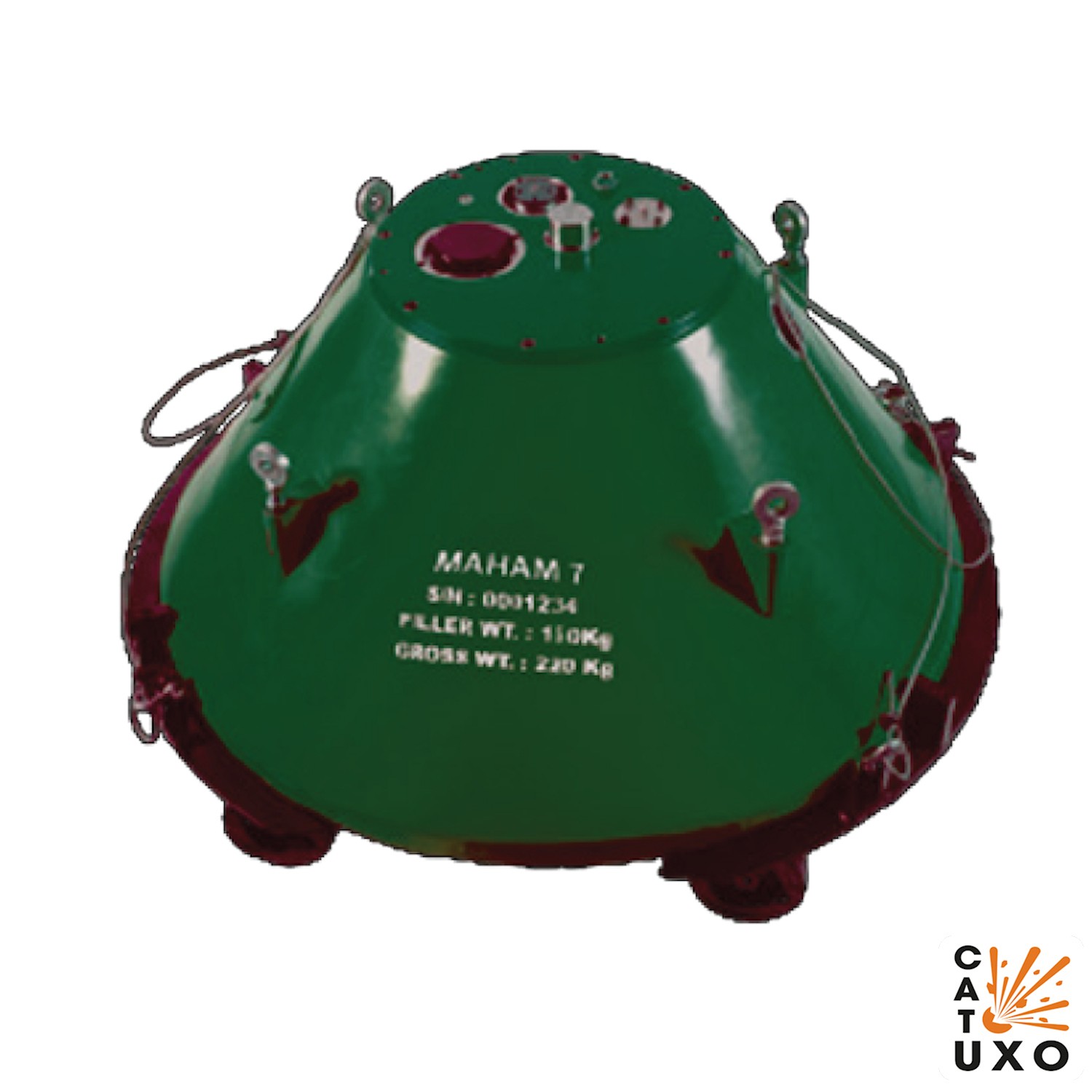
Maham 7 sea mineCollective Awareness to Unexploded Ordnance (CAT-UXO)
Maham 7 can also be used in shallower waters (from three to 91 m) and can be deployed both by ships and by dropping from a helicopter or plane. Mahan 7 is also dangerous because it has a special shape that makes it difficult to detect by sonar.
It is also worth adding that – as far as we know – Iran used both of these mines in real combat conditions for the first time.
Iranian mines and the Polish Navy
The use of sea mines by the authorities in Tehran shows that every self-respecting navy should have in its arsenal ships designed to eliminate this type of threats. We are even more pleased that Poland has one of the most modern units of this type in the world in the form of Kormoran II minehunters.
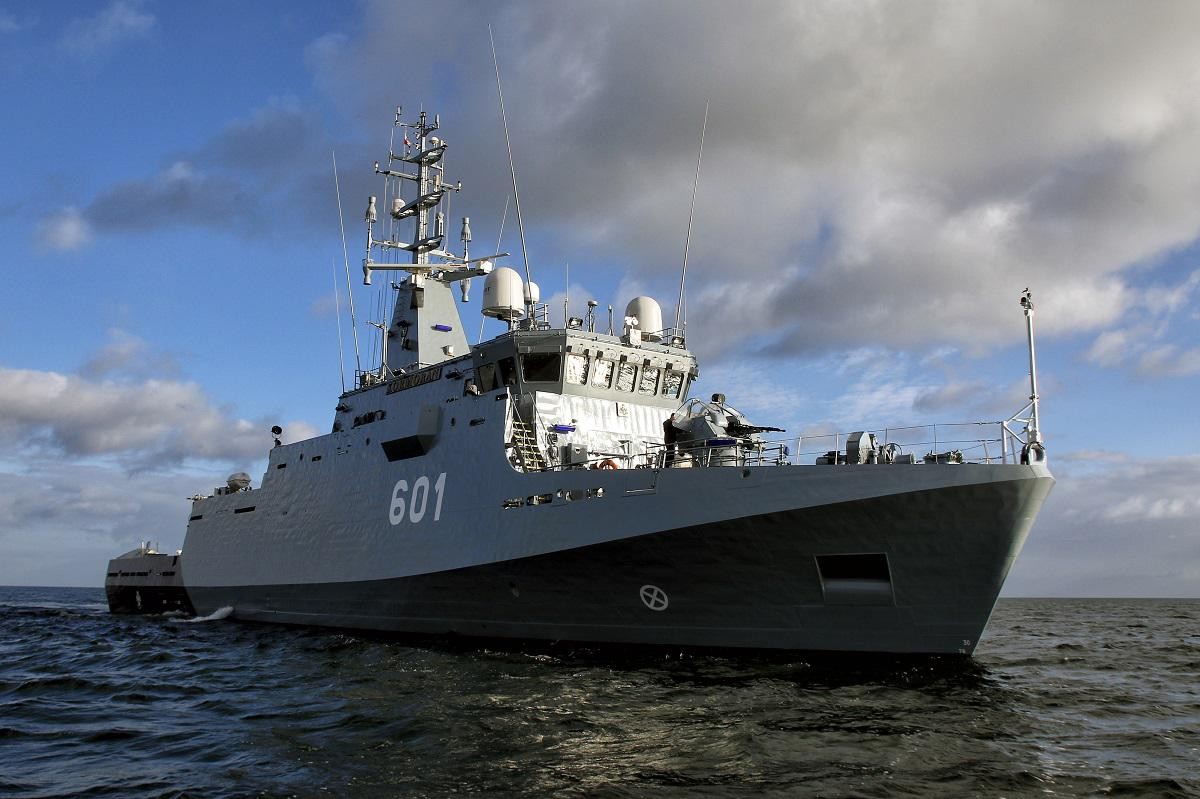
Kormoran II-class minehuntermiliopolskie.pl
Eliminating Iranian mines would be an ideal mission for Polish ships. Their equipment precisely responds to the threats posed by modern acoustic, magnetic and sea mines, including: thanks to modern sonars, remotely operated underwater vehicles for detecting mines or specialized loads for their destruction. Additionally, the hulls of our destroyers are made of amagnetic steel, which reduces the risk of triggering magnetic fuses.
For now, however, there is no indication that Polish Kormorans will participate in demining the Strait of Hormuz.


