After a decline at the beginning of the full-scale war in Ukraine, the number of bullying cases in schools is again on the rise. Parents do not want to conflict with schools, administrations try not to wash dirty linen in public, and more and more cases of bullying are being recorded not only among children, but also among adults. Read more in the material of the publication “GORDON”.
Scope and trends of bullying in schools
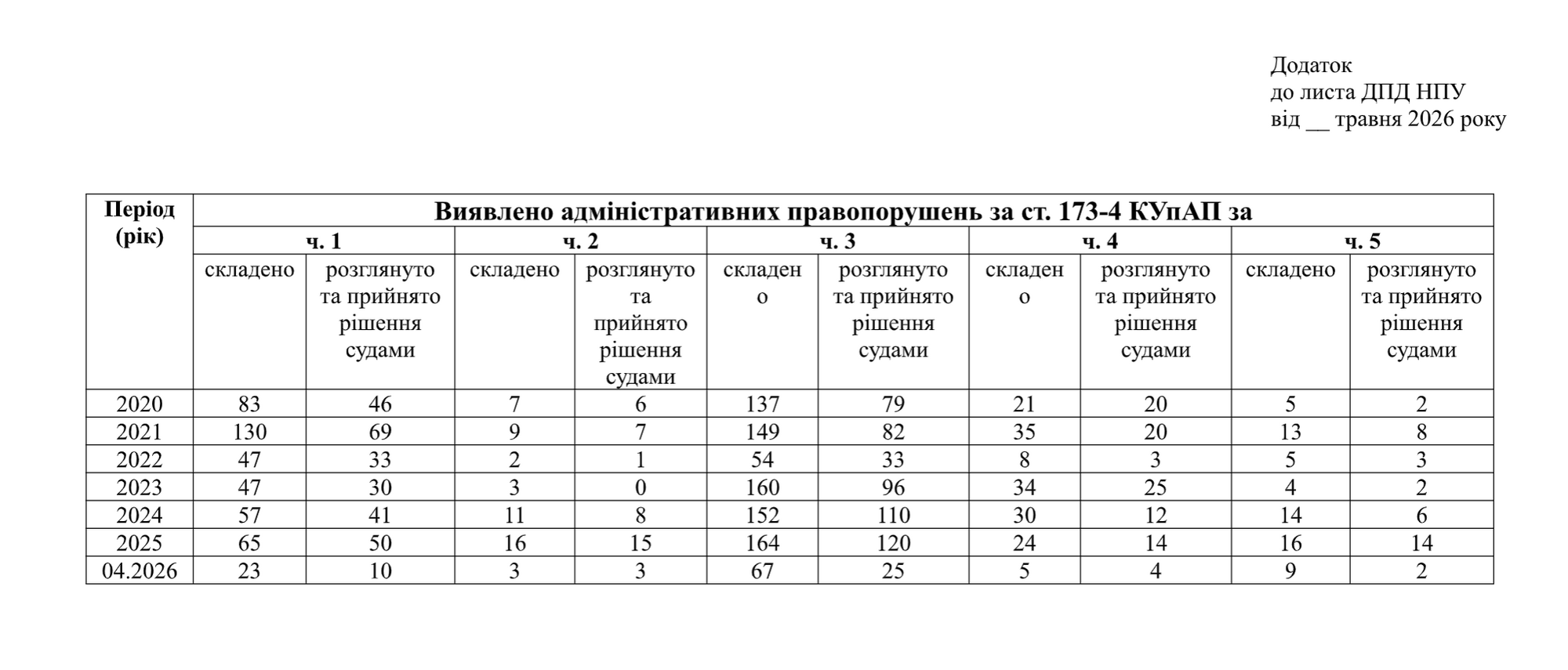
According to the open data service Opendatabot, according to the National Police of Ukraine, last year law enforcement officers recorded 285 cases of bullying in educational institutions. This year, 107 protocols have already been drawn up.
Over the year, the number of bullying cases increased by 8%, analysts note. However, the statistics have not yet reached the figures on the eve of a full-scale invasion.
Last year, police officers issued an average of 32 bullying reports—if you count only the months of the school year. For comparison, in 2021 this figure was 37 cases.
Ombudsman Dmitry Lubinets noted that in 2024, the secretariat of the Commissioner of the Verkhovna Rada of Ukraine for Human Rights received almost three times more complaints about bullying in schools than in 2023.
This year the situation has improved somewhat, analysts say. 18% fewer protocols were issued than during the same period in 2025. (On average 27 protocols per month).
Bullying by adults
Most often, cases of bullying are recorded among children and adolescents. In 2025, more than half of all cases involved bullying by minors (under 14 years old) and minors (14–18 years old). Last year, law enforcement officers drew up 164 relevant protocols.
At the same time, the number of cases of bullying by adults has increased – after a sharp decline in the first year of a full-scale war. The police recorded 65 such cases in 2025, which is 14% more than the year before.
According to lawyer, chairman of the NAAU Committee on Family Law Larisa Gretchenko, the drop in statistics in 2022 hardly meant a real decrease in bullying. She believes distance learning, stress from the war and less willingness of parents and schools to officially report conflicts have contributed to this. But now the situation may indicate a return to more active recording of such cases.
Also, as Opendatabot writes, the number of cases of repeated or group bullying by adults is growing even faster. Last year there were 1.5 times more protocols than in 2024.
But among children and adolescents, group bullying is gradually declining. The most such cases occurred in 2023.

The courts began to actively consider cases
At the same time, the proportion of cases going to trial has increased. If in 2021, before a full-scale invasion, decisions were made in 55% of cases, then in 2025 this figure increased to 75%. However, this year the statistics are lower – decisions have now been made in 41% of cases.
Almost all cases of repeated or group bullying by adults in 2025 have already been considered by the courts: in 15 out of 16 cases a decision has been made.
Causes and trends of bullying in schools
Official statistics do not always reflect the real scale of the problem, and there are significantly more appeals from parents and participants in the educational process than cases that reach the police or court, Gretchenko notes.
“Parents often avoid aggravating the conflict with the educational institution, since in many communities the school is virtually the only place of education, and transferring the child to another institution or switching to another form of education is not always available. Parents are often afraid of conflict with the school, pressure from the team, or do not believe that an official appeal will help protect the child,” the lawyer said.
According to her, the administration often tries to “solve everything internally” in order to avoid scandal or reputational losses. At the same time, today it is quite possible to bring the director to justice; the corresponding judicial practice has already been formed, she added.
According to analysts, last year 16 reports were drawn up against school leaders for failure to report bullying. This is 23% more than before the full-scale war. At the same time, courts are increasingly making decisions on such cases: last year – in 88% of cases.
However, it is much more important to create a system in which the school is not interested in hiding the situation, but in responding to it in a timely, professional and safe manner in the interests of the child and the teacher, the expert said.
The lawyer emphasizes: public policy should shift the emphasis from formal punishment to prevention, early detection of conflicts, psychological support for participants in the educational process, development of a culture of non-violent communication and mediation as a way of resolving conflicts in groups involving children. Increasing the size of fines or the terms of prosecution in any case will remain a reaction to a critical situation, and not an effective mechanism for preventing it and protecting the child.