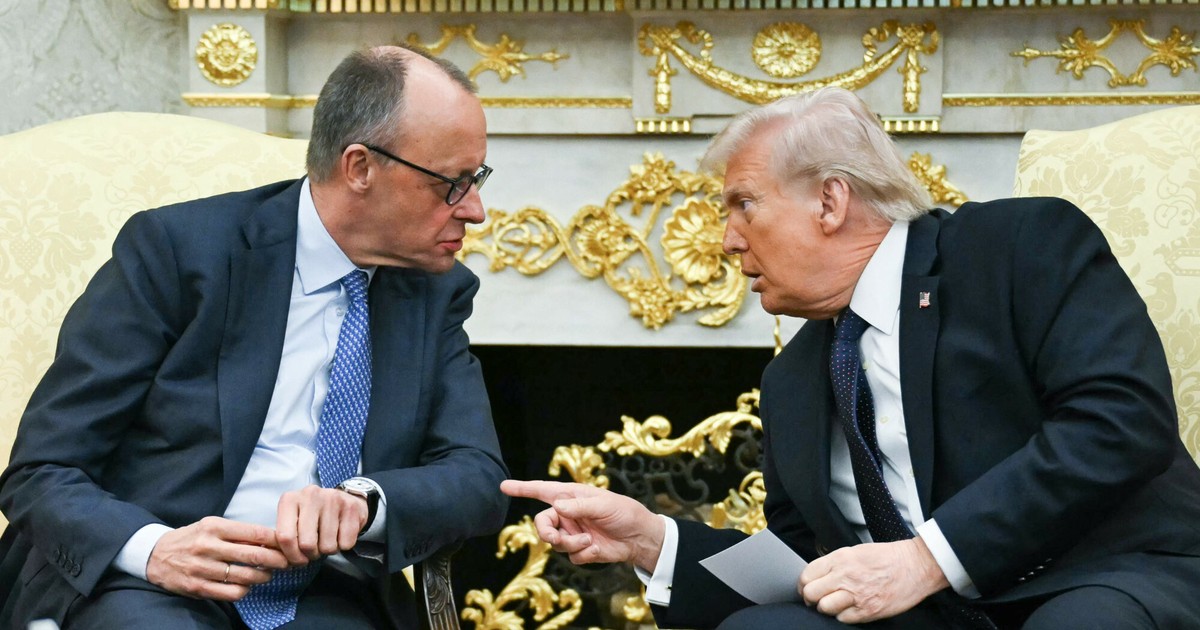
His statements are part of the growing tensions in transatlantic relations and criticism of the Donald Trump administration's policy towards Europe, universities and immigrants, as Bloomberg writes.
During a meeting with representatives of the Catholic community in Würzburg, Friedrich Merz admitted that although he had been an admirer of the United States for years, his attitude towards this country had recently become noticeably colder.
“I am a great admirer of America – but my admiration is not growing at the moment. I would not recommend that my children go to the US to study or work today.” – said the German Chancellor.
Merz pointed to the deteriorating – in his opinion – “social climate” that has recently “suddenly appeared there.”
- Read also: The German Chancellor criticizes an important decision of the Trump administration. “Mistake”
The labor market and education are in doubt
One of the chancellor's key arguments was the situation on the American labor market, especially from the perspective of young, well-educated people.
“Just a few years ago, the answer to the question of what well-educated young people can achieve in the U.S. was completely different than today. Currently, the most educated Americans have great difficulty finding a job” — rated Merz.
His words are part of a broader debate around the condition of American universities and the labor market for graduates, especially foreigners, as Bloomberg writes.
Universities under pressure from the Trump administration
As Bloomberg reminds, the Donald Trump administration has in recent months tightened its approach towards some of the most prestigious American universities. It included, among others: limiting federal research funding and other streams of public support.
At the same time, American immigration services began taking action against foreign students. Immigration and Customs Enforcement agents detained and arrested foreign nationals—including on campuses and in dorms—and thousands had their legal residence status revoked.
Effect? The number of new international undergraduate students in the U.S. dropped by an average of 20 percent this spring, according to a study by a coalition of education organizations. compared to the same period a year earlier – writes Bloomberg.
Political tensions between Berlin and Washington
Merz's critical statements appear in the context of tensions in German-American relations. Last month, the chancellor said during a meeting with students that the United States had been “humiliated” by Iran. This statement caused a wave of sharp reactions from Donald Trump on social media.
The US president then threatened to withdraw American troops from Germany and cancel plans to deploy Tomahawk missiles there. Washington also accused Germany and other European countries of lacking real US support in activities aimed at reopening the Strait of Hormuz.
- Read also: Transatlantic relations are tense again. “He has no idea what he's talking about!”
An attempt to tone down the dispute
Last week, the German Minister of Foreign Affairs Johann Wadephul tried to ease tensions. In an interview with Bloomberg News Editor-in-Chief John Micklethwait he described the conflict as a “big misunderstanding” and assured that relations between the US and Germany remain “solid.”