Russian President Vladimir Putin recently suggested that the war in Ukraine may be coming to an end, but according to an analysis by the Institute for the Study of War (ISW) there is no real indication that Moscow intends to stop military aggression, Ukrainian media reports.
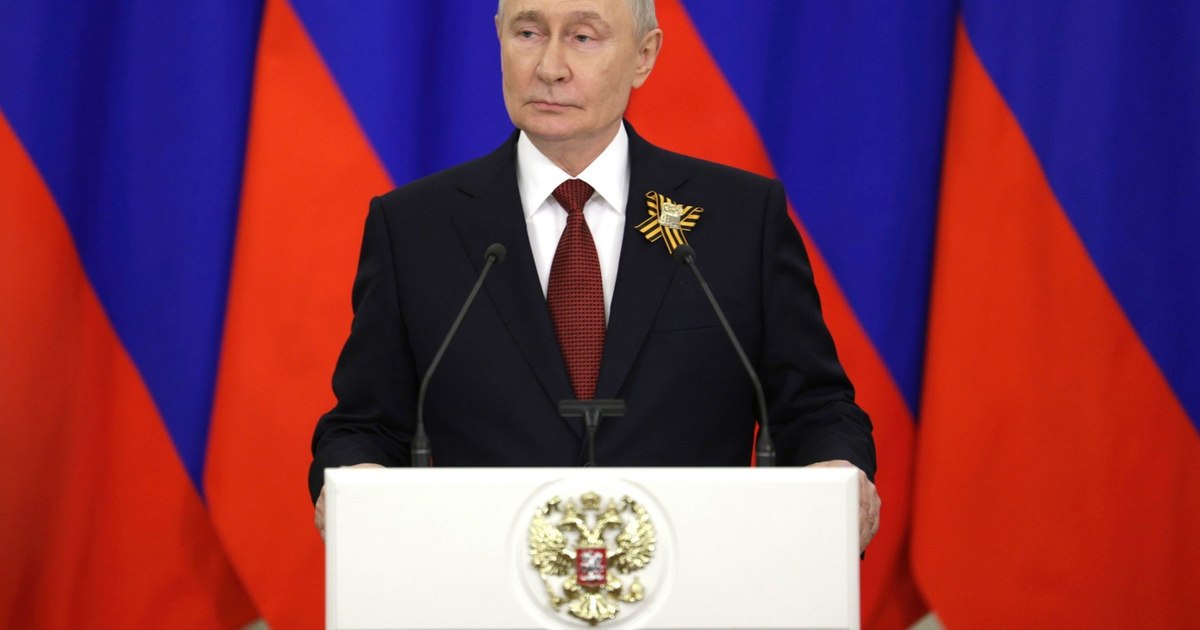
Vladimir Putin at the press conference after the May 9 parade PHOTO profimedia
The statements were made on May 9, during a press conference held after the traditional military parade commemorating Victory Day, the defeat of Nazi Germany in World War II. The context was this: Putin was answering questions about the alleged involvement of Western states in the recent long-range Ukrainian attacks in Russia.
“This matter is coming to an end,” he commented, wording taken literally by the Russian media as an announcement of an imminent end to the war.
ISW analysts point out that Putin's statements do not actually indicate any change of position on the part of the Kremlin leader, and that this rhetoric makes it quite clear that Russia's strategic objective of inflicting a decisive defeat on Ukraine has remained unchanged.
On the contrary, in his speech Putin reiterated the official justifications for the invasion of Ukraine and reaffirmed Russia's military objectives.
An important detail highlighted by ISW analysts is the fact that Putin stated that the Russian army did not parade with heavy military equipment as it must focus on the “final defeat of Ukraine”.
It is a signal that the Kremlin's maximalist goals are the same – to obtain the capitulation of Ukraine: at the same time, Putin shows no signs of readiness for bilateral meetings with a view to negotiations for a possible peace agreement.
And that's because Putin reiterated his previous condition that a possible meeting with Ukrainian President Volodymyr Zelensky could only possibly take place for the signing of a final agreement.
The Russian leader insisted that the talks should take place either in Moscow or in a third country, but exclusively in the context of finalizing a peace treaty.
“Putin reiterated his earlier demand that any bilateral meeting with Ukrainian President Volodymyr Zelensky take place in Moscow and suggested he would not meet with Zelensky abroad for peace talks,” the analysts write.
Messages for the public in Russia
According to ISW, Putin's statements are mainly aimed at the domestic audience, which is increasingly feeling the impact of a war that has lasted more than four years
At the same time, long-range Ukrainian attacks on Russian infrastructure and difficulties in the defense system are adding to the pressure on the leadership in the Kremlin.
Germany rejects Putin's proposal to involve Gerhard Schröder in the peace negotiations in Ukraine
Information warfare
ISW also signals the escalation of Russia's information warfare operations, which are becoming increasingly sophisticated as high-impact images are distributed. Thus, analysts have seen a proliferation of footage from the front, including some generated with the help of artificial intelligence, showing Russian soldiers raising flags in various areas of the front.
These images are used to suggest a significant military advance, in conditions where there are no stable positions or real territorial gains, being in many cases limited infiltrations by groups of infantrymen.
Analysts believe that such materials are part of a coordinated propaganda campaign, which was amplified especially in the days leading up to the May 9 parade, in order to project the image of major progress on the front.
“The Kremlin continues to conduct a systematic campaign of cognitive warfare to exaggerate Russian advances through overstated claims of gains and “flag-raising” infiltration missions in an attempt to present them as a large-scale, broad-front offensive in order to give the false impression that the front line is collapsing across the entire theater of operations, contrary to all available evidence,” ISW analysts say.
Hostilities continued despite the armistice
From 9–11 May, both sides reported limited continuation of hostilities, despite a temporary ceasefire announced by the US
Ukrainian President Volodymyr Zelensky said Russian forces had carried out more than 150 ground attacks, about 100 artillery bombardments and nearly 10,000 drone strikes.
For its part, the Russian Defense Ministry has accused Ukraine of ceasefire violations through artillery and drone attacks.
Independent data indicate a decrease in the intensity of fighting, but not a complete cessation of conflict. Clashes continued at the local level in several sectors of the front.
ISW concludes that ceasefires without clear monitoring and enforcement mechanisms are unstable and difficult to maintain, causing violence to persist even during declared ceasefire periods.
In conclusion, analysts appreciate that Putin's recent statements do not represent a real signal of peace, but rather a political and propaganda message aimed at strengthening the image of the Kremlin domestically and influencing the perception of the evolution of the war.