Ukraine's repeated attacks on the Tuapse oil terminal on Russia's Black Sea coast highlight Russia's difficulties in protecting its energy infrastructure despite having one of the most extensive air defense networks in the world, a Kyiv Independent analysis says.
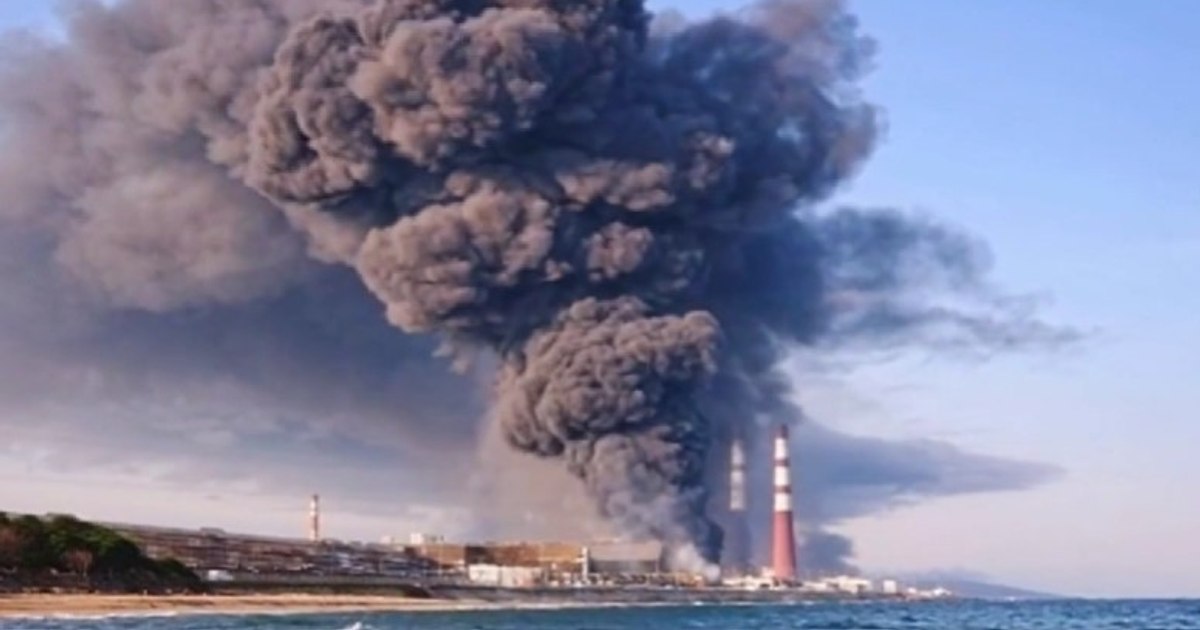
Since mid-April, Ukraine has hit the Tuapse terminal four times, causing major fires, the temporary shutdown of refinery activities, pollution of parts of the coast and prolonged emergency interventions. The attacks occurred despite active defense systems and repeated statements by Russian authorities regarding the interception of drones.
Military experts say the scale of Russia's oil infrastructure poses a major challenge to Moscow's air defenses. Oil refineries, warehouses and terminals are spread over a vast territory, which forces Russia to disperse defense systems over areas of hundreds of thousands of square kilometers.
Justin Bronk, a senior researcher at the Royal United Services Institute, believes that this dispersion reduces the effectiveness of the Russian defensive system, which is designed to operate by overlapping several layers of defense in the same area.
“There are so many potential targets that Russia needs to defend”he explained. According to him, to the extent that Ukraine forces Russia to distribute its defense over an ever-widening territory, the effectiveness of the network decreases considerably.
In addition, oil infrastructure is particularly vulnerable to even small-scale drone attacks. Tanks and pipelines are not armored or reinforced, and petroleum products are highly flammable. Thus, a few drones that manage to get past the defenses can cause large-scale fires and explosions.
Bronk explains that the short-range Pantir systems, used to protect critical sites from drone strikes, are under increasing pressure, including due to problems with ammunition stocks. Under these conditions, Russia is forced to increasingly use medium and long-range systems or helicopters to intercept Ukrainian drones.
“This fact could explain why Ukraine continues to breach the defense lines around installations like Tuapse,” he points out.
The terminal in Tuapse, located in the Krasnodar region, is one of Russia's most important oil export centers, processing approximately 12 million tons of oil annually. According to Dmytro Zhmailo, the executive director of the Ukrainian Center for Security and Cooperation, the port and area of Novorossiisk are also essential for the activity of the phantom fleet of oil tankers operating in the Black Sea.
Ukraine no longer uses gloves in attacks on Russian oil. Kiev's new strike strategy
“Why was it hit again? Because it wasn't completely destroyed”, says Zhmailo.
According to him, Ukraine is not trying to completely destroy these targets in a single attack, but is aiming to gradually degrade the Russian energy infrastructure through repeated strikes.
In recent months, Ukraine has attacked refineries, pumping stations, warehouses and other infrastructure connected to Russia's export network. Zhmailo claims that these strikes temporarily affected about 10 percent of Russia's oil export infrastructure.
“We often say that Ukraine's weak point in this war is its defense against Russian ballistic and air-ballistic missiles. Instead, Russia's weak point is its oil refining complex.”
Data cited by Bloomberg show that attacks on Russian oil infrastructure in April reached their highest level in four months, with at least 21 hits reported on refineries, pipelines and offshore oil assets. As a result, Russia's average refining capacity fell to 4.69 million barrels per day, the lowest level since December 2009.
Ukrainian officials admit that many drones are intercepted before they reach their targets. However, even a small number of successful strikes can still result in refinery shutdowns, high repair costs, and significant logistical disruptions.
“When we see a successful Ukrainian drone attack, nine other drones in that series may have been shot down by Russian air defenses“, he says.
According to Zhmailo, the effectiveness of the Ukrainian long-range attack campaign is also the result of the operations carried out in recent years against Russian air defense systems, especially in occupied Crimea.
“We're in a much better position now than we were a year ago,” he says.
Ukrainian forces have systematically targeted radar systems, launchers and other air defenses deep behind the front line, increasing the likelihood that long-range attacks could penetrate Russian defenses.
For his part, Bronk believes that the economic and logistical impact of these attacks is becoming more important amid the difficulties encountered by Russia on the front and the problems of replacing the losses of soldiers.
“Russia's economic and material losses as a result of Ukraine's long-range strike campaign are more significant than they were likely to be last year,” points out Bronk, pointing out that currently they are getting worse “a situation on the battlefield that is not evolving in their favor at all”.