The Pole wants to fight for the governor of California. Łukasz Filiński wants to change the richest state in the USA


On June 2, California residents will see the name of Łukasz Filiński, a Pole from Świnoujście, who, as a 17-year-old, emigrated to the United States following his own American dream, among dozens of candidates for the governor of this state.
The same list includes: former US Secretary of Health Xavier Becerra, Riverside County Sheriff of 30 years Chad Bianco and, among others, former Los Angeles Mayor Antonio Villaraigosa.
There is no note “financier” next to Łukasz Filiński's name, although this is what he does professionally. Instead, there is one laconic word “father”.
– If I looked at it technically, from the point of view of politics, I would have to say that my chances are close to zero – says Łukasz Filiński in an interview with Onet. — I don't have a party, I don't have money, I don't have any support. But I didn't come here because someone promised me victory. I came because at some point I stopped pretending not to see what was going on around me.
Filinski treats running in the elections primarily as an opportunity to show himself and his mission. A mission that he says God gave him.
Fulfill the American teenager's dream
It is the beginning of the 1990s. It is a period of transformation in Poland. In the seaside town of Świnoujście, trade flourishes at the somewhat wild border market. Łukasz Filiński is 14 years old and, together with his brother who is a few years older, he sells shoes on the lawn. Ordinary, sports footwear that the Germans quickly like and sell like hot cakes.
They earn really well. Mainly on weekends, because there is school during the week. They hear about America, like everyone else in those years, mainly from television. This distant, exotic world tempts, but seems unattainable.
At least until information about a student exchange appears. The program is just starting, and when Łukasz Filiński applies, he dreams of New York. In his mind's eye he sees the Statue of Liberty and Times Square.
Łukasz Filiński as a teenager in the 1990s.Private archive / materials press releases
However, it quickly turns out that he will not go to New York. He will be welcomed by an American family in Phoenix, not in Arizona, but in Oregon. Three thousand inhabitants and virtually no American world straight from TV.
—I cried the entire trip. 11 hours. These weren't tears of emotion. It wasn't until I said goodbye to my family and boarded the plane that the full reality hit me. I realized the personal price I pay for going to the USA. I was desperate, he recalls.
The student exchange program assumed that Poles would go to the homes of American families who would agree to take them in. Filinski goes to Kerry Malone.
— I was planning to come back, I really was. I thought I would finish school, gain experience and return to Poland, to Warsaw, to some international company, he says. — Life quickly verified this.
Kerry was lonely. Filiński calls her his “American mom”. When she got cancer, he decided he couldn't leave her. — I couldn't say: “I'm sorry, I'm going back to Poland,” he says. — I took care of her, went to school, worked after school. It was a time of great responsibility and great loneliness.
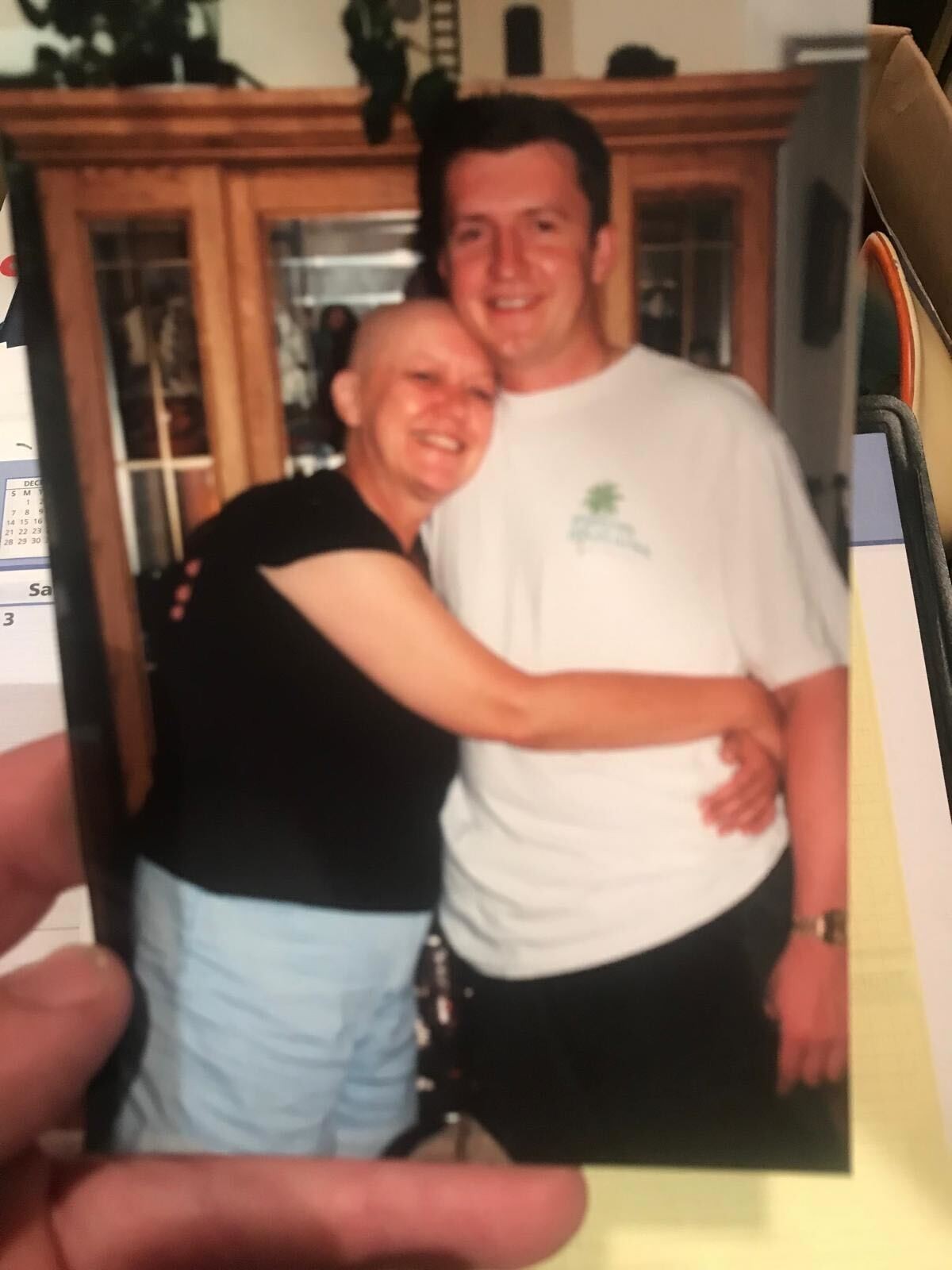
Łukasz Filiński with Kerry Malone, i.e. “American mom”Private archive / materials press releases
In Poland, the family missed him, but they were understanding. Łukasz graduated from high school and later studied. It was then that he started dealing with finances. First in Oregon. He jokes that the level of education in Poland was so much higher than in the US that in college they were impressed by his knowledge of mathematics.
How the American dream is falling
Filiński says that it was in Oregon that he fell for the first time. He was young, had his own house and earned really good money. And then, practically overnight, he lost everything. He then packed all his belongings into an old passenger car and headed towards California. Over a thousand kilometers one way.
He then got a job offer in a mortgage company. — It was a bit like someone fast-forwarding a movie. Within a year, I went from a motel to a director's position. I managed teams, large amounts of money, and responsibility across the country, he recalls.
Later he founded his own company. At its best, it employed several dozen people. Today, the team is smaller because the United States was also affected by financial crises. And he himself was at a crossroads in life again.
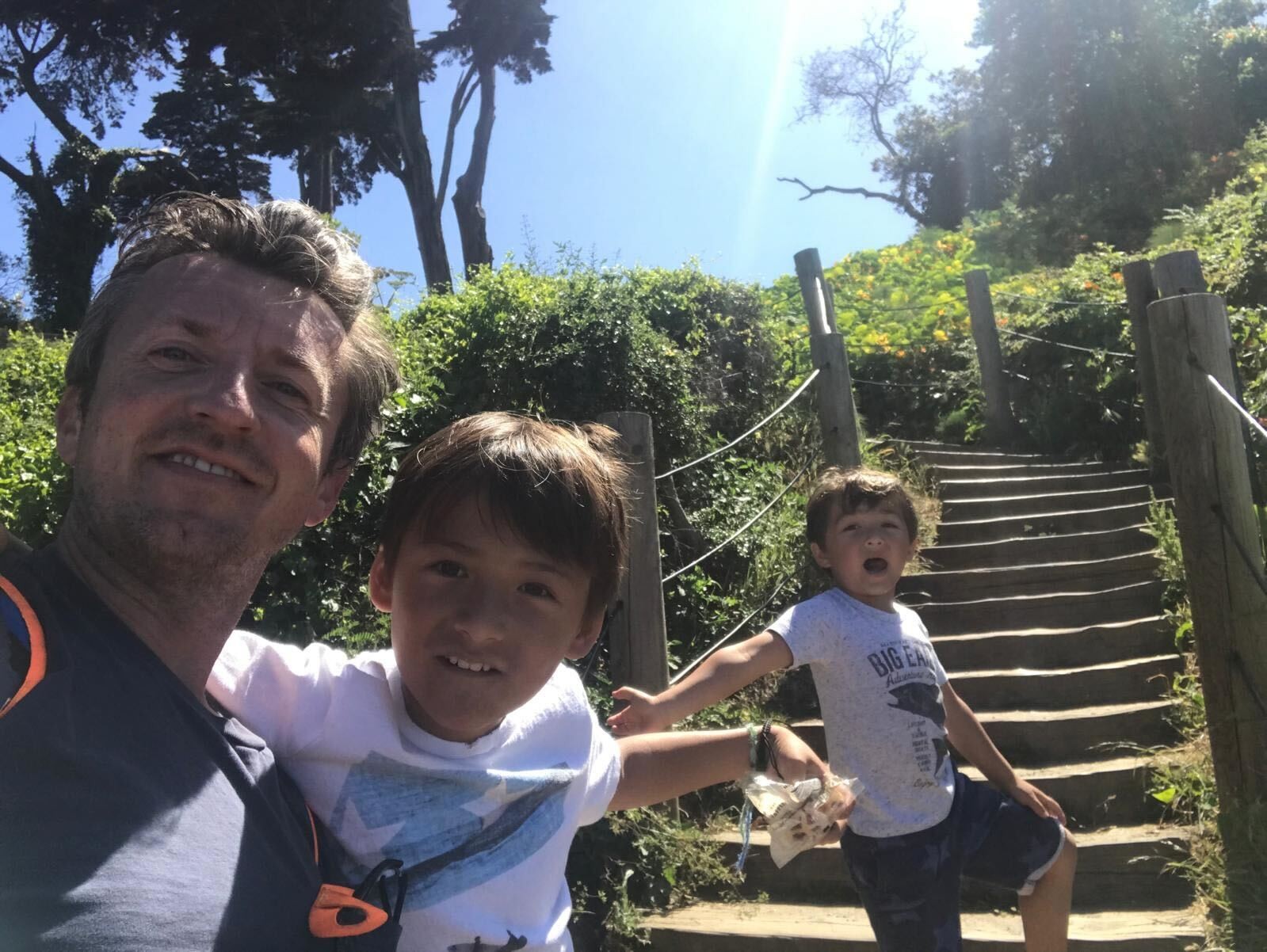
Łukasz Filiński with his sonsPrivate archive / materials press releases
— There was a moment when I really felt like I was losing ground under my feet. Not philosophically, but financially and in life, he says. — For two weeks I didn't know if I would be able to keep the house. I had my son with me. And then for the first time I really felt how close I was to homelessness.
The topic of homelessness in California is now one of the items on his agenda.
The election program is like a manifesto
Filiński has no billboards or leaflets distributed in homes or handed out on the streets. At least for now. He himself says that the decision to run for office was made spontaneously. He says he felt like someone had put him on this path at that particular moment.
There's actually very little you can find about him on the internet. Apart from the website and the account on X, where he talks, among others: the story of Dominik, who has been homeless for 27 years. He met him in a park near his house.
Today Dominik is 74 years old and every day at dawn he hangs the American flag in the Presidio Park in San Francisco. — At first I thought it was another story we knew from the street. And then I realized that I hadn't listened to him at all, admits Filiński. — People often approach the homeless as a problem to be solved. I was like that too. And it wasn't until I stopped trying to fix it that we started talking.
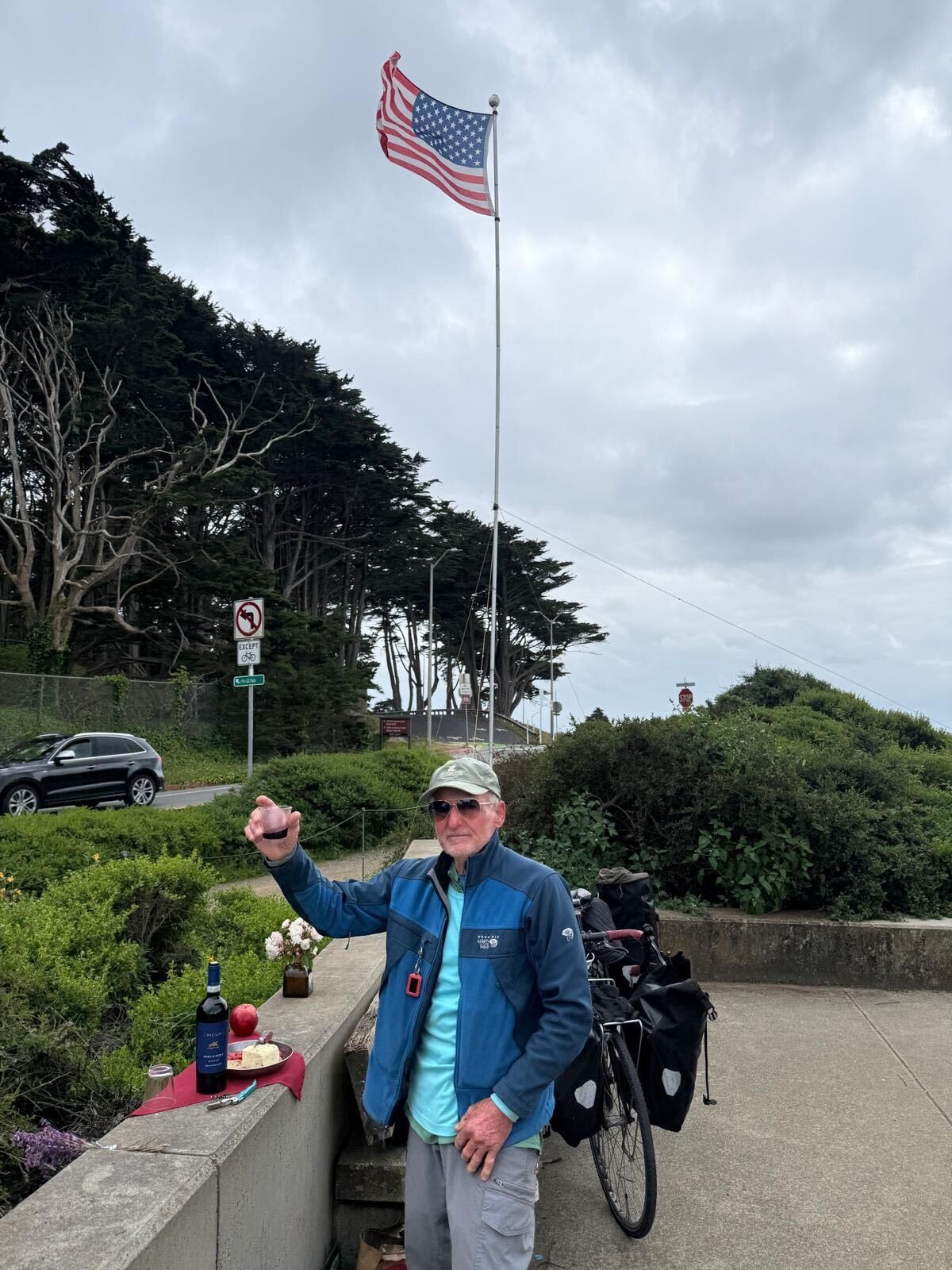
Dominik has been in a homelessness crisis for 27 yearsPrivate archive / materials press releases
Today, one of the ten points on Łukasz Filiński's agenda is the fight against homelessness in California. According to his calculations, there are approximately a quarter of a million people in the state of homelessness. Filinski's idea is to create a program in which Americans welcome people in need under their roof. In return, they would receive financial support.
Filiński claims that in this way he wants to connect people in the homeless crisis with those who have financial problems but at the same time have their own houses or apartments.
As he says, the existing programs are ineffective. — California has a lot of money. It is one of the richest states in the world. We don't lack a budget, we lack transparency, he says. — In recent years, tens of billions of dollars have been spent on fighting homelessness, and today we cannot even clearly say where these funds went.
When I ask what exactly the financing of these promises would look like, the answer again comes down to one slogan: California is rich. In one of the points he promises:
“We will phase out the state income tax for working- and middle-class families and transform the property tax system toward a simple, predictable flat fee based solely on the physical size and primary use of a property, rather than continually increasing assessed values that penalize people for improving their homes.”
15 thousand hole. to start with for young married couples
In the program, he also writes a lot about family and God. He himself says that for him these two values are the most important. He went through several crises, including a difficult divorce. He has three sons.
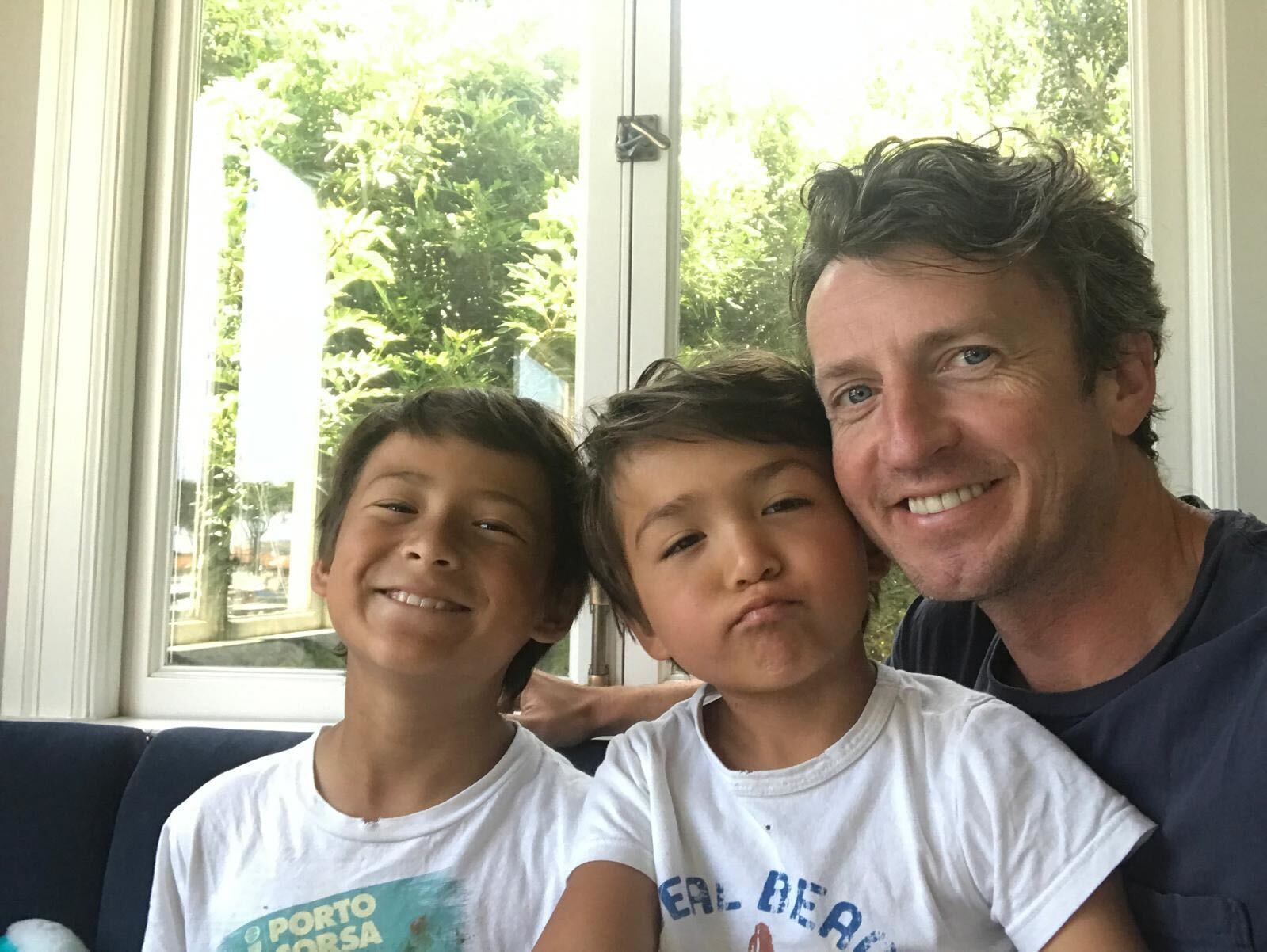
Łukasz Filiński with his sonsPrivate archive / materials press releases
— I don't go to church every day. I don't wave my Bible. But I've gone through moments in my life when I wouldn't have gotten up without faith, he says. — For me it is not an ideology. This is a very personal experience.
There is also a point about newlyweds. Filiński wants to support young married couples with grants of PLN 15,000. hole. to start. He argues that he wants to “regenerate the foundations of the family.” He would like to reform the courts so that in the event of a crisis, mediators are the first to step in.
– If we want people to start families, we have to really help them, not just say that family is important – he argues. “California can afford it,” he argues.
When I ask whether these grants would also apply to same-sex marriage, which is fully formalized in California, he hesitates for a long moment.
“I don't make the laws, I would sign them as governor,” he begins carefully. — My job is to unite people, not divide them. The world is terribly polarized today.
After a moment, he adds: – My upbringing and faith tell me that family is a man and a woman. But we live in a legal reality that is different. If something were to apply, it could not be discriminatory.

Łukasz Filiński is a candidate for governor of CaliforniaPrivate archive / materials press releases
He also admits that “the document is not perfect.” — I wrote it quickly. It is intended to be a starting point for conversation, it is not a closed project, he says.
Łukasz Filiński is one of nearly 60 candidates for governor of California, where electoral regulations require voting twice. In the first one, on June 2, one list (regardless of party affiliation) will include the names of all candidates. The two with the most votes will ultimately fight for the governor's seat in November.
At the beginning of May, Filiński, together with several other independent candidates for governor, sent an open letter to the American media. As they argue, they are omitted in candidate debates and they want to change that.
— If I don't win, the world won't collapse. I will continue to do the same. I will help those I meet. I will talk about uncomfortable things. In California we have 250,000. people in a homelessness crisis and no good solution, he says.