What do the UFO files declassified by the Pentagon contain? Revelations made by the astronauts of the Apollo 11 mission on the way to the moon

The Pentagon on Friday released the first batch of previously secret documents documenting reports of unidentified flying objects (UFOs), in what the White House described as an act of “total transparency” with the American public.
“These files, hidden under the seal of state secrecy, have long fueled informed speculation – and the time has come for the American people to see them with their own eyes,” Defense Secretary Pete Hegseth said in a statement published on X, reports The Guardian.
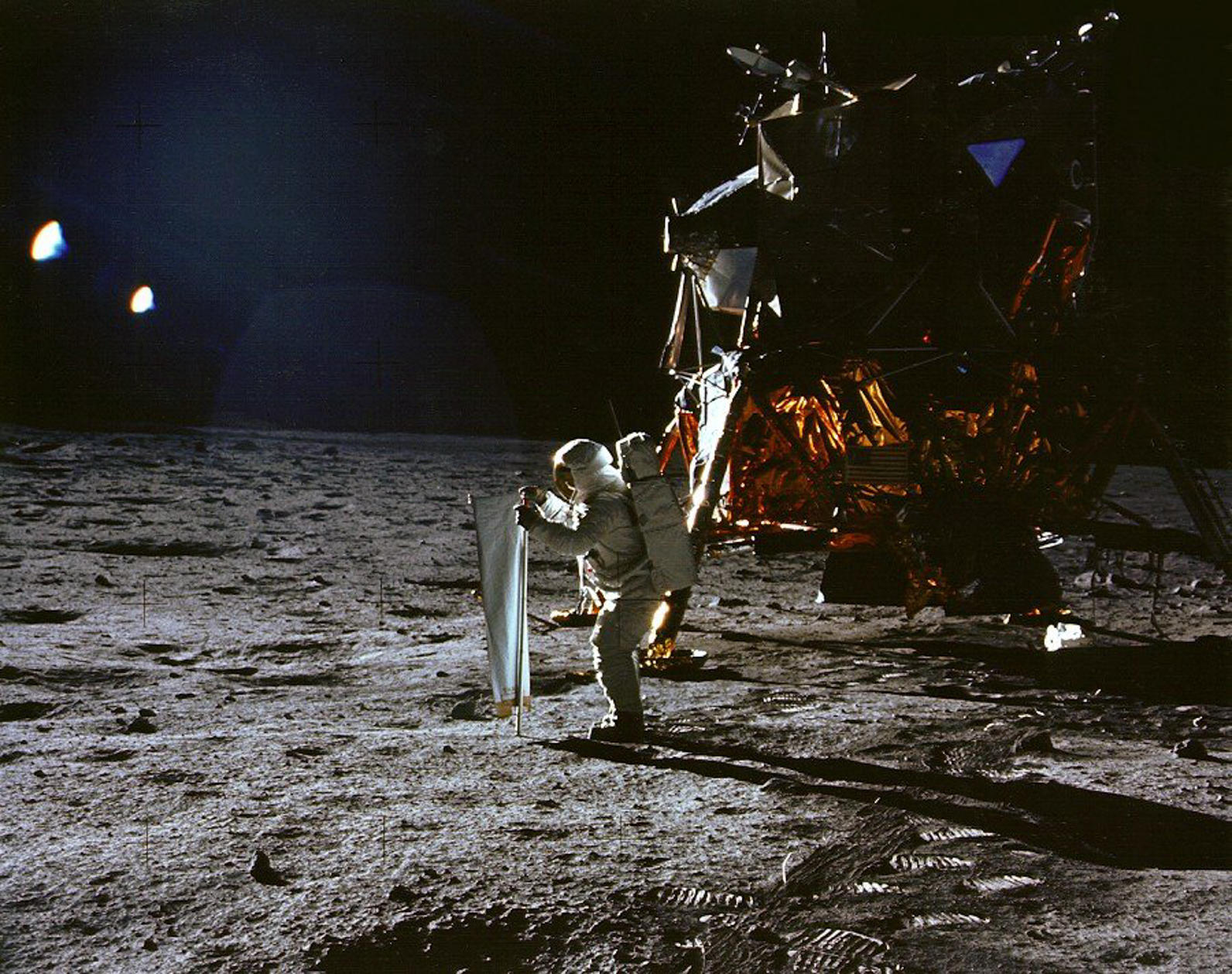
Among the most important information in the documents is the account of 1969 Apollo 11 astronaut Buzz Aldrin, the second man to walk on the moon.
He recounted in a 1969 report that he saw an object “of considerable size” close to the lunar surface and a “fairly bright light source” that the crew believed to be a laser.
Aldrin wasn't the only astronaut to report a strange event. A NASA photo from the Apollo 17 mission in 1972 shows three dots arranged in a triangle shape. The Pentagon, in a description accompanying the image, said there was “no consensus on the nature of the anomaly” but that a new preliminary analysis indicated it could be a “physical object”.
Numerous other pages present similar but unproven accounts of sudden, brief, or unexpected phenomena observed in the sky.
In addition to the many written reports, there is also a collection of video files sourced from military cameras around the world.
These include a soccer ball-shaped object spotted over the East China Sea in 2022, as well as images recorded in recent years showing points moving chaotically and at different speeds over Iraq, Syria and the United Arab Emirates.
All 28 UFO Videos declassified by The Pentagon today 👽🛸🇺🇸
A full compilation pic.twitter.com/7lzoF7S4vP
— Interstellar (@InterstellarUAP) May 8, 2026
The UFO files, declassified on Trump's orders
The release of the files follows a directive issued by Donald Trump in February urging federal agencies to begin identifying, declassifying and releasing government files related to UFOs and the possibility of extraterrestrial life beyond Earth.
The move, the US president said at the time, was based on “tremendous interest” from the public.
Last month, Jared Isaacman, NASA's new administrator, added more weight to efforts to increase transparency within the agency, saying that NASA is planning missions into space at least in part because of the possible existence of extraterrestrial life.
“The likelihood that at some point we'll find something that suggests we're not alone is pretty high,” he told NBC.
However, the first batch of 162 files released on Friday provided little new or conclusive evidence.
What else do the UFO documents contain?
According to the Pentagon's statement, the public “can ultimately form its own opinion about the information in these files.”
These include old State Department cables, FBI documents and transcripts of NASA manned space flights. Other pages, dating back several decades, contain ambiguous eyewitness accounts of UFO encounters or alleged sightings.
For example, a previously confidential 1947 report from Air Defense Command headquarters in New York contains an account by the pilot and navigator of a Pan American World Airways (Pan Am) commercial airliner who stated that they briefly glimpsed a mysterious “bright orange object” in the sky.
The object was visible for only a few seconds, then quickly disappeared behind a cloud and was never seen again, crew members said.
A more recent document details an FBI interview with a person identified as a drone pilot who, in September 2023, said he saw a “linear object” in the sky with a light bright enough that he could “distinguish bands within the light.”
“The object was visible for five to ten seconds, then the light went out and the object disappeared,” according to the statement given to the FBI.