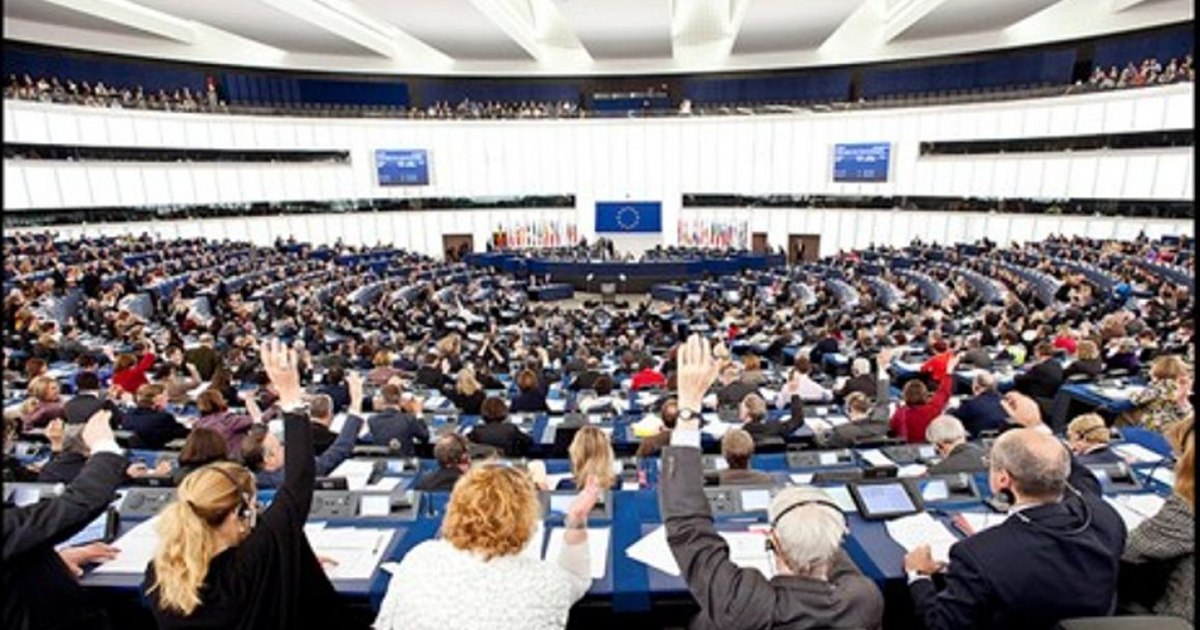
The latest round of tariff threats from President Donald Trump is forcing a decisive showdown within the European Union. The stake is the implementation of the transatlantic trade agreement negotiated last year, but the mistrust of the MEPs towards the leader from the White House has reached a critical point.
MEPs have already imposed strict additional conditions for the EU-US agreement
Negotiators from the European Parliament, national governments and the European Commission are meeting on Wednesday to try to break a deep deadlock. The dispute concerns the validation of the agreement signed last July at Donald Trump's golf resort in Turnberry, Scotland.
While the great industrial powers, led by Germany and its car industry, are pushing for the formalization of the treaty, a majority of the European legislature, dominated by the left wing, remains skeptical, writes politico.eu.
“Turnberry is a bad deal”
The chairman of the trade committee in the European Parliament, Bernd Lange, claims that the warning issued by Trump on Friday — regarding the imposition of tariffs of 25% on European cars — confirms that the American president is not a reliable partner.
“We've said it from the beginning and we'll say it again: Turnberry is a bad deal, and we're not going to simply approve it,” said Kathleen Van Brempt, vice chairwoman of the commerce committee.
MEPs have already imposed strict additional conditions: suspending the agreement if the US threatens the territorial integrity of the EU, terminating the validity of the treaty before the end of Trump's term, delaying implementation until Washington removes steel tariffs.
Diplomacy under pressure in Paris and Yerevan
In an attempt to defuse the situation, Trade Commissioner Maroš Šefčovič met with US Trade Representative Jamieson Greer in Paris on Tuesday. The talks, which lasted over an hour, ended without a concrete result. According to sources cited by POLITICO, the US side refused to withdraw the threat of tariffs on automobiles.
From Yerevan, where she participated in an EU-Armenia summit, the president of the European Commission, Ursula von der Leyen, urged stability: “we have an agreement, and its essence is prosperity, common rules and reliability.”
However, the Commission's pragmatism runs up against a changing legal reality. In February, the US Supreme Court struck down much of Trump's initial tariffs, shaking up the legal basis for how he can select his trade partners.
Berlin versus Paris
Inside the community block, the reactions are divided:
Germany: Chancellor Friedrich Merz tried to temper the situation, suggesting that Trump's disappointment over the delay in ratification is “frankly speaking, justified.” Berlin opposes the introduction of any clauses that could antagonize the American president.
France: President Emmanuel Macron took a middle ground, warning that while agreements must be honored, the EU has the tools to respond if it is threatened with new tariffs. “Everything is on the table,” declared the Élysée leader.
Spain and Belgium: These states are open to a “sunset clause” but want it to take effect only after Trump leaves office.
In the absence of a compromise between the European Parliament and the member states, the future of transatlantic trade relations remains suspended between economic pragmatism and an acute crisis of political confidence.