The housing crisis is pushing voters to the far right. The European left has the last chance to stop the slide


Europe is boiling over in terms of housing, and the researchers say bluntly: if the left does not take seriously the solution to the crisis, the electorate will turn its back on it and go to the extreme right. And the direction, the data says, is already visible.
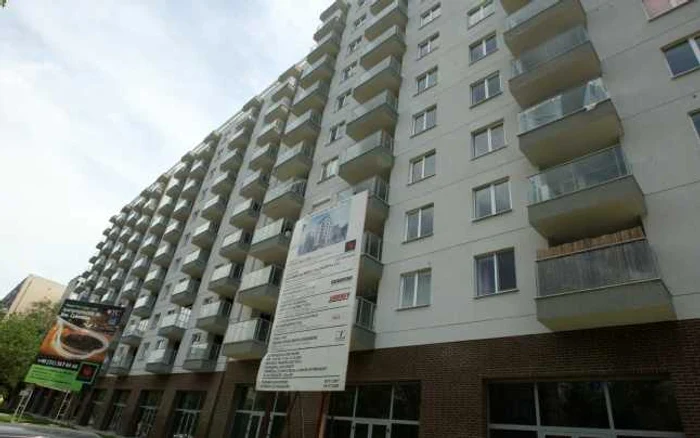
Housing crisis in Europe/PHOTO: Archive
The Progressive Politics Research Network (PPRNet) shows in a wide-ranging analysis that the explosion in house prices and rents has “erased” one of the last assets of the center-left parties: the defense of access to a decent home. What was once a social right is now becoming a luxury, and frustration is pushing increasingly disillusioned voters into the arms of those who promise simple solutions — the far right, writes The Guardian.
“Affordable housing has become a central economic, social and political issue,” explains Aidan Regan, professor at University College Dublin. “If progressives come up with credible solutions, they can rebuild a broad alliance. But it will require real political will.”
A suffocatingly expensive Europe
The Eurobarometer shows the same tension: rising living costs — where housing weighs heaviest — is the deciding factor in voting options for the European elections in 2024. In short: people can no longer pay for the roof over their heads.
In two decades, house prices in the EU have risen by almost 50% and rents by 25%. In the big European cities, the price increase in the last eight years jumps by 50%. And, everywhere, wages are not keeping up. For millions of people, housing swallows up a fifth of their income, and in countries like Ireland and Denmark, the burden is 80% higher than the European average.
The paradox? While rent and rates burden the younger generations, landlords are rejoicing: housing remains for many the most important financial asset. And public policy—including under center-left governments—has fueled this direction, abandoning rent control, massively selling off public housing stock and fueling real estate speculation.
Left, responsible for own goals
The data from Denmark, explains Martin Vinæs Larsen from Aarhus University, is revealing: the collapse of social housing construction did not come from the right, but even under the Social Democrats. After the mid-1990s, Social Democratic control of local councils “didn't translate into social housing. The political effort just disappeared”.
Demographic changes explain part of the problem: social housing is increasingly occupied by low-income people, often from immigrant backgrounds, while traditional left-wing voters are becoming more educated and affluent. But today's situation rewrites the equation: the crisis also hits essential professions — teachers, nurses — who can no longer afford to live in the cities where they work. Here reappears, says Larsen, “a real chance for the social democrats”.
However, the obstacles are to be expected: high construction costs, opposition from residents, strict eligibility rules, but also a toxic narrative that presents social housing as a privilege of “immigrants”. Possible solutions? Even higher social rents, as long as they stay below market — to make housing affordable again to a wider range of people.
How lost ground can be recovered
Regan believes that the progressive parties have a good chance if they can bring back to the fore the model preferred by Europeans: property — but one that is not a tool of speculation, but a form of stability. For young people and those on low incomes, access to owning a home has collapsed over the past 20 years. Whoever solves this wins the electorate in the long run.
For that, the left must radically rethink housing policy: home ownership as a guarantor of security for the middle classes, complementary to a robust public rental and non-profit sector. Today, inequality is “built into the system”: landlords are accumulating wealth, renters are sinking in costs, and young people without family support are being locked out of the market.
Behind all the numbers, the message is simple: people need stable, safe and affordable housing. For an entire generation, this is no longer reality—it's a dream.
If the left hesitates, the far right fills the gap
PPRNet researchers warn that lost ground is becoming fertile ground for populists. Not because they have coherent housing policies — there is no evidence of this in Hungary or Austria — but because they know how to capitalize on frustrations. When prices stagnate or fall in a region, people vote for the radical right. When rents go up in poor areas, the same thing happens.
Moreover, radical parties rewrite the theme of housing in an identity key: “housing as national heritage”, linked to family, stability and the exclusion of those considered “outsiders”. In Hungary, Fidesz has made housing a tool of pro-natalist policies — non-reimbursable grants for families promising children. The result? Existing inequalities are reinforced and new ones are created.
The researchers' conclusion is stark: if the European left wants to regain ground, it must relearn to talk about houses, rents, property — not as financial assets, but as essential public infrastructure. This is where the political future is decided. This is where the alliance that can bring Europe out from under the temptation of extremism is played.
The rest is just political silence — and, as we can already see, this silence is expensive.