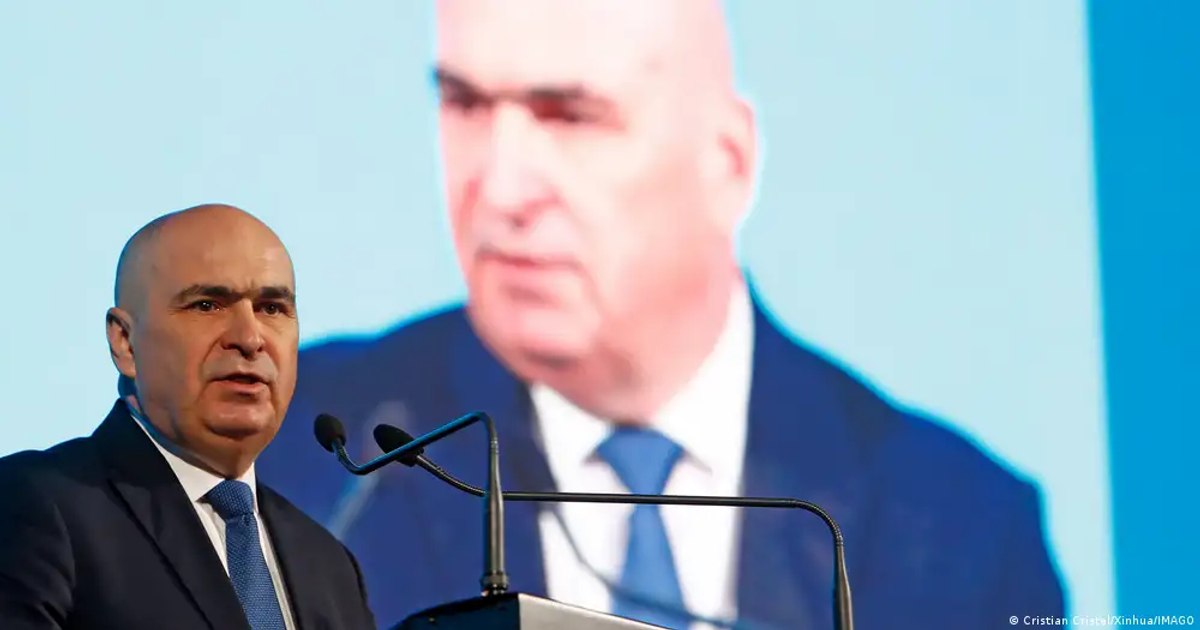
The share of Prime Minister Bolojan increased on social networks after the withdrawal of the PSD from the government and after the censure motion, but the applause comes only from the rarefied area of the right-wing electorate.
The Prime Minister of Romania, Ilie Bolojan
Ilie Bolojan probably grew up because he became a victim of PSD-AUR, a group considered anti-reformist and Eurosceptic. However, almost 60% of Romanians are of the opinion that the prime minister should resign and only 40% think he should remain in office (CURS, May 2026). It is understood that there is significant support, but that the dissatisfaction is much greater.
The social democrats built their strategy on such reasonings when they decided to leave the government, but also on a prior agreement with the AUR. However, they did not foresee the way in which the political-economic crisis will develop: (i) the resuscitation of the anti-PSD electorate, the one that led to the fall of the government led by Sorin Grindeanu in 2017, after he issued Ordinance 13 with the dedication for his party leader, Liviu Dragnea, to get rid of the criminal case that prevented him from becoming the real prime minister; (ii) increasing sympathy for Ilie Bolojan because he proved consistent, but above all because he did not lie and constantly explained the situation in which he, the government and the country find themselves. In post-December Romania, politics was rarely done with the truth on the table.
The comparison with Margaret Thatcher
Recently, Radu Berceanu, one of the few politicians who remained with Traian Băsescu from the 1990s until the end of his mandate, compared Ilie Bolojan for the austerity measures he took with Margaret Thatcher: “only everyone supported Margaret Thatcher in her party, because they knew that those were the measures that had to be taken and they knew politics”, on the other hand in PNL, most of them remain to solve their own interests and “to fill themselves with money” because “they never see themselves as the biggest party in Romania”; (iii) the remaining of the liberals closely united around Ilie Bolojan, even the group that opposes the prime minister and which the PSD would have wanted to tear away and bring to its side, possibly led by the Minister of the Interior, Cătălin Predoiu. In the meantime, however, it was the vote from the Permanent Bureau of the PNL that unanimously decided to support the prime minister and exclude a coalition with the PSD.
The clear signal for the liberals was given by Valeriu Stoica, the oldest living ex-liberal president, the one who mentored Cătălin Predoiu: “PNL, in the situation it is in today, if it were to participate in a new government with the PSD, risks diminishing its political weight even more and there are even greater risks than that”.
Valeriu Stoica also told the liberals that it would not be good to sacrifice Bolojan and accept “the cunning call of the PSD” and “the return to a government with social democrats”, because in this case “Bolojan might still have a political career, but the PNL don't know what he will do”; (iv) the loss of image in favor of the AUR, without which he could not make the no-confidence motion: the polls do not suggest an increase in the social democrats, although by trying to remove Prime Minister Bolojan from the game, the PSD wanted not only to regain control of the country's resources, but also to convince its electorate who had fled to the AUR to return.
What can a prime minister who does not have the support of the parliamentary majority do?
The first vice-president of the PNL, Ciprian Ciucu claims that Ilie Bolojan may not lose the post of prime minister in the no-confidence motion scheduled for tomorrow and that he would still need 5-10 votes in the negotiations that are taking place these days. AUR, PSD and the PACE group announced, on the other hand, that they will vote with the balls in sight, to see who and if they betray.
But what can a prime minister do who has neither the support of the population nor that of a parliamentary majority? If he loses the prime minister's seat and the PNL goes into opposition without betraying him, Bolojan can become a kind of Thatcher, rebuild the party and bring it to other dimensions so that in the 2028 elections it will be the right size for a Bolojan 2.0 government. If the PNL prefers money and power, it will remain, as Ciucu expressed, “embarrassing” in the PSD.
Sabina Fati – DW