The Polish Financial Supervision Authority limits the possibility of concluding an arrangement in sanction proceedings. What does this mean for the market?

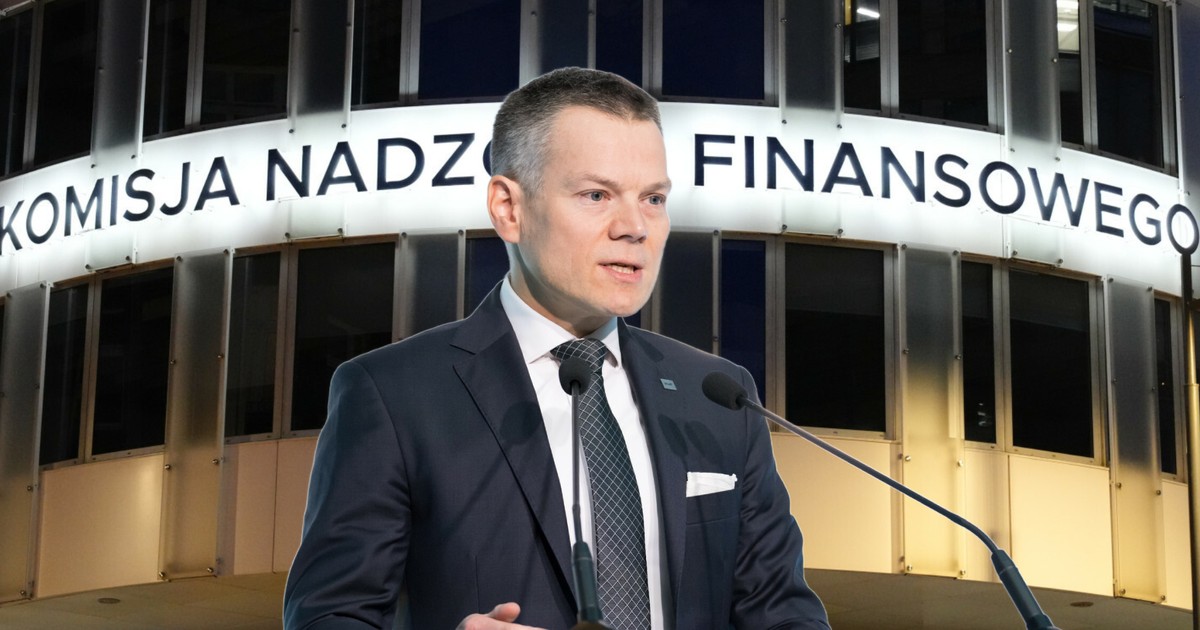
If the Polish Financial Supervision Authority has serious doubts as to the legality of the activities of a supervised entity, e.g. a bank, brokerage house or securities issuer, it initiates sanction proceedings. This is not a desirable situation for supervised institutions. If the doubts are confirmed, the Polish Financial Supervision Authority may impose fines. Such penalties can be really severe.
For example, an investment company may receive a fine of up to PLN 21,312,000 or the equivalent of 10%. total annual revenue, and an issuer (public company) failing to properly perform disclosure obligations may face a penalty of up to PLN 10,364,000 or the equivalent of 2%. total annual revenue.
However, for over two years, thanks to an amendment to the Financial Market Supervision Act, sanction proceedings can be ended with the conclusion of an arrangement.
Read also in BUSINESS INSIDER
This is a kind of agreement in which the Polish Financial Supervision Authority reduces the amount of the fine by 20 or even 90%. In exceptional cases, it may refrain from imposing a penalty.
In return, the entity must meet certain conditions – stop violating the law, remove the state of illegality and disclose all circumstances related to the violation, including co-perpetrators of the violation. Importantly, he must also waive the right to file a complaint to the administrative court against the decision approving the arrangement.
The system works because it's at a turning point The Polish Financial Supervision Authority concluded 2025 and 2026 with 29 arrangement proposals. 24 were accepted by entities interested in concluding an arrangement, and three were not accepted. In the case of two proposals, the deadline for their adoption was still running.
You want a deal? Apply blindly
There could be more systems if it weren't for some shortcomings. One of the basic problems related to the application of the institution of the arrangement is that the party is unable to agree its content with the Polish Financial Supervision Authority.
It might seem that the conclusion of an agreement is preceded by negotiations about its terms. In fact, however, the structure of the arrangement proceedings provides that the Polish Financial Supervision Authority prepares the arrangement proposal (Article 18n(1) of the Act on Financial Market Supervision). The party can only accept or reject this proposal (Article 18o, sections 1-3 of the Act on Financial Market Supervision). Therefore, it has no influence on the content of the concluded agreement – the Act does not provide for any “negotiation” procedure.
In practice, this is a significant drawback of this solution. Let us remember that the condition for concluding an agreement is, among others: the entity stops violating the law or removes the state of non-compliance with the law (Article 18k(4)(1) of the Act on Financial Market Supervision). Most often, however, the party does not agree with the Polish Financial Supervision Authority's assessment that the violation occurred at all. This means that the party to the proceedings – before receiving the proposal to conclude an arrangement – must in fact accept the interpretation of the law suggested by the Polish Financial Supervision Authority (even if it does not agree with it).
Moreover, the party has no formal opportunity to receive guidelines from the Polish Financial Supervision Authority as to what method of removing the state of illegality would be appropriate in the Polish Financial Supervision Authority's opinion. Sometimes he does not even know what exactly the Polish Financial Supervision Authority is considering imposing a penalty for (it is difficult to treat quoting the content of the violated provision in the notice of initiating sanction proceedings as a precise definition of the violation).
If a supervised entity wants to conclude an arrangement in the first instance, it must submit an application “in the dark“.
It is hardly surprising that entities prefer to conclude an arrangement after the decision has been issued in the first instance. Only the justification of the decision to impose sanctions allows one to fully understand the PFSA's approach to the case (interpretation of regulations, assessment of the facts, real amount of sanctions). Therefore, it should be rational to allow (without any restrictions) the conclusion of an arrangement at the stage of appeal proceedings.
In fact, the arrangement means that the party waives the right to appeal against the decision of the Polish Financial Supervision Authority to an administrative court and accepts a certain penalty without the court deciding who was right.
Read also: LPP Group with problems after inspection. Penalty and changes in financial reports
The Polish Financial Supervision Authority changes the rules of the game
In the latest position from April 27 this year. The Polish Financial Supervision Authority points out that “more than two years after the entry into force of the provisions on the arrangement, the institution of the arrangement and its premises are already well known to market participants.” Therefore, according to the Polish Financial Supervision Authority, the conditions for concluding an arrangement, such as stopping the violation of the law or removing the state of illegality, should be implemented at an earlier stage of the proceedings, i.e. at the first instance at the latest.
The mere cessation of violations of the law or the removal of the state of illegality only after the first instance decision is issued will no longer justify the initiation of arrangement proceedings.
The Polish Financial Supervision Authority justifies that “the arrangement is likely to contribute to the acceleration of proceedings when the violations of the law are stopped or the state of illegality is removed before the decision of the first instance authority is issued. Only then will it contribute to a more complete implementation of supervisory objectives and ensure the proper functioning of the financial market.”
The position of the Polish Financial Supervision Authority is a step backwards
It is difficult to agree with the thesis presented by the Polish Financial Supervision Authority. Concluding an arrangement at the stage of appeal proceedings still contributes to accelerating the final resolution of the case. Firstly, due to the resignation from reconsideration of the case by the Polish Financial Supervision Authority, but primarily due to the lack of a court-administrative stage.
Moreover, suchappeal“the arrangement will still be a more favorable solution from the point of view of market stability, building trust in it and ensuring the protection of the interests of market participants. The Polish Financial Supervision Authority is settling the matter”here and now“, gives a clear signal to other entities what expectations he has from them. There is no “But” in the form of a reservation that the party has appealed against the decision and the administrative court may still overturn it.
It is therefore difficult to agree with the regulator's thesis that the proceedings before the Provincial Administrative Court and the Supreme Administrative Court, which last several years, will contribute to a more complete implementation of supervisory goals. The position is therefore a step backwards.
Or maybe, instead of saying “No”, just change your practice
The position also reads that: “The purpose of the KNF's position is not to limit the application of the institution of the arrangement, but to ensure its compliance with the original assumptions. The supervisory authority strives to ensure that the parties to the proceedings take corrective actions as early as possible, i.e. preferably before the initiation of the proceedings or possibly at the first instance stage. In such cases, it is possible to apply leniency of sanctions under the arrangement.”
Will there be fewer layouts?
Nevertheless, the position limits the possibility of applying the institution of the agreement. As for the requirement to take corrective actions as early as possible, this requires clear communication from the regulator. The supervised entity must know (as early as possible) what specific changes it should introduce in order for them to be approved by the Polish Financial Supervision Authority.
Also in the proceedings itselfsystemic” communication between the KNF and the website should be improved. In particular, it would be reasonable to enable arrangements to be made regarding the proposed content of the agreement. This possibility will increase the attractiveness of arrangement proceedings for the parties, to the benefit of the entire market.
However, in no case does limiting the possibility of concluding an arrangement at the stage of appeal proceedings seem to be an appropriate solution.
Authors: Mateusz Kędzior, attorney, Aleksander Orzeł, legal advisor from the Romanowski & Wspólnicy law firm