Negotiations began in 1999, but were characterized by many failures. That left officials in Brussels wondering whether the deal to create a free trade zone covering 720 million people would ever come into force.
From May 1, part of the EU's trade agreement with the Mercosur countries – Argentina, Brazil, Paraguay and Uruguay – temporarily comes into force. However, final ratification of the agreement will take some time – the European Parliament voted to refer it to the EU's highest court for legal review.
— The provisional application of the agreement represents a qualitative change in EU-Mercosur relations. After more than 20 years, the agreement is starting to produce practical results, says Pablo Sader, Uruguay's ambassador to the EU. — At the same time, May 1 should be seen in the right perspective: it is not an end point, but the beginning of a new stage — he adds in an interview with POLITICO.
Here's what you need to know about the contract.
How did this happen?
Germany has long supported the agreement, wanting to increase exports of cars and machinery. However, France and Poland were against it — feared that cheap beef and poultry from Brazil and Argentina would hit their powerful agricultural sectors.
French President Emmanuel Macron tried to stop the signing of the agreement at the beginning of 2024. However, his subsequent electoral defeats meant that he was no longer able to stop Commission President Ursula von der Leyen's efforts to finalize the agreement.
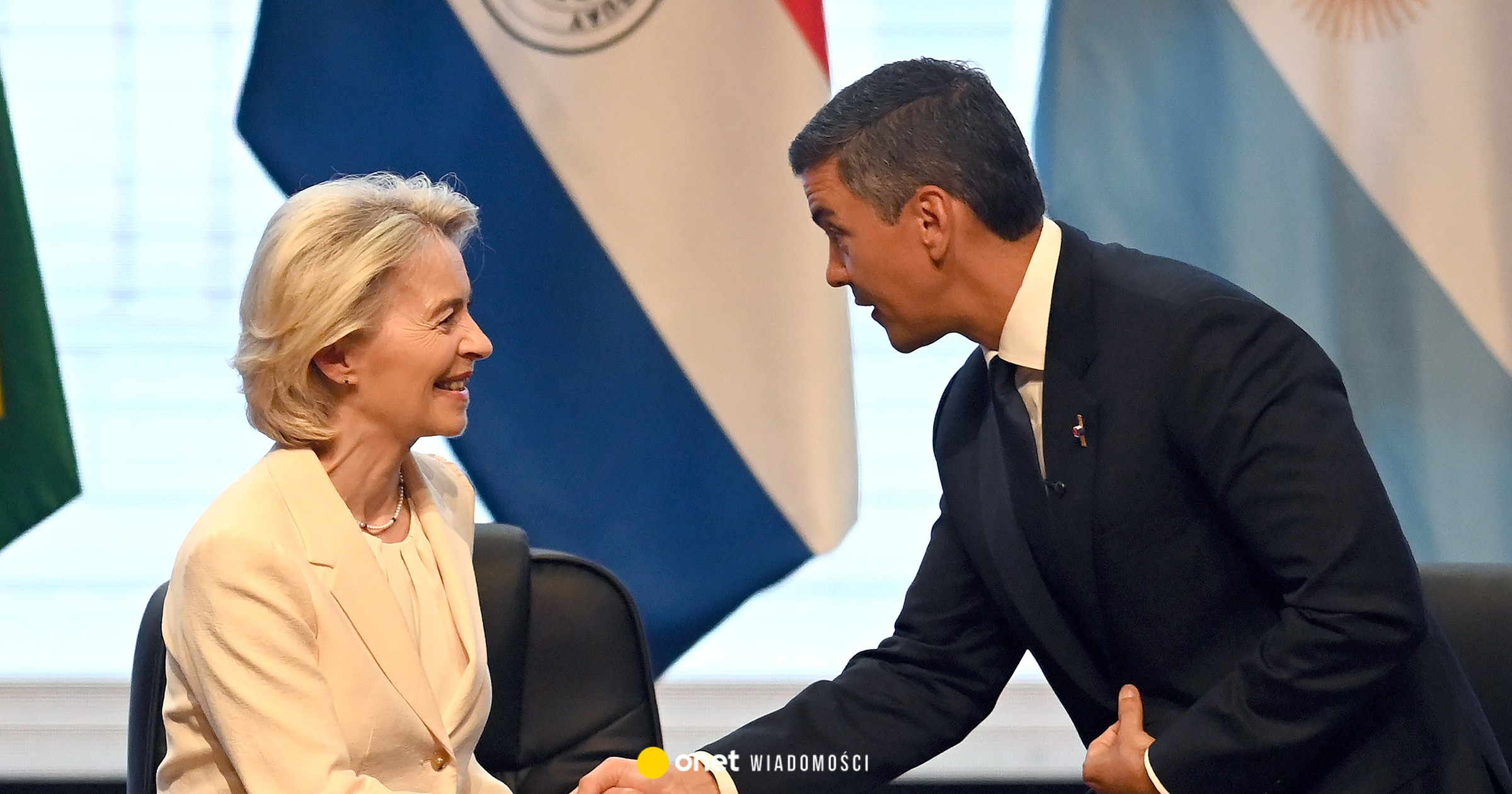
In December of the same year, she shook hands with Mercosur leaders, and after another political fight, she signed the agreement in January 2026.
The pro-agreement camp, led by Germany, had the necessary qualified majority to order the European Commission to implement the trade part of the agreement. Ursula von der Leyen brought this process to fruition – even after MEPs decided by a narrow majority to refer the deal to the Court of Justice of the European Union for review.
What's changing?
The agreement will gradually eliminate customs duties by over 90%. EU exports, including cars, medicines, wine and spirits and olive oil. Some of the so-called non-tariff barriers – such as those relating to labeling. However, public procurement markets will open, allowing EU companies to apply for government contracts.
The Commission estimates that EU exports to the Mercosur region will increase by 39% by 2040, reaching a value of EUR 50 billion (PLN 212 billion). “The benefits are real and visible now. Tariffs are starting to fall. Companies gain access to new markets. Investors have the predictability they need,” wrote Ursula von der Leyen on X.
For some products, however, the benefits will appear more slowly. — In most cases, tariff reductions will be phased in over 10-15 years. The economic effects will therefore be visible primarily in the medium and long term, says Oliver Richtberg, director of foreign trade at the German engineering federation VDMA.
However, this does not apply to French champagne, which – like other sparkling wines – is already duty-free, following a reduction in the previous rate of 20%.
At the same time, beef exports from Mercosur countries (Brazil, Argentina, Paraguay, Uruguay) to Europe will be subject to a lower customs duty – 7.5%. in relation to the first 99 thousand tons per year. Everything above this amount will be taxed at a rate of 40%. The EU produces this amount of beef in five days.
The article continues below the video
— The first tranche of agricultural quotas will appear on both sides and almost no one will notice. It will certainly have no visible impact on the EU beef market, says Rupert Schlegelmilch, a former European Commission official who negotiated the deal.
What's next?
With the finish line in sight, European lawmakers extended the process, requesting judicial review of the agreement.
This means the European Parliament may have to wait up to two years before it can hold a final vote on approval of the full partnership agreement. It will replace the interim trade agreement that is currently entering into force. The agreement must be ratified by the parliaments of the 27 EU member states.
— Europe can be sure that before Parliament [Europejski] will make the final decision, the contract will come already [jej] economic and political benefits, says Bernd Lange, German social democrat, chairman of the European Parliament's trade committee.
According to Trade Commissioner Maros Sefcovic, the Mercosur deal will withstand legal scrutiny as many of the issues raised were satisfactorily resolved during a previous review of the trade deal with Singapore. If the Court of Justice or lawmakers ultimately reject the agreement, The European Commission will have to go back to square one.
Sefcovic says the EU cannot afford this – given that China has already displaced it as Mercosur's main trading partner. “By 2032, we'll be back to where we were 10 years ago,” he told lawmakers earlier this year.
Other countries, Colombia and Panama, have also expressed interest in joining Mercosur. Venezuela, suspended from Mercosur under the late President Hugo Chavez, is considering returning, and Bolivia is making quiet progress in that direction.
A source close to the President of the European Council, Antonio Costa, claims that “expanding partnerships with new partners is a way to promote other poles of regional integration.”
I’m Ashley Davis as an editor, I’m committed to upholding the highest standards of integrity and accuracy in every piece we publish. My work is driven by curiosity, a passion for truth, and a belief that journalism plays a crucial role in shaping public discourse. I strive to tell stories that not only inform but also inspire action and conversation.