Billions of rubles in losses. This is how another sector in Russia collapses

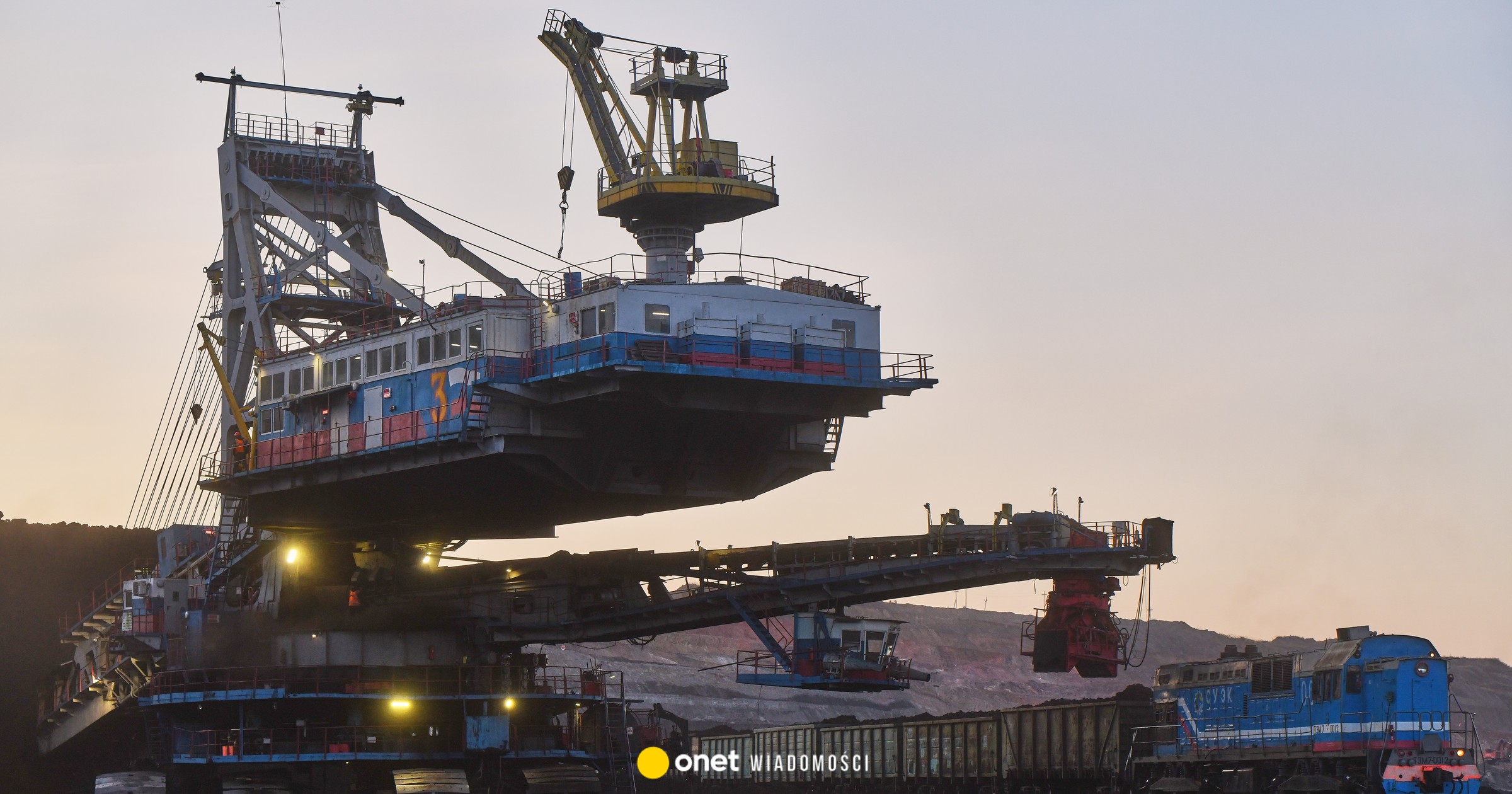
Analysts and officials have warned that the sector is heading for another year of heavy losses.
Washington and Tehran alternate between diplomacy and repeated threats. In recent weeks, the price of Brent crude oil has fluctuated around $95. (PLN 345 at the current exchange rate) per barrel, which is a drop from the peak values reached during the war, but still significantly above the pre-conflict level of approximately USD 70. (PLN 254).
The Russian coal sector, employing almost 150,000 people, is located under pressure Since global coal prices stabilized after 2023, competition has intensified and Western sanctions have restricted access to key export markets. In 2025, coal companies took note total losses of 408 billion rubles (PLN 19 billion), and approx. 67 percent companies operated at a loss.
The economic slowdown has hit the coal mining region of Kemerovo in Siberia particularly hard. This has deepened a wider socio-economic crisis following years of underinvestment in public services.
At first glance, one might expect higher oil and gas prices to increase demand for Russian coal, especially in Asia.
But Russian managers and officials say the crisis in the Middle East has done little to revive the sector.
According to calculations by the Center for Research on Energy and Clean Air (CREA), in March, when Russia earned about $24 billion from the export of energy raw materials. (PLN 87 billion) – which was the highest result in two years – coal was responsible for approx. 5.5%. this amount.
In March, coal export revenues increased by 22%. on a monthly basis, but lagged far behind oil, where revenues increased by 94%. Analysts say the increases are too modest to reverse the downward trend in the sector.
A wider energy crisis
Deputy Energy Minister Dmitry Islamov said that the crisis in the Middle East will not have a noticeable impact on coal producers. He added that “systemic” price changes are unlikely before the end of 2026 or 2027.
On March 24, about a month after the start of the energy crisis, Islamov stated that the industry's losses may increase up to 575 billion rubles (PLN 27 billion) this year.
Alexander Kotov, partner at the Moscow-based consulting company NEFT Research, presents a similar forecast, estimating the sector's losses at 500-550 billion rubles (PLN 24-26 billion).
Despite short-term benefits resulting from the conflict in the Middle East, coal exports from Russia are expected to decline by 5% in 2026. up to 8 percent compared to the level of 2025, reaching a level of 195 million to 200 million tonnes.
One reason is that coal markets are less constrained than oil and gas markets, with greater supply and fewer countries competing to buy it.
As a result, prices for Russian thermal coal, the main export grade used in energy, have risen, but much less sharply than prices for oil and gas.
Price chaos
Prices of coal shipped from ports in the Russian Far East, the main gateway to Asian markets, increased by about 23%. from $79 (PLN 287) per tonne at the beginning of the year to USD 97. (PLN 352) per tonne as of March 20, according to data from the Price Index Center.
NEFT Research estimates that export prices of Russian coal in the second, third and fourth quarters of this year will range from $69.60 to $82.30. (from PLN 252 to PLN 299) per tonne depending on destination – still well below the 2022 peak.when Russian coal was sold for over $150. (PLN 545) per tonne.
For comparison, the price of Russian Urals crude oil increased from an average of $56.60. (PLN 205) per barrel in February to USD 94.50. (PLN 343) in March, which is an increase of approx. 73%.
This difference reflects stronger competitionfaced by Russian coal exporters compared to the country's oil and gas producers, particularly in Asia.
Several of the world's largest consumers of coal – China, India and Indonesia – are also among the largest producers, all of which rank ahead of Russia.
In 2024, China again introduced import tariffs on Russian coal to support domestic producers. India also imposes tariffs on Russian supplies.
At the same time, producers in Australia and Indonesia benefit from shorter transport routes and lower trade barriers when selling to India and China.
Rising logistics costs have added to the pressure.
Additional problems
The crisis in the Middle East caused increase in demand for sea transport and the cost of ship fuelin many cases offsetting the gains from higher coal prices.
According to the Price Index Center, freight rates from the Russian Far East increased by 21 percent. up to 44 percent between the end of February and the end of March, depending on destination.
In some cases, exporters withdrew offers to Chinese buyers because variable freight costs made it difficult to price supplies and made them unprofitable.
NEFT Research estimates that in February, exporters sending coal from the Kuzbas basin through Far Eastern ports received approximately 6,424 rubles per tonne (PLN 310), but after deducting transport costs and other expenses, they were left with only 1,888 rubles per tonne (PLN 91).
Margins rose by up to a third in March, but analysts cited by Kommersant said only some eastern export routes were consistently profitable — especially deliveries to South Korea, which relies heavily on energy imports.
For most manufacturers, Kotov says, margins remain too low to cover production costs.
Alexei Kalachev from the consulting company Finam claims that higher prices and a weaker ruble may slow down the “industry's descent into crisis” this year, but are not enough to “start pulling her out of him”.
A temporary increase in export revenues may allow some producers to pay off outstanding taxes and insurance premiums, but the sector as a whole will continue to record losses, Moscow analyst Kirill Rodionov wrote on Telegram.
He also noted that coal production in the Kemerovo region, the heart of Russia's coal mining industry, fell by 7% in the first quarter of 2026. up to 46.6 million metric tons.
Coal is behind
Both Russian and Western analysts say that the current crisis is unlikely to result in a significant recovery in the coal market and may even accelerate Asia's transition to alternative energy sources.
China and India, which still rely heavily on coal, were among the countries that saw coal-fired electricity production decline by 1.6% in 2025, respectively. and 3 percent
The long-term prospects for Russian exporters remain uncertainas China and India prioritize domestic supplies and greater coal self-sufficiency, while Japan and South Korea accelerate their transition to renewables and nuclear power, says NEFT Research.
This leaves Southeast Asian countries such as Vietnam and the Philippines as the main source of demand growth. However, the consulting firm believes this will not be enough to offset the decline in imports from larger economies.
— Coal may be an easily accessible buffer for now, but a war with Iran will not derail the transition to cleaner energy, says Julius Cesar Trajano, an energy analyst specializing in Asia. — In the long run, the war with Iran will strengthen, not reverse, the region's transition to a more diversified energy mix. The conflict highlights the real reason governments want to limit the use of fossil fuels: it's not about reducing emissions, but about reducing exposure to a volatile energy market.
India is steadily expanding its nuclear program, and China has 36 reactors under construction – more than the rest of the world combined – as part of plans to double its use of energy from non-fossil fuels by 2035.
South Korea is also increasing nuclear power production and exploring financing options for projects in Vietnam, while Japan is abandoning its policy of closing nuclear plants after the 2011 Fukushima disaster.