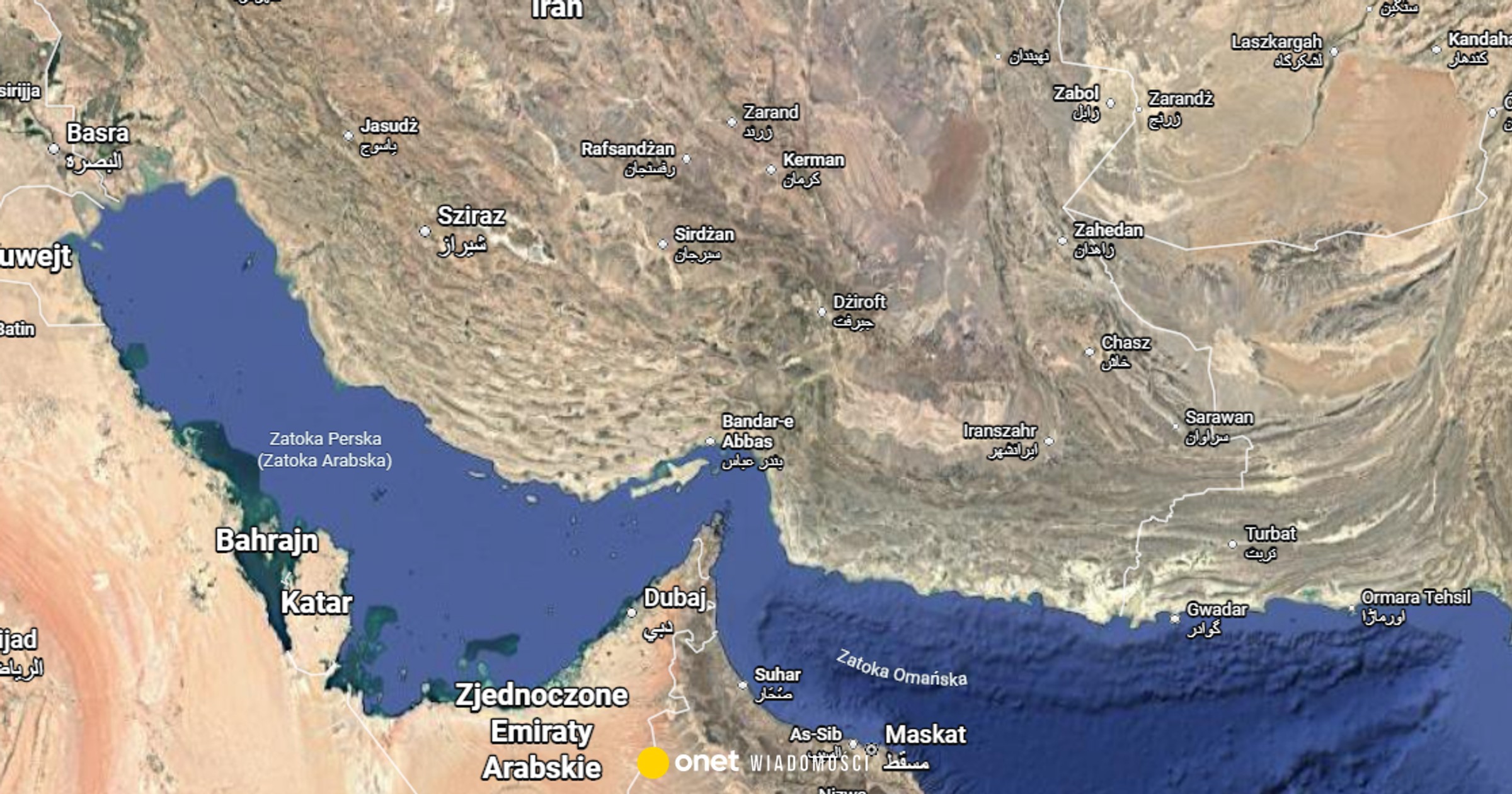
The Mubaraz gas carrier, which had been in the Persian Gulf since at least early March, turned off its transponder at the end of that month. It restarted on Monday when it was east of the Indian Peninsula.
After Iran blocked Hormuz, through which one fifth of the world's volume of crude oil and LNG was exported before the war between Israel and the US on Iran, traffic in the strait almost came to a standstill. This led to a sharp increase in prices.
The Americans blocked the Strait of Hormuz
At the same time, satellite data cited by Bloomberg show that tankers loaded with Iranian oil have gathered in the area of Chabahar port in southeastern Iran, slightly ahead of the American blockade in the strait, enforced by U.S. forces since mid-April against ships sailing to and from Iranian ports.
According to the agency, the accumulation of tankers in the Chabahar area indicates that the American blockade is an effective barrier to Iranian exports. Iran continues to load oil onto ships, but may soon be forced to halt production as storage space runs out, Bloomberg estimates.
It is not known how many empty tankers Iran still has, but according to the agency, it appears that older vessels are being returned to service. The large VLCC tanker, which was built 30 years ago and can hold up to 2 million barrels of oil, began transmitting a signal from the Persian Gulf last week. This means the ship, which delivered its last cargo in 2023, is now heading west towards Khark Island, from which Iran exports most of its oil, Bloomberg reported.