Iran's surprise proposal to exit the 'frozen' war: What happened in two capitals, plus Rubio's firm reaction

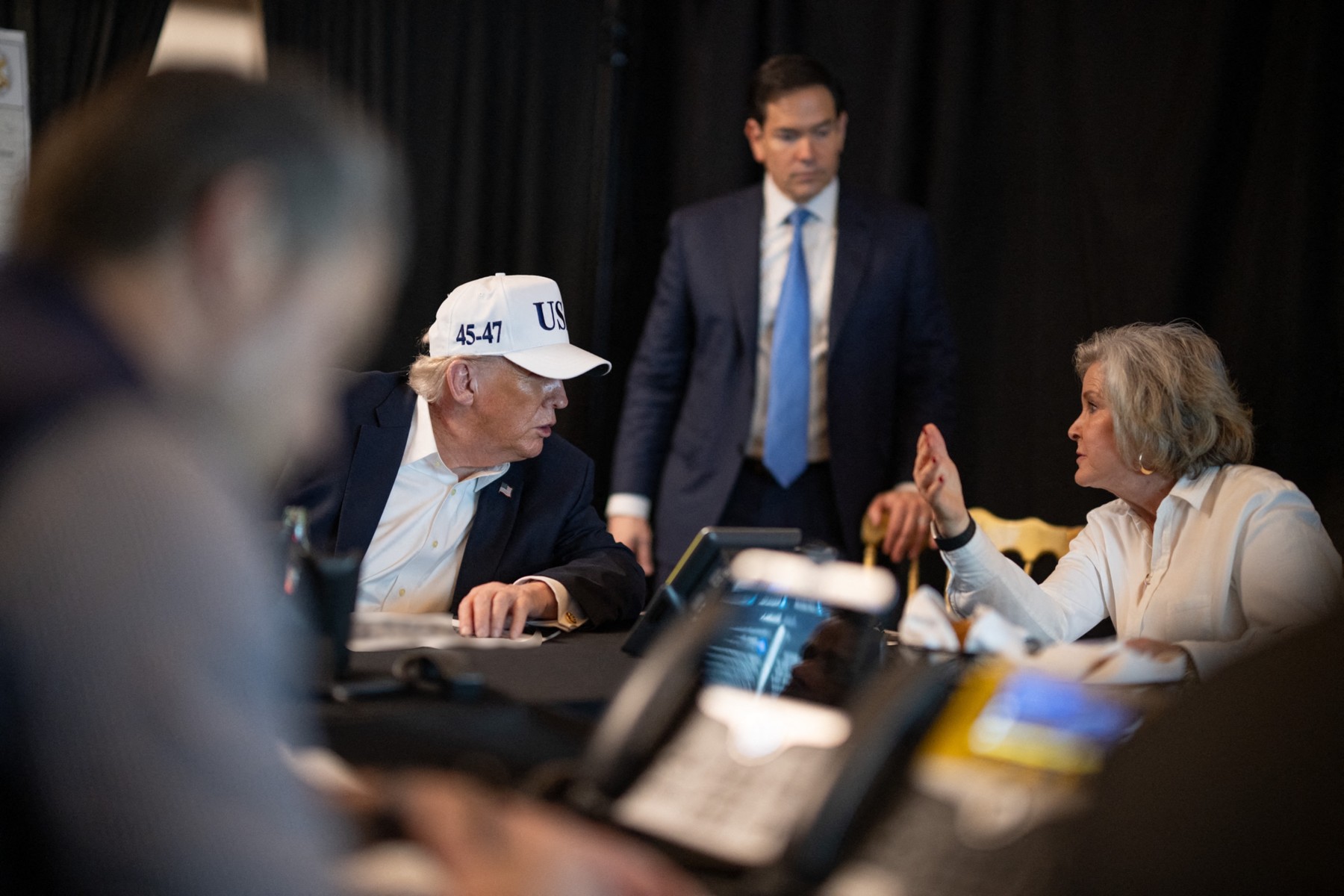
US President Donald Trump discussed Monday, in Washington, with his main national security advisers the new Iranian proposal on ending the war with Tehran, in the context in which the resolution of the conflict is still at an impasse, and the energy supply in the Middle East region is reduced, writes Reuters.
Iranian sources revealed on Monday morning Tehran's latest proposal, which calls for postponing talks on Iran's nuclear program until the end of the war and the settlement of shipping disputes in the Gulf. This is unlikely to satisfy Washington, which maintains that nuclear issues must be resolved from the outset.
US Secretary of State Marco Rubio said he believed Iran was trying to buy time. “We can't let them get away with this,” the secretary of state said in an interview with Fox News.
“They're very good negotiators. They're very experienced negotiators. We have to make sure that any deal that's made, any agreement that's made is one that definitively prevents them from rapidly moving toward a nuclear weapon at any time,” Rubio added.
Efforts to bridge differences between the US and Iran have not stopped, sources in Pakistan, the mediating country, said, despite the absence of a face-to-face meeting after Trump canceled a visit by his negotiators scheduled for last weekend.
Hopes of reviving peace efforts have faded after the US president announced this weekend that he had canceled the trip of his special envoy, Steve Witkoff, and his son-in-law, Jared Kushner, to Islamabad, the Pakistani capital, where Iranian Foreign Minister Abbas Araqchi made two visits over the weekend.
Araqchi also visited Oman and on Monday traveled to Russia, where he met President Vladimir Putin in St. Petersburg and received a pledge of support from Moscow, a longtime ally of Tehran.
“We will do everything that serves your interests, the interests of all peoples in the region, so that peace can be achieved as soon as possible,” Vladimir Putin told Araqchi, according to Russian state media.
Oil prices rose again
With the warring parties still seemingly far apart over issues such as Iran's nuclear ambitions and access to the crucial Strait of Hormuz, oil prices resumed their upward march on Monday, hitting a two-week high.
Trump met with his national security team early Monday morning.
“There was a discussion this morning that I don't want to comment on, and I'm sure you'll be hearing very soon directly from the president on that topic,” White House spokeswoman Karoline Leavitt said.
Araqchi told reporters in Russia that Trump had called for negotiations because the US had not met any of its goals.
What happened in Islamabad
Senior Iranian sources, who spoke on condition of anonymity, told Reuters that the proposal presented by Araqchi in Islamabad over the weekend called for phased negotiations, with the nuclear issue set aside at first.
A first step would involve ending the US-Israeli war against Iran and providing assurances that Washington will not resume it. Only then would negotiators address the issue of the US blockade and the fate of the Strait of Hormuz, which Iran plans to reopen under its control.
Only then would talks turn to other issues, including the long-running dispute over Iran's nuclear program, with Tehran still seeking some form of US recognition of its right to enrich uranium for what it says are peaceful purposes.
In a sign that no face-to-face meetings are planned in the near future, streets reopened in Pakistan's capital, Islamabad, which had been locked down for a week pending talks that failed to take place.
Pakistani officials said negotiations were still taking place remotely, but that there were no plans to convene a face-to-face meeting until the sides were close enough to sign a memorandum.
Maritime transport, blocked
Although the fragile truce brought a pause to US and Israeli attacks on Iran that began on February 28, no agreement has been reached on terms to end the war that has killed thousands, sent oil prices soaring, fueled inflation and clouded the outlook for global economic growth.
Since the beginning of the war, Iran has largely blocked all maritime traffic in the Persian Gulf through the Strait of Hormuz, except for its own ships.
And this month, the United States began blocking Iranian ships bound for the country's ports.
At least six tankers carrying Iranian oil have been forced to return to Iran in recent days following a US Navy blockade, ship tracking data shows, indicating the war's heavy impact on shipping.
On Monday, Tehran's Foreign Ministry condemned, in a post on the X social network, the US seizure of oil tankers suspected of links to Iran, calling it the “unequivocal legalization of piracy and armed robbery on the high seas”.
Before the war, between 125 and 140 ships crossed the strait daily, but only seven did so in the last day, according to Kpler ship-tracking data and satellite analysis from SynMax, and none of them were carrying oil destined for the global market.
With his domestic approval rating plummeting, Trump faces domestic pressure to end the unpopular conflict. Iran's leaders, though militarily weakened, have found an advantage in their ability to shut down shipping in the strait, through which a fifth of global oil shipments normally transit.
Fighting intensifies in Lebanon
Meanwhile, the conflict intensified in Lebanon, where, according to the Ministry of Health, Israeli attacks killed 14 people and wounded 37 others in the south of the country on Sunday, the bloodiest day since a US-brokered ceasefire was announced in mid-April.
Iran says it will not hold talks on the Middle East conflict unless a ceasefire also holds in Lebanon, which Israel invaded in March in pursuit of the Tehran-backed Shiite group Hezbollah, which has launched bombings across the border in support of Tehran.
Israel and Hezbollah accuse each other of violating the ceasefire agreed between Israel and the Lebanese government in Washington and extended last week.